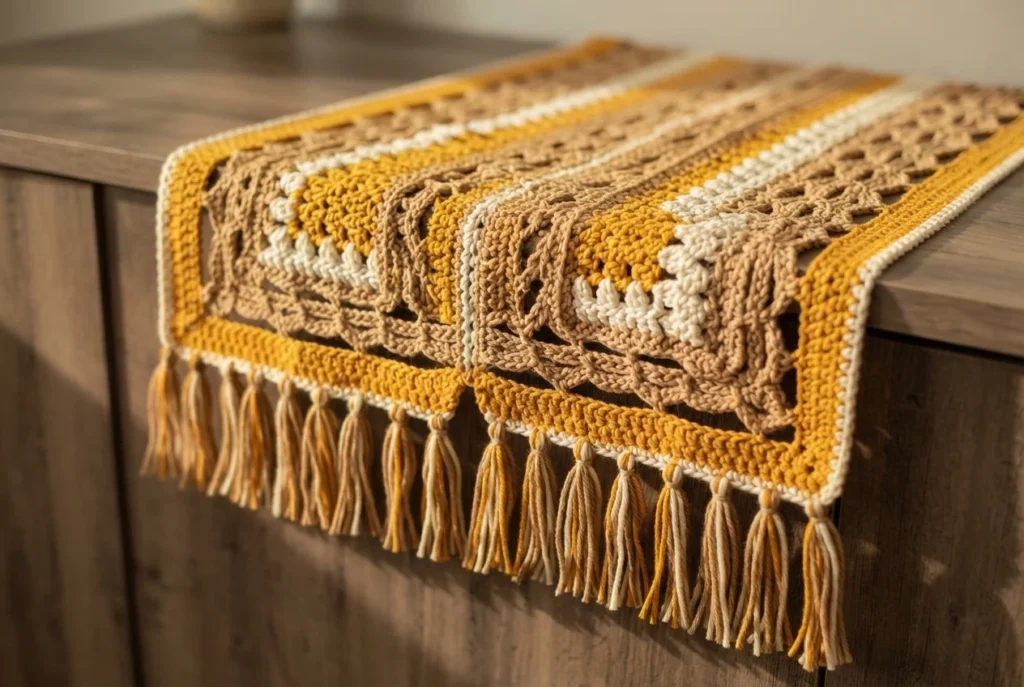
Project introduction
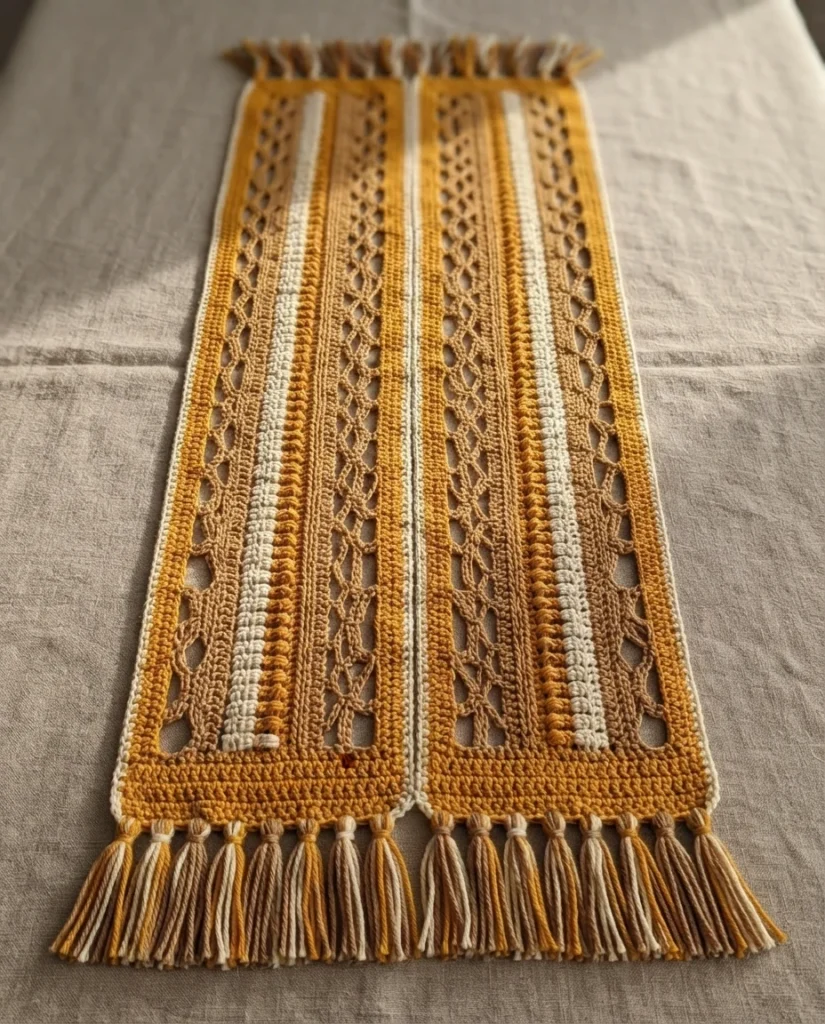
The Autumn Lane Table Runner is a free crochet pattern from Dana at Darling Dana Designs, released as a fall seasonal project. Dana also calls it a sideboard runner, and she notes that her kitchen and dining room were under construction at the time, so no table was available for photographs. The design was planned a few weeks before it appeared. This is a pattern overview, not a full tutorial, so treat it as a guide to what the project involves and where to find the complete instructions.
The original source is the best place to work from, and you can find the Original designer’s pattern and instructions on the designer’s site. The pattern is offered as a free web version on the designer’s site, so read the page carefully to see what format is provided there and whether any paid printable or PDF option is also available.
Pattern Overview
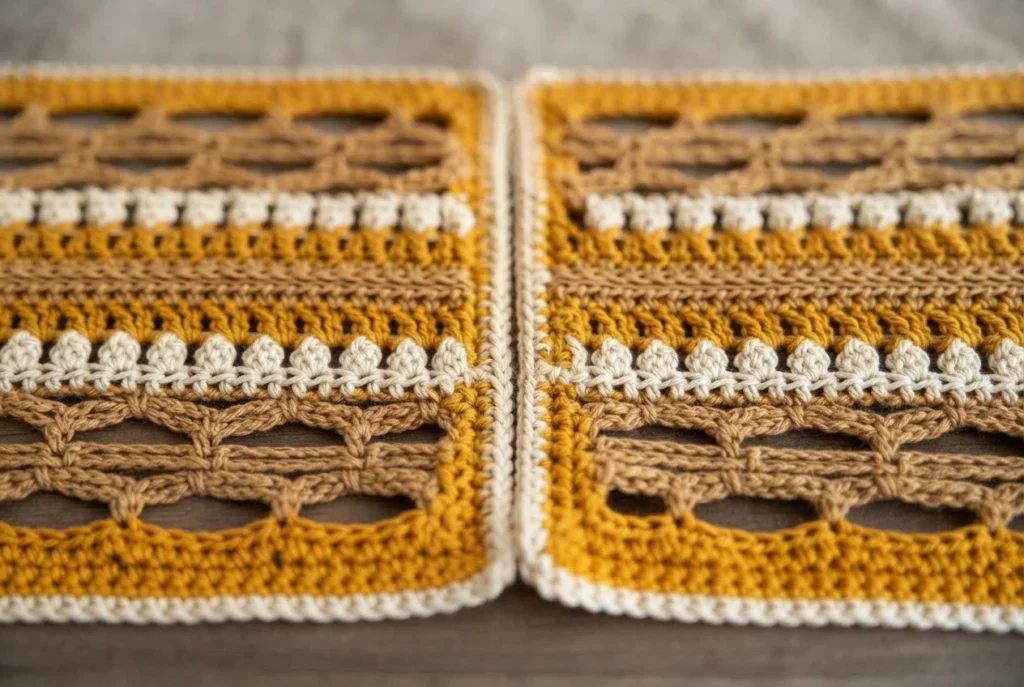
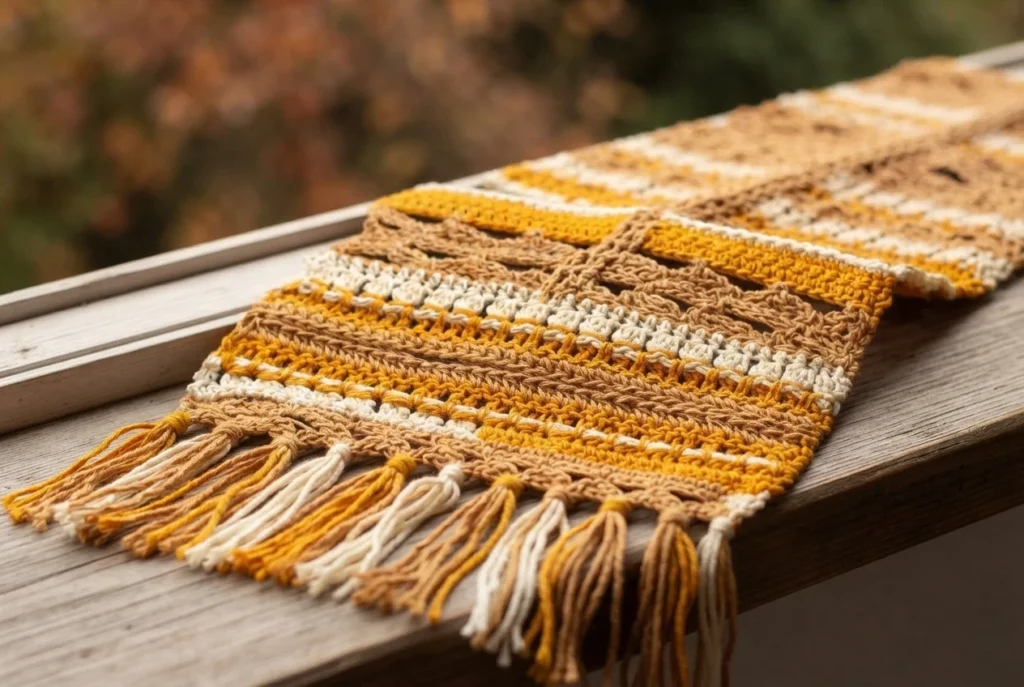
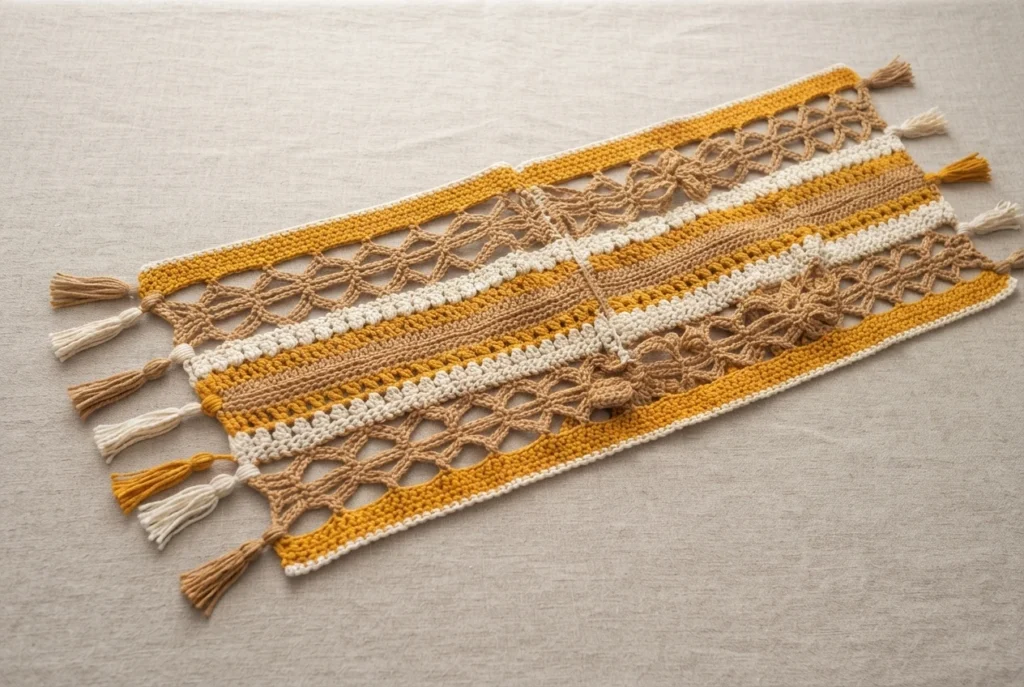
The source lists a total length of 72 inches. The source directs you to make 2 pieces, each one half of the runner, and to seam them together. Each half begins with a chain of 218, and the color changes create bands of texture rather than a single flat fabric.
Dana used Lion Brand 24/7 Cotton (Weight 4) in three colors: Color A Goldenrod, Color B Camel, and Color C Cream. She notes she needed approximately 1.5 skeins of each color. The supplies list also includes a 5 mm hook (G+), a yarn needle, and recommended blocking mats and pins. If you substitute yarn, keep the weight and the color contrast in mind, since the stitch pattern relies on clear color blocks.
Here is a concise checklist of the supplies named in the source:
- Lion Brand 24/7 Cotton (Weight 4) in Color A Goldenrod, Color B Camel, and Color C Cream
- Approximately 1.5 skeins of each color
- 5 mm hook (G+)
- Yarn needle
- Blocking mats and pins (recommended)
The pattern defines a special stitch called DC3TOG in one space, worked by making three double crochet stitches together into the same space. The source gives the full step-by-step definition, so follow that page for the exact movements. The construction moves through color sections: Color A opens with single and half double crochet rows, Color B introduces chain arches and single crochet, Color C uses single crochet and the DC3TOG stitch, Color A returns with double crochet and front post treble, and Color B finishes with half double crochet on Row 14.
This overview does not reproduce those rows; work them from the designer’s page.
Assembly matters here. The two halves are seamed together along Row 14, and the source warns that the back of both pieces should line up because the front post treble stitches from Row 13 are visible on the backside. The seam is worked with slip stitch in the back loop only along Row 14 on both sides of each half. After seaming, the ends are sewn in and the runner is blocked. Dana blocked hers in sections because of the length, using a spray bottle of water to wet one section at a time.
A border in Color C is added by reattaching yarn at the base of Row 1 and working single crochet in each stitch across, then finishing off. The pattern also calls for 10 tassels: Dana made 1 in Color A and 2 each in Color B and Color C.
For each tassel, the source says to cut 10 pieces of yarn about 6 inches long, pull 9 pieces through the desired space with half on the front and half on the back, space them evenly, and use the 10th piece to tie around the top to secure. Trim to your desired length.
If you enjoy seasonal table runners, these related overviews can help you compare styles: the Fall Pumpkins Table Runner pattern by Sara Sach: Pattern Overview and the Thanksgiving C2C Grateful Crochet Table Runner: Pattern Overview. Each one takes a different approach to fall decor, so you can pick the construction method that suits your mood.
Because this is an overview rather than a full tutorial, use it to gather supplies and understand the shape of the project, then work from the original designer’s page for the row-by-row instructions. That page is the authority on stitch counts, color placement, and assembly details. This overview is not a complete pattern and does not replace it.
1 thought on “Autumn Lane Table Runner: Pattern Overview”