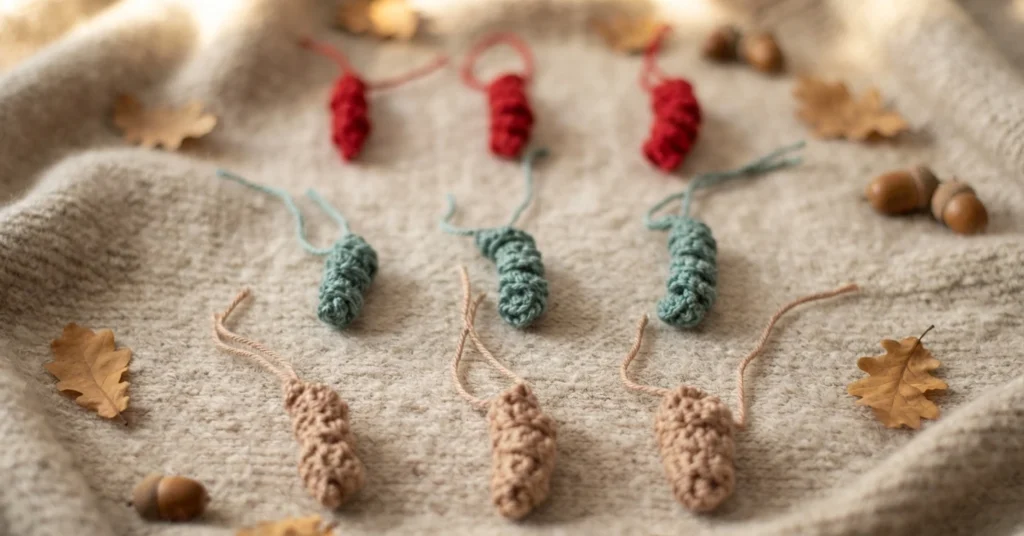
This is a pattern overview, not a full tutorial. It walks through what the Pumpkin Worry Worm crochet pattern by Start Crochet involves, what you need, and how the project is put together, so you can decide whether to open the Original designer’s pattern and instructions and work from the source itself.
Pumpkin Worry Worm Crochet Pattern Overview
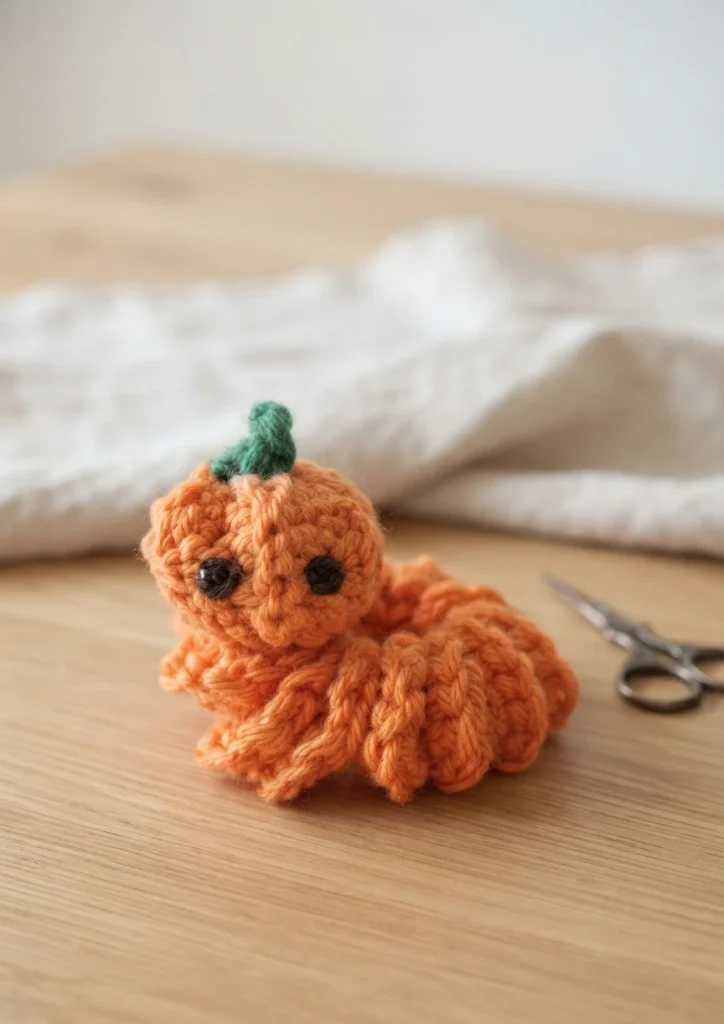
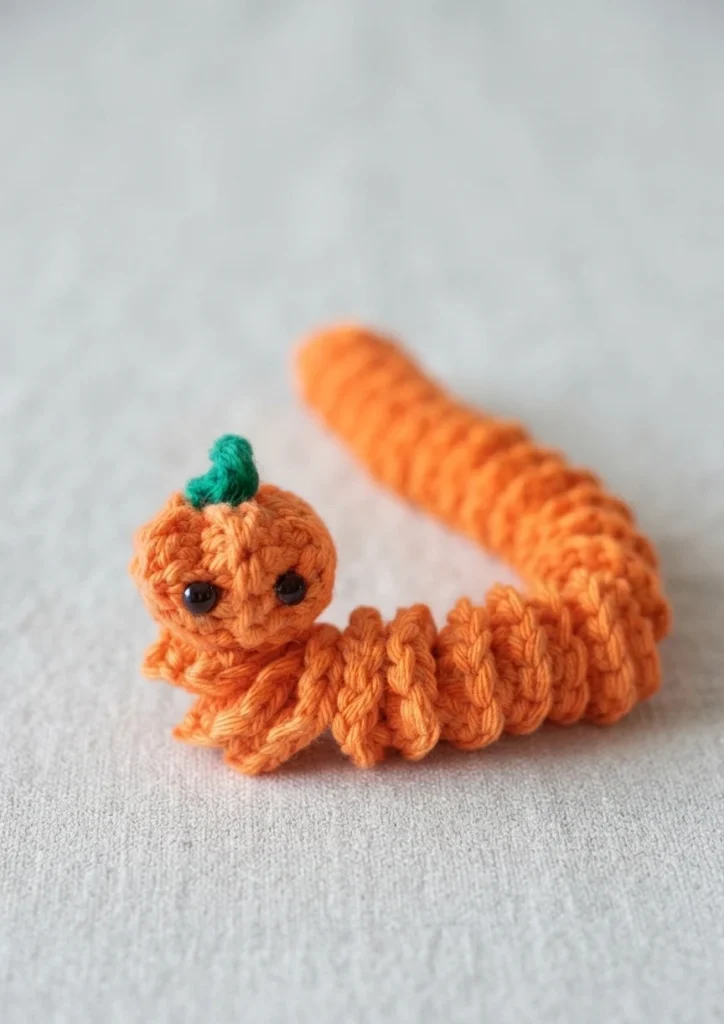
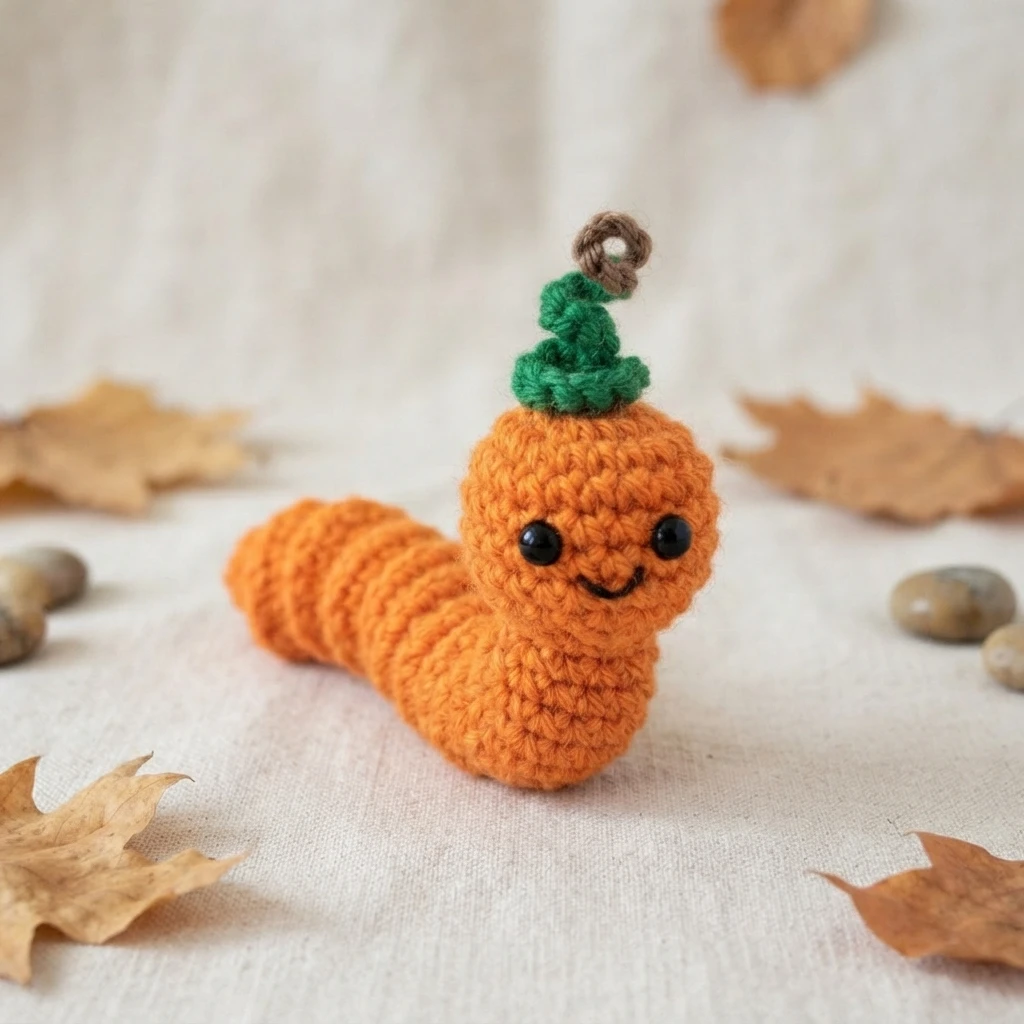
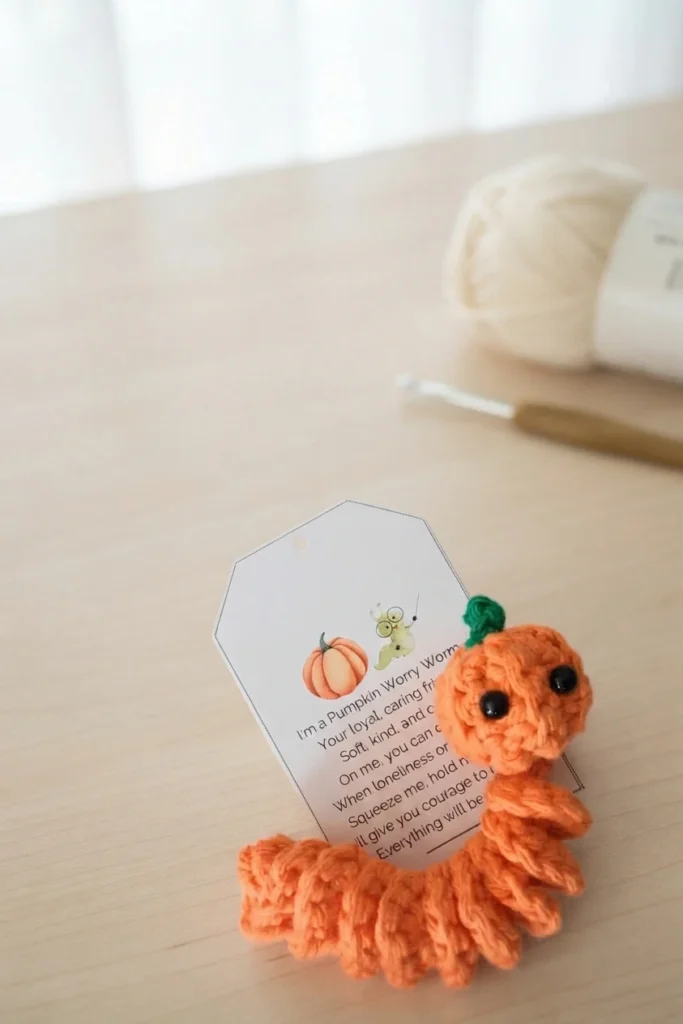
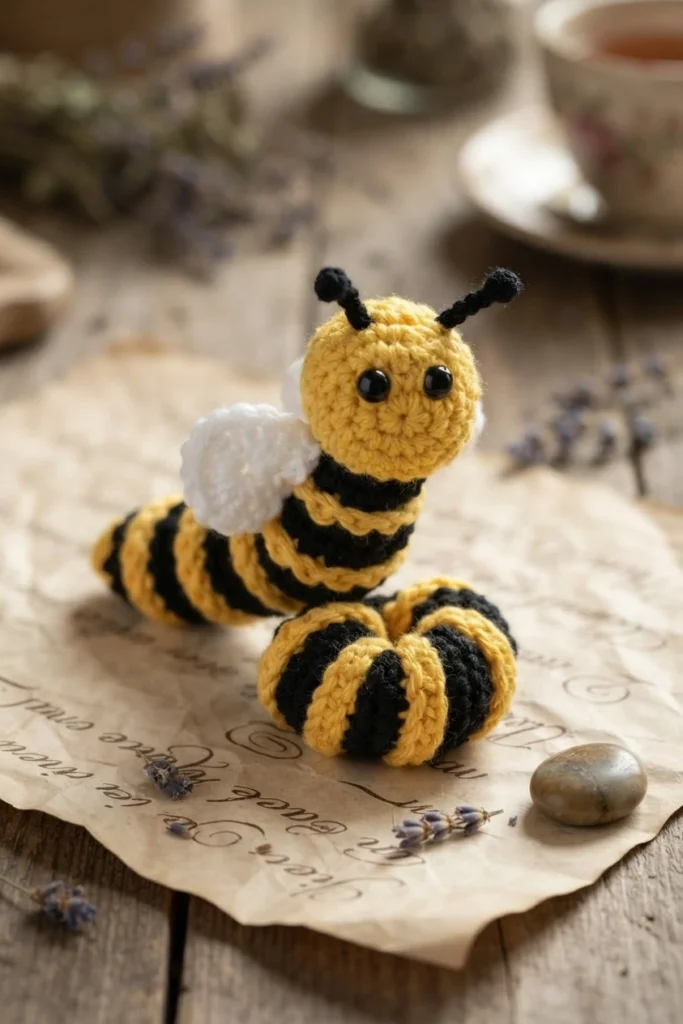
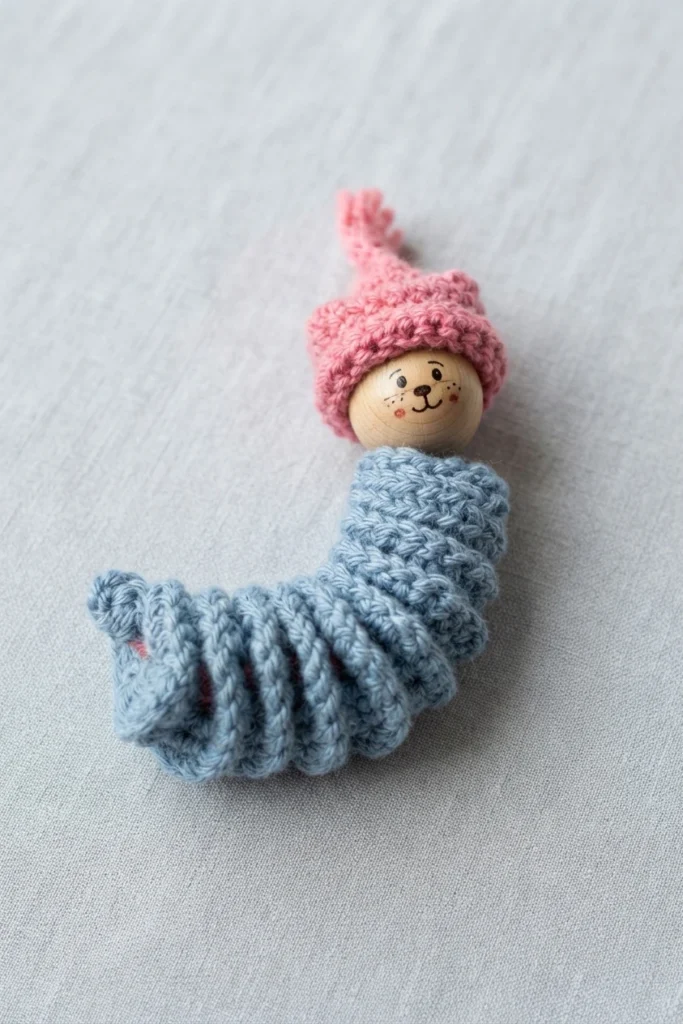
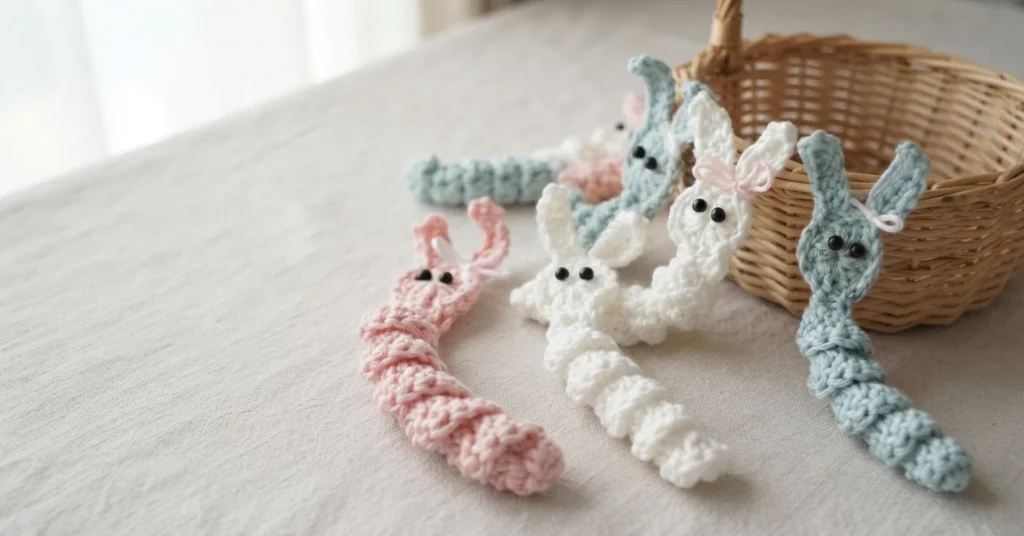
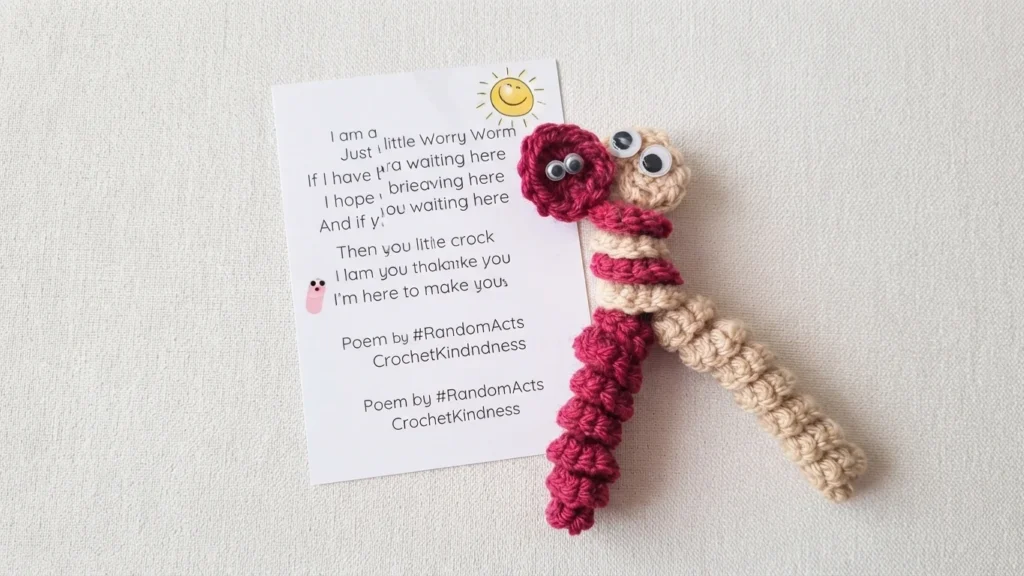
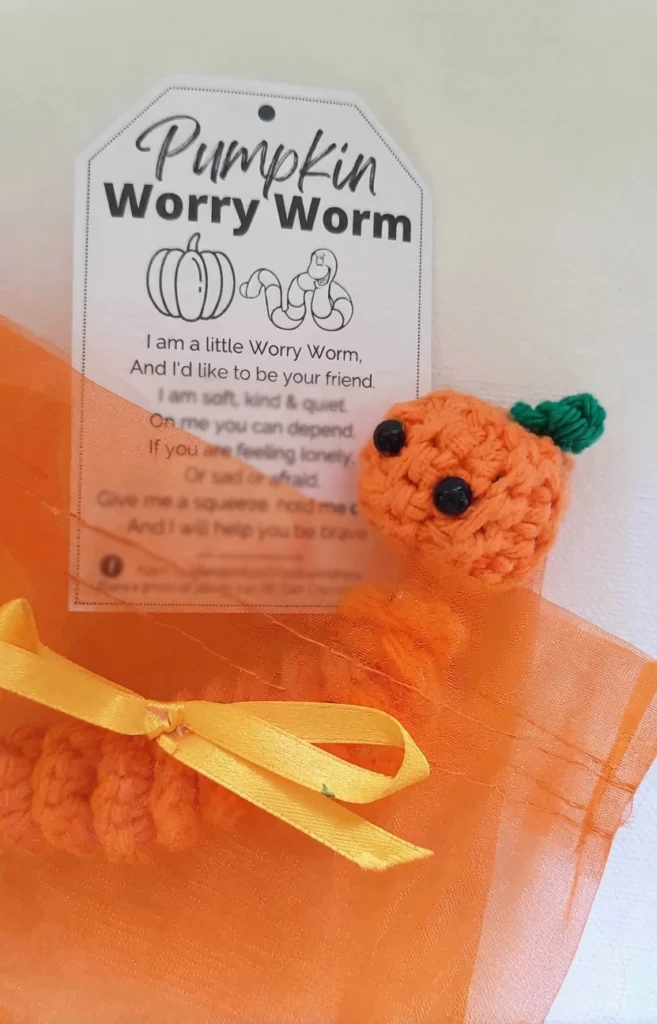
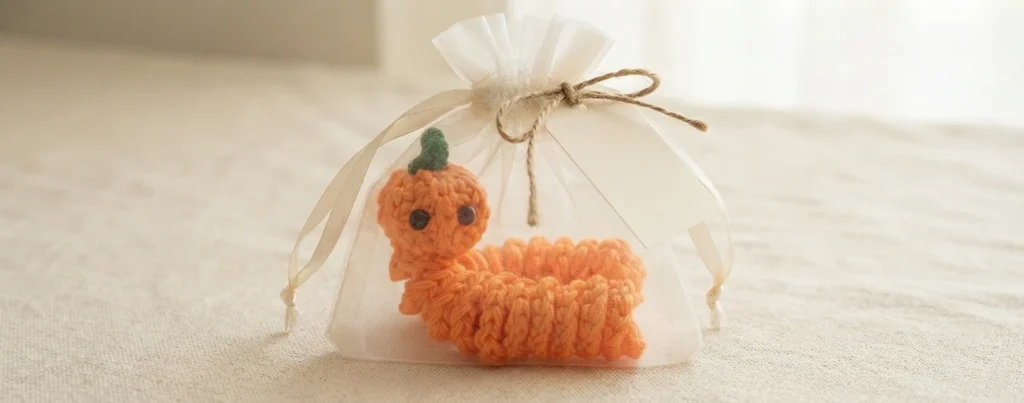
The designer introduces this project as Pippin the Pumpkin Spice, a small cuddly pumpkin character with a big heart, described as warm and cozy for fall and as a comfort object for children who are feeling worried. It belongs to the worry worm family, which became popular when a Facebook group called Random Acts of Crochet Kindness distributed simple crochet worms with poems in see-through plastic baggies or organza bags in places like woods, playgrounds, nursing homes, schools and camping areas.
The source does not credit that group as the creator of the concept, only as the group that popularized distributing them this way.
The purpose behind worry worms is to make someone smile, build a sense of community through kind acts, and brighten the day of whoever finds one. The source describes them as quick and easy to make, which suits beginners. The curly surface comes from hyperbolic crochet: stitches are added at a constant rate, and the more frequently they are added, the curlier the result.
You can watch a video about hyperbolic crochet here.
PDF Crochet Pattern Overview
The printable pattern is offered as an ad-free PDF for $3.99. Two formats are described: a text-only version for easy printing, and a version with step-by-step progress photos. The same listing block also shows a three-pattern Halloween bundle as a separate paid option, and no price is stated for that bundle here.
Printable Poem Tags
Separately, the designer offers printable pumpkin worry worm poem tags as an ad-free PDF for $3.99. The listing describes pre-designed tags for Random Acts of Kindness or Trick-or-Treats, three poem variations, and two sizes. Choking-hazard tags are included, and the file is editable with a free Canva.com account. A later listing block on the same page shows four poem variations instead of three.
PDF Crochet Pattern + Printable Poem Tags
A bundle combines the printable pumpkin worry worm pattern with the editable poem tags. The listing shows $8.98 crossed through and $6.99. It repeats the pattern formats (text-only and step-by-step progress photos) and the tag details: three poem variations, two sizes, choking-hazard tags, and editing through a free Canva account. A later listing block on the same page shows four poem variations instead of three.
6 PDF Worry Worm Crochet Patterns
A larger bundle gathers six ad-free printable worry worm patterns for every occasion, listed at $26.94 reduced to $19.99. The six seasonal designs cover Spring, Easter, Fall or Halloween, Valentine’s, and Christmas. Text-only patterns and patterns with step-by-step progress photos are included, along with printable poem tags for the basic worry worm.
15 PDF Worry Worm Crochet Patterns MEGA Bundle
The mega bundle contains 15 ad-free printable worry worm designs plus one set of poem tags, listed at $79.84 reduced to $39.99. The 15 designs cover Spring, Easter, Fall or Halloween, Valentine’s, and Christmas, and some include beads, googly eyes and other details. Text-only patterns, patterns with step-by-step progress photos, and printable poem tags for the basic worry worm are all part of the set.
What You’ll Learn
The source frames the project around a specific set of skills. Working through it means learning how to crochet a worry worm’s pumpkin head with the scBLO technique, which is single crochet back loop only. It also covers crocheting a 3-D continuous spiral in single crochet, and shaping a 3-D pumpkin head from a flat piece of crocheted fabric.
Beyond the head, the pattern covers attaching the pumpkin head to the worry worm body, adding a poem or tag to the finished worm, and packaging the crochet worry worm for distribution. The combination of flat work and simple stitches is what keeps this within reach for newer crocheters.
Materials Needed
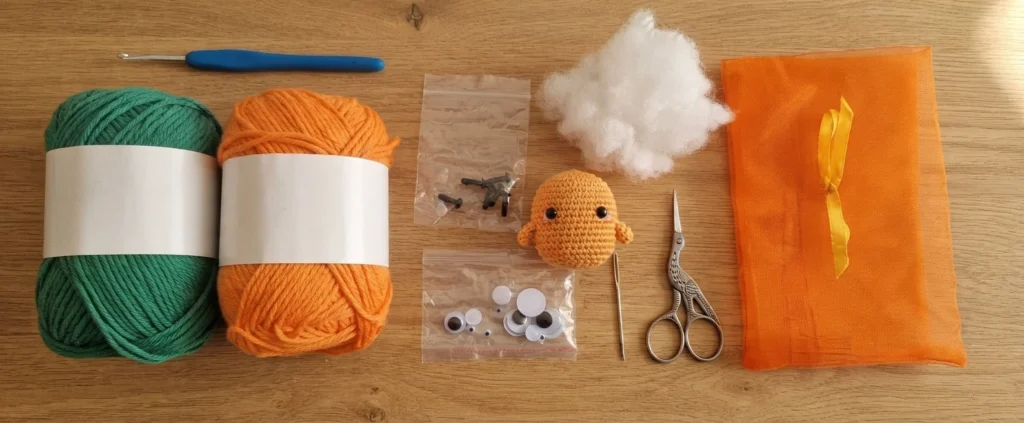
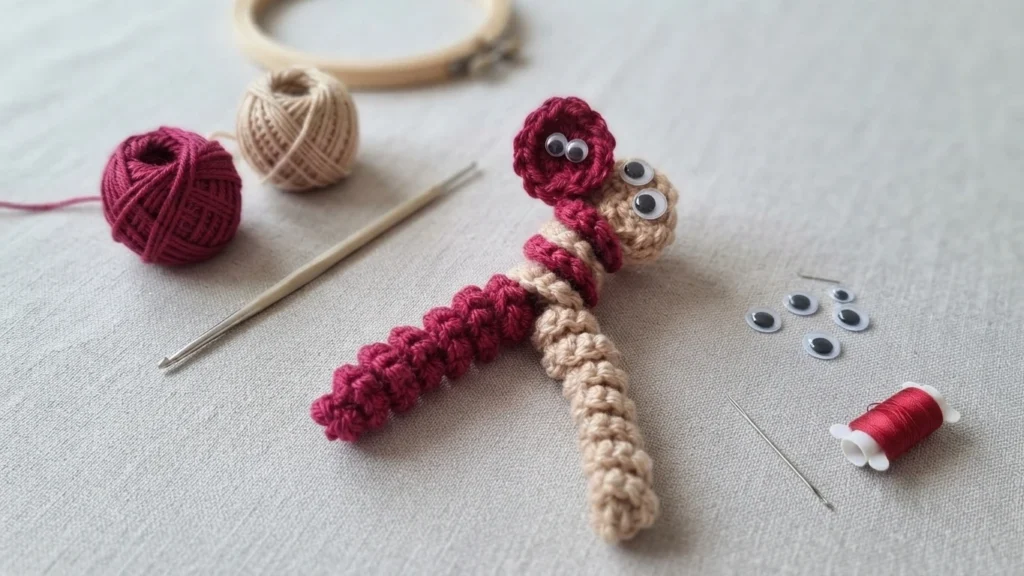
The source lists the following supplies for this project. The example yarn is Lily’s Sugar & Cream cotton from LoveCrafts, though any yarn works if matched to a suitable hook per the label recommendations. The example hook size is G or 4 mm.
- Cotton yarn (example: Lily’s Sugar & Cream)
- Crochet hook that fits your yarn (example: size G, 4 mm)
- Stitch markers or a piece of contrasting color yarn (optional)
- A tapestry needle
- A pair of scissors
- Trimits Toy Eyes Solid Black 6mm, googly eyes, black or brown fiber art beads, or a permanent marker
- Fluffy cotton filling, fiberfill or a few strands of leftover yarn
- Plastic or organza baggies
- Printer and A4 paper for tags (cardstock is an option for more durable tags)
For the eyes, the source points to a set of 15 worry worm eye options to choose from, so there is room to personalize the face. The filling can be cotton filling, fiberfill, or leftover yarn strands, and the baggies are what the finished worm goes into for distribution.
Abbreviations
The pattern uses standard US crochet terms, and the source defines its abbreviations as follows.
- ch = chain
- sc = single crochet
- scBLO = single crochet back loop only
- sl st = slip stitch
- st = stitch
- sts = stitches
- fo = fasten off
Skill Level
The project is rated beginner. The source explains that it uses basic stitches in different ways, and that amigurumi experience is not required because the pattern is worked flat. That is a helpful distinction for anyone who has avoided amigurumi because of the magic circle or working in the round.
Measurements
The source provides specific measurements for the sample. The length is 5.5 inches. The weight is 0.28 oz. The yardage used is 13.4 yards of yarn. These figures describe the sample as made, so your own result can differ with yarn and hook choices.
Gauge
The stated gauge is 12 sc and 12 rows with a 4.5 mm crochet hook. The source notes that gauge is not crucial here and suggests experimenting with different hook sizes and yarn weights to get a result you are happy with.
Two adjustments are offered. If the worry worm looks smaller than anticipated, try a thicker weight yarn or a smaller size crochet hook. If using bulky yarn, decrease the repeated stitches in the body chain to 3 sc per ch instead of 4. To make the worm longer, increase the number of stitches in the body chain.
Notes
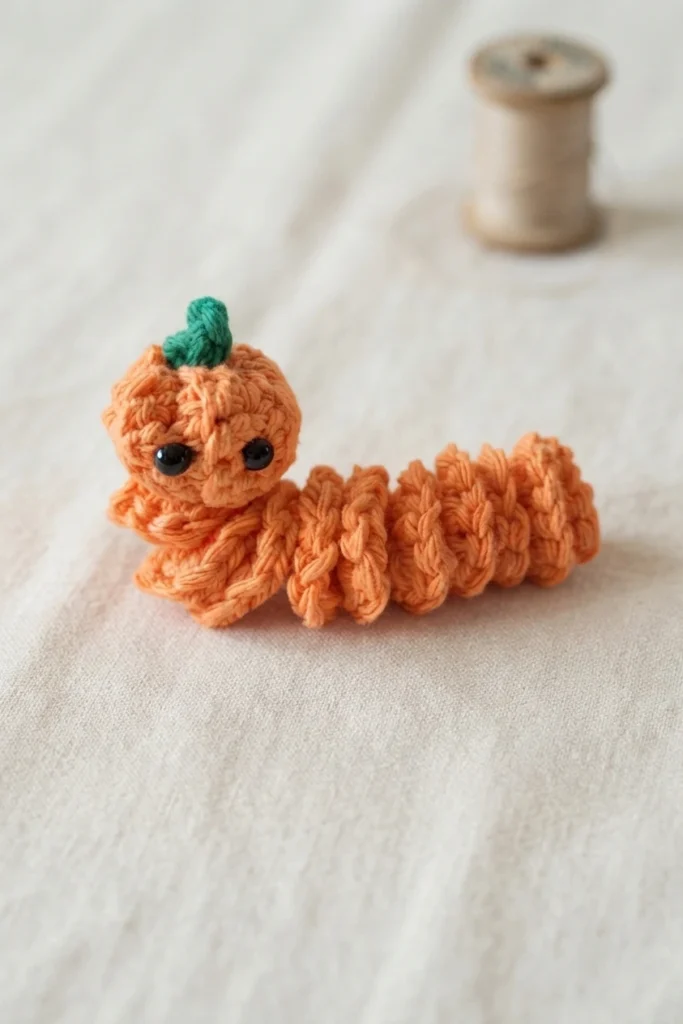
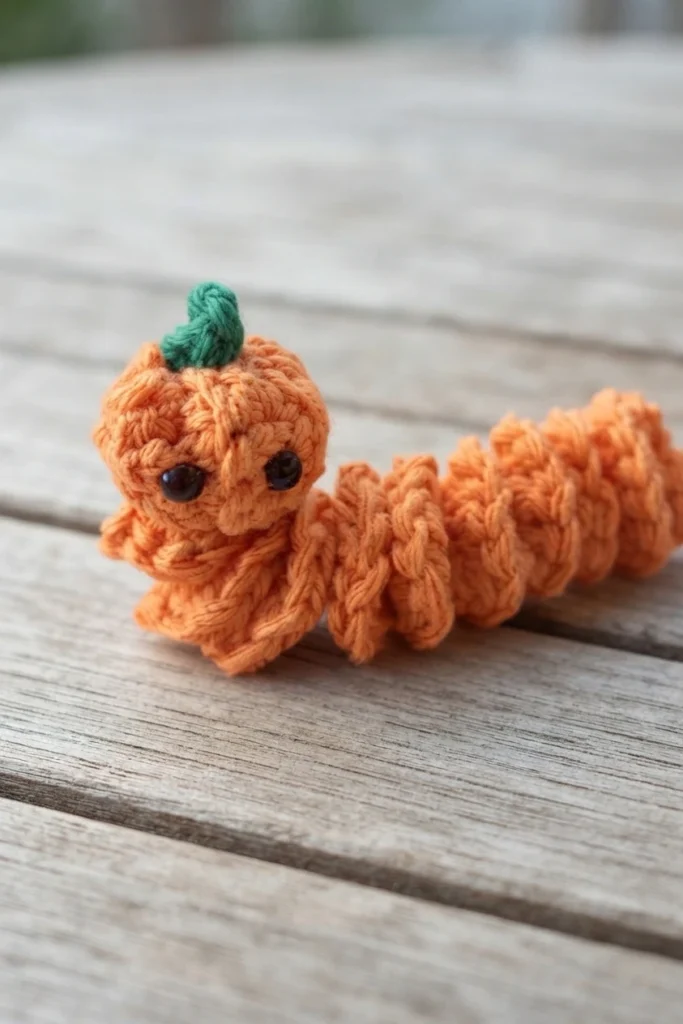
The source notes that any yarn type works as long as the hook corresponds to it, following the yarn label. It also describes two main ways to crochet worry worms: from the bottom up, starting at the tail end, or from the top down, starting with the head.
For this Halloween version, no circle is needed for the head. The head is worked flat, then stitched closed on the sides and top, fitted with eyes and a stem, and stuffed from the bottom. Changing yarn type or hook size makes the pattern larger or smaller. Numbers in brackets at the end of each step indicate the final stitch count for that step, beginning chain stitches do not count as a stitch, and the pattern uses US terms.
Stitch How-To Construction Overview
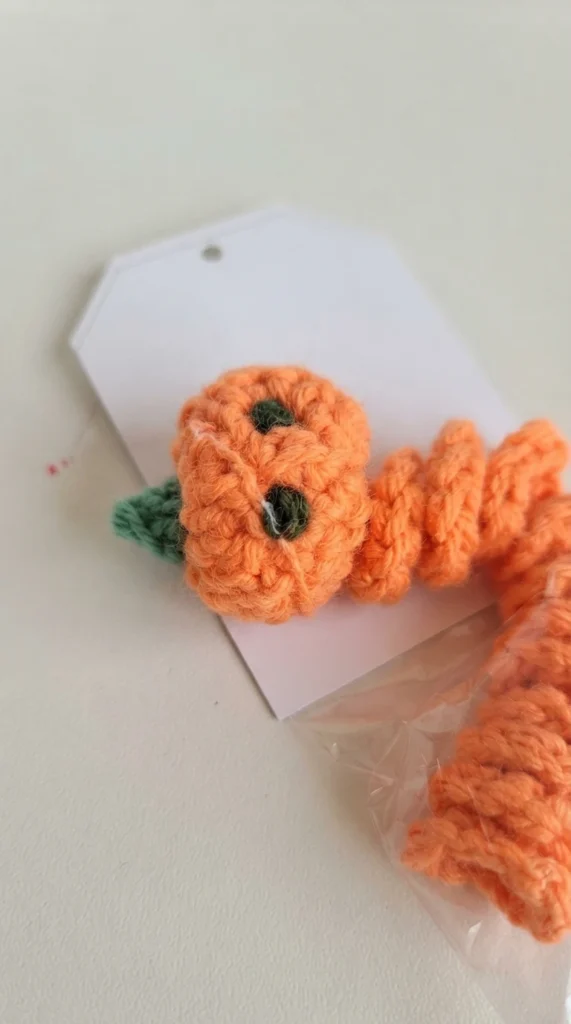
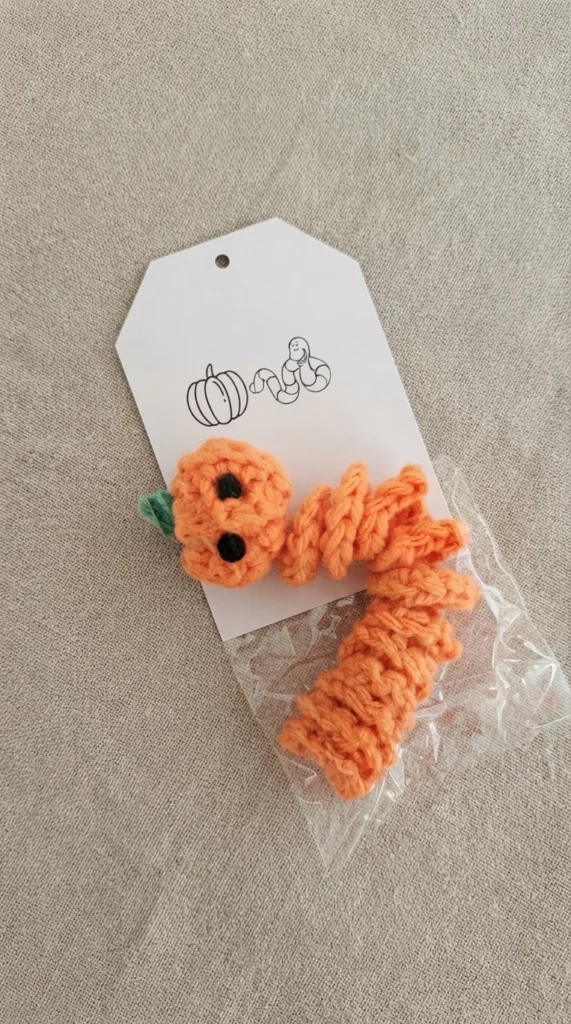
The source includes short explanations of the stitches used, which is useful for anyone meeting scBLO for the first time. Chain is worked by bringing the yarn over the hook from back to front, hooking it, and drawing it through the loop on the hook. Single crochet inserts the hook into the stitch, yarns over, pulls the loop back through, yarns over again, and pulls through both loops. The source notes this equals the UK double crochet.
Slip stitch inserts the hook, yarns over, and pulls the loop back through both the last stitch and the loop on the hook. Fastening off means cutting the yarn after the last stitch, leaving a 6 inch end, drawing it through the stitch, and pulling to tighten. Single crochet back loop only works into the center of the v stitch between the front and back loops, and the source notes it equals the UK double crochet back loop only. There is also a Instructions for Ch (Chain): video if you prefer to see the motion.
Printables
The source offers a text-only ad-free printable version of the Pumpkin Worry Worm that can be bought for a small fee. A second printable contains worry worm poems that can be added as tags if you plan to leave your worms out for people to find. Both are optional extras; the pattern itself is available through the designer’s original page.
Three Halloween Worry Worm Crochet Patterns Bundle Sale (PDF Printable)
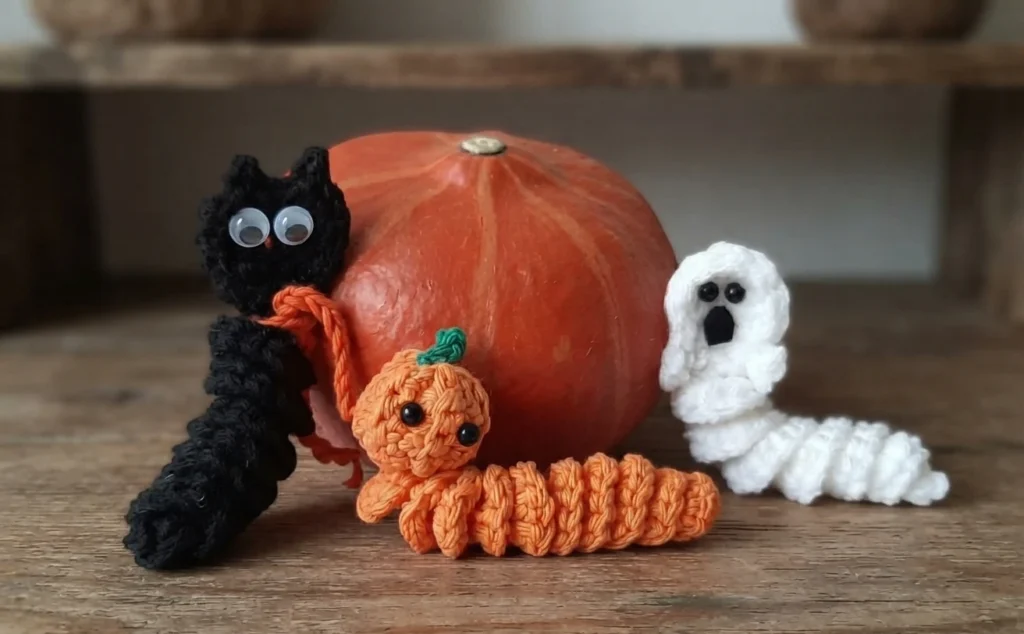
The source also describes a bundle of three Halloween worry worm crochet patterns in an ad-free PDF printable format, available through Ravelry or the designer’s online shop. This is a separate paid option from the single Pumpkin Worry Worm pattern, and the source does not state a price for it here.
PDF Crochet Pattern Overview
This listing repeats the single printable pattern offer: an ad-free printable PDF Pumpkin Worry Worm pattern at $3.99, with a text-only version for easy printing and a version with step-by-step progress photos.
Printable Poem Tags
This version of the poem tags listing shows four poem variations, along with choking-hazard tags and an editable file for Canva.com. The tags are pre-designed for Random Acts of Kindness or Trick-or-Treats, and the listing price is $3.99.
PDF Crochet Pattern + Printable Poem Tags
The bundle listing pairs the pumpkin worry worm PDF pattern with the editable poem tags, shown at $8.98 reduced to $6.99. It includes the text-only printing option, the progress photo version, four poem variations, choking-hazard tags, and Canva editing.
6 PDF Worry Worm Crochet Patterns
The six pattern bundle is listed at $26.94 reduced to $19.99. It covers six seasonal designs for Spring, Easter, Fall or Halloween, Valentine’s, and Christmas, with text-only patterns, progress photo patterns, and printable poem tags for the basic worry worm.
15 PDF Worry Worm Crochet Patterns MEGA Bundle
The mega bundle is listed at $79.84 reduced to $39.99 and contains 15 special designs across Spring, Easter, Fall or Halloween, Valentine’s, and Christmas, including designs with beads and googly eyes. Text-only patterns, progress photo patterns, and one set of printable poem tags for the basic worry worm are included.
Pumpkin Worry Worm Crochet Pattern Written Construction Overview
Pumpkin Stem
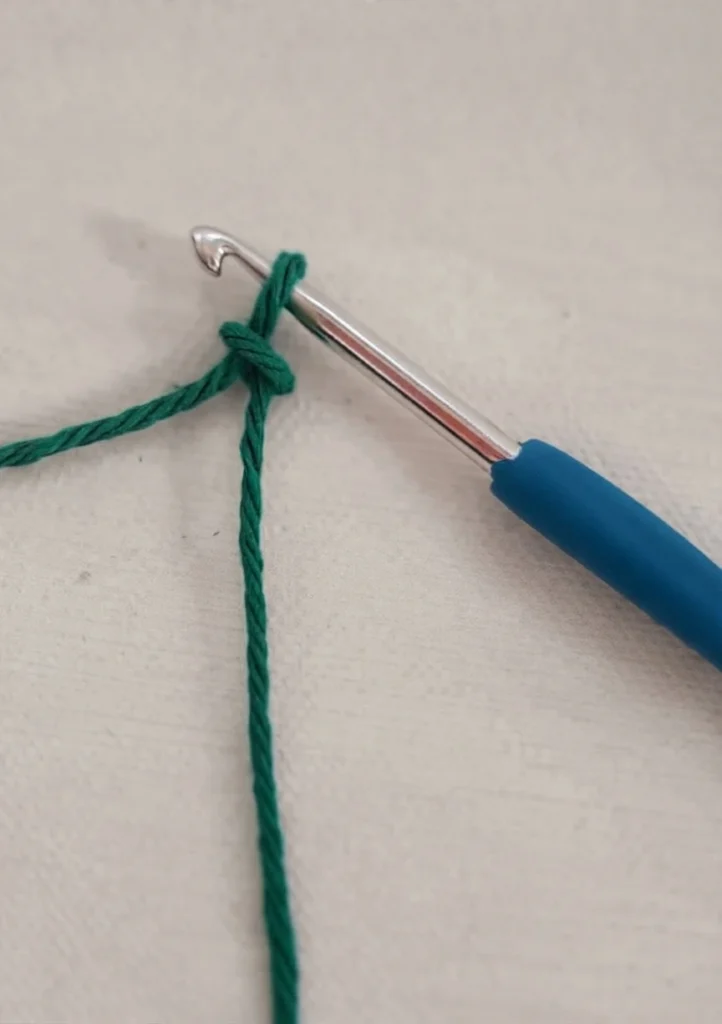
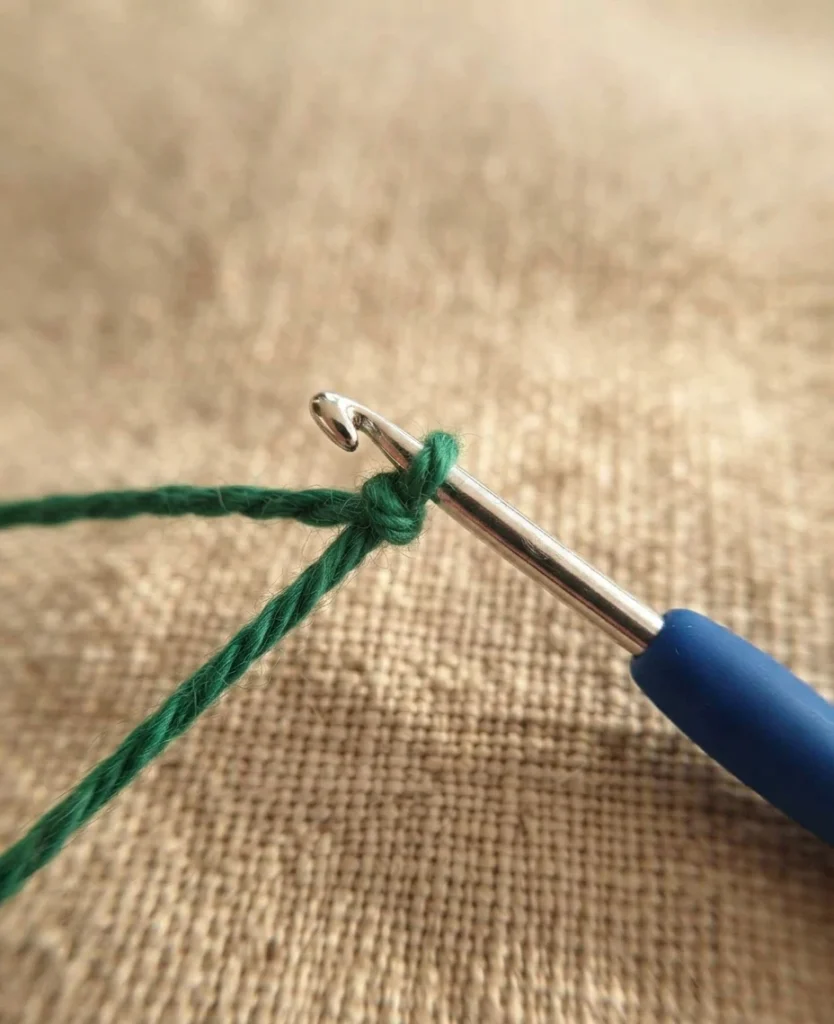
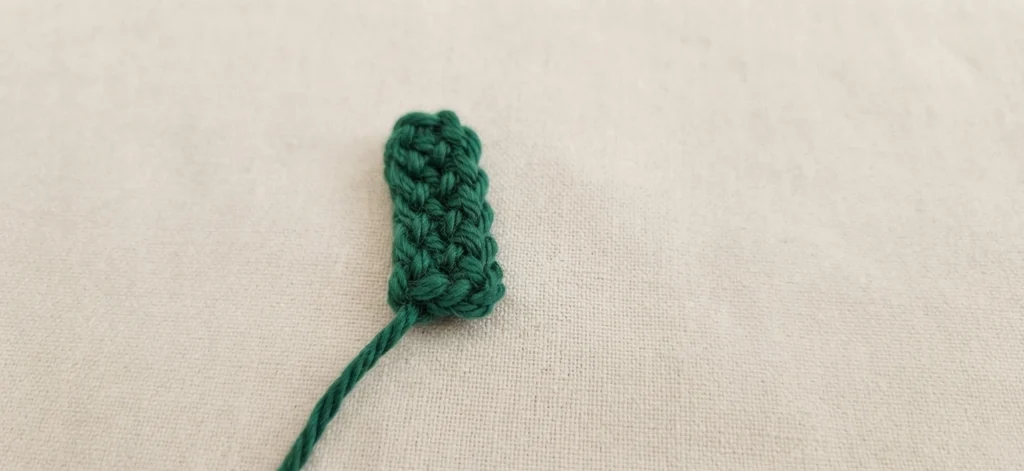
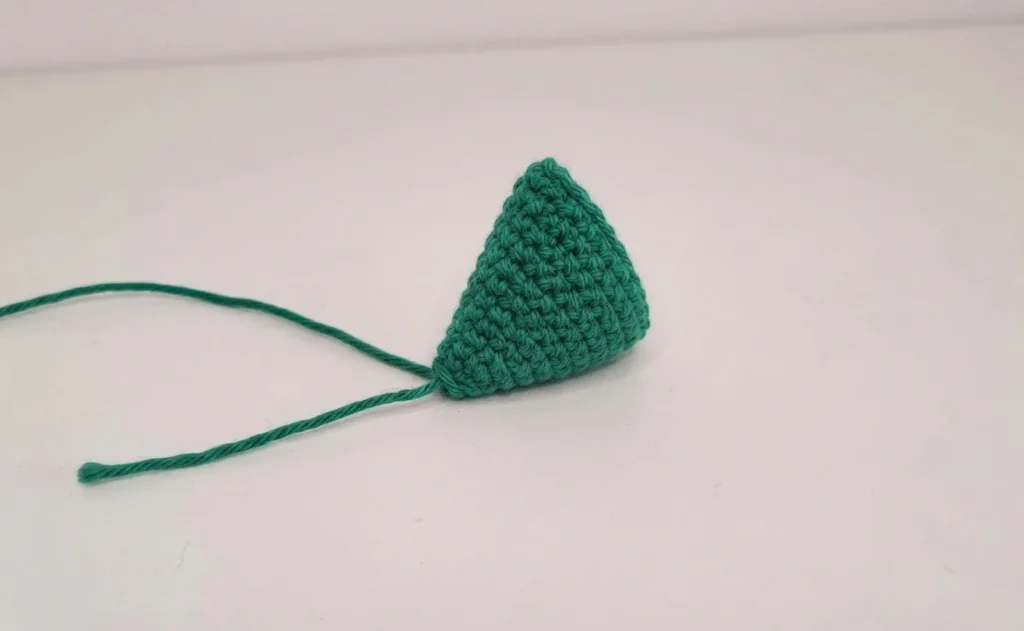
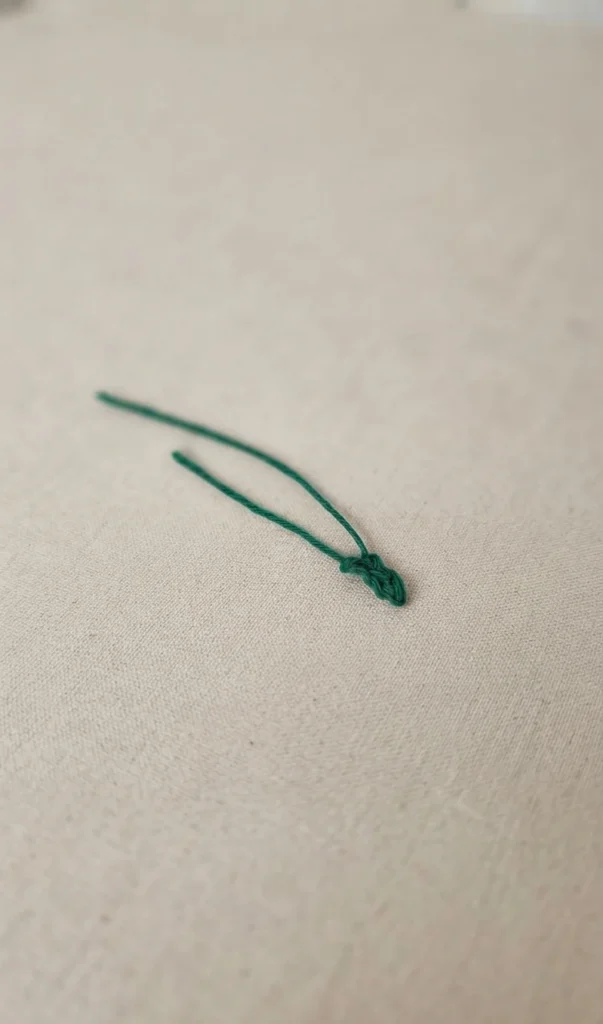
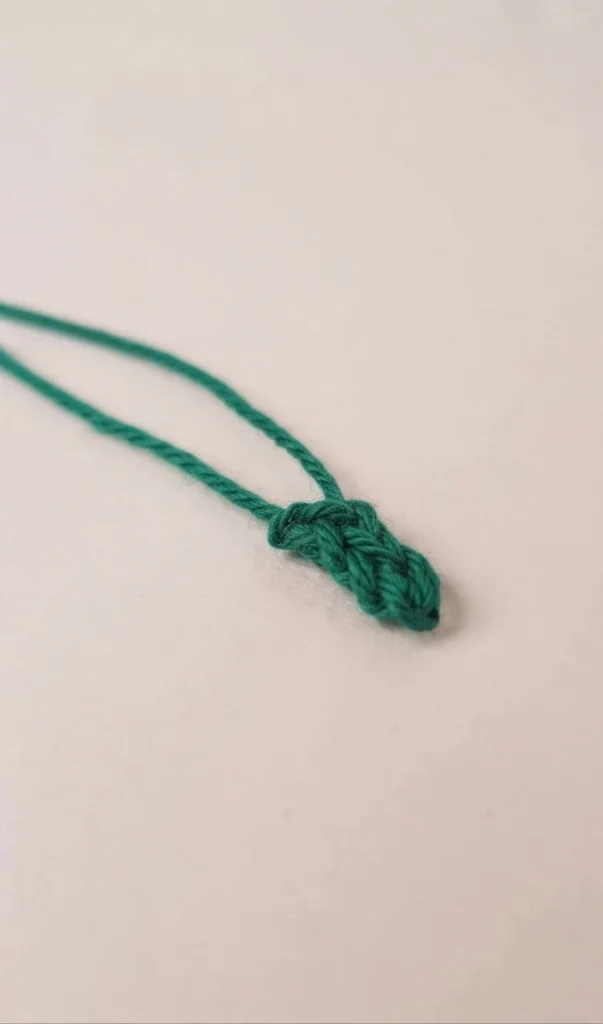
The stem is a small green piece worked in two short rows. Row 1 begins with a slip knot leaving a 4 inch tail, chains 3, and turns. Row 2 slip stitches into the next 2 stitches. The yarn is cut and fastened off with a second 4 inch tail, so two tails remain for attaching the stem to the head later.
Pumpkin Head
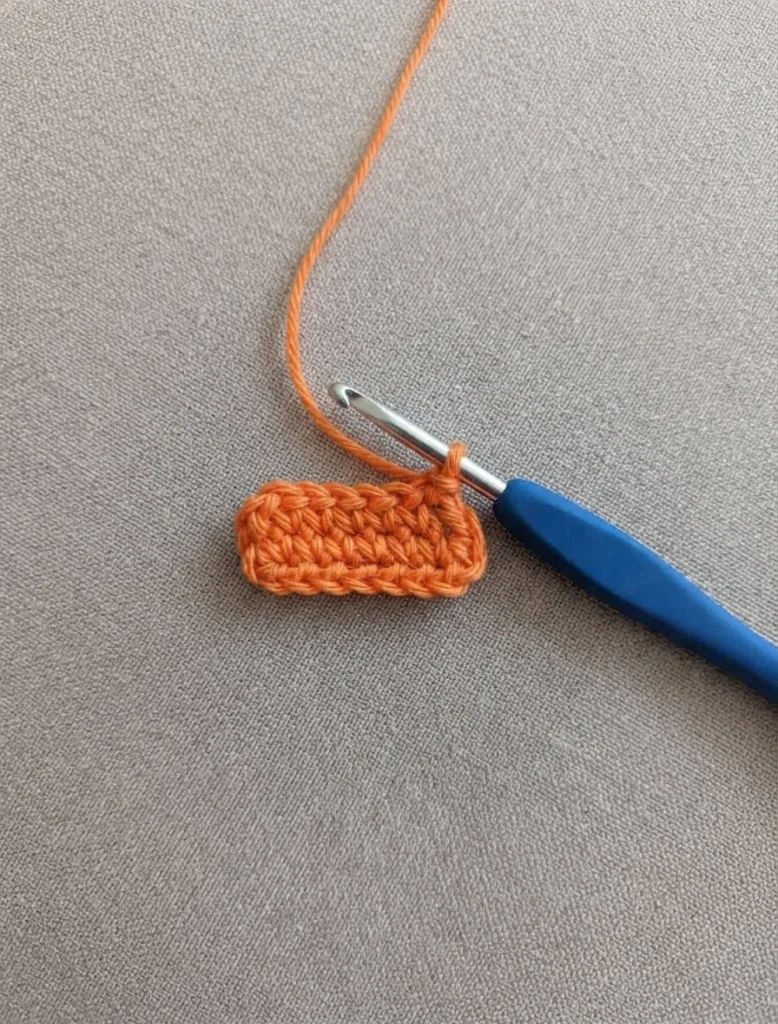
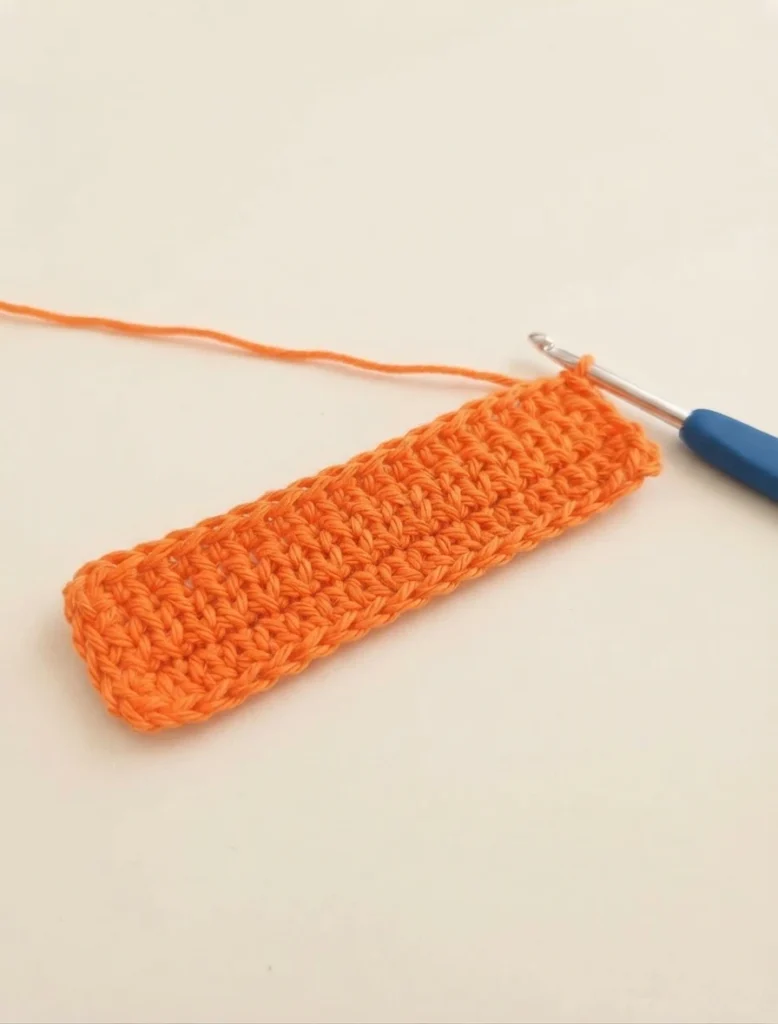
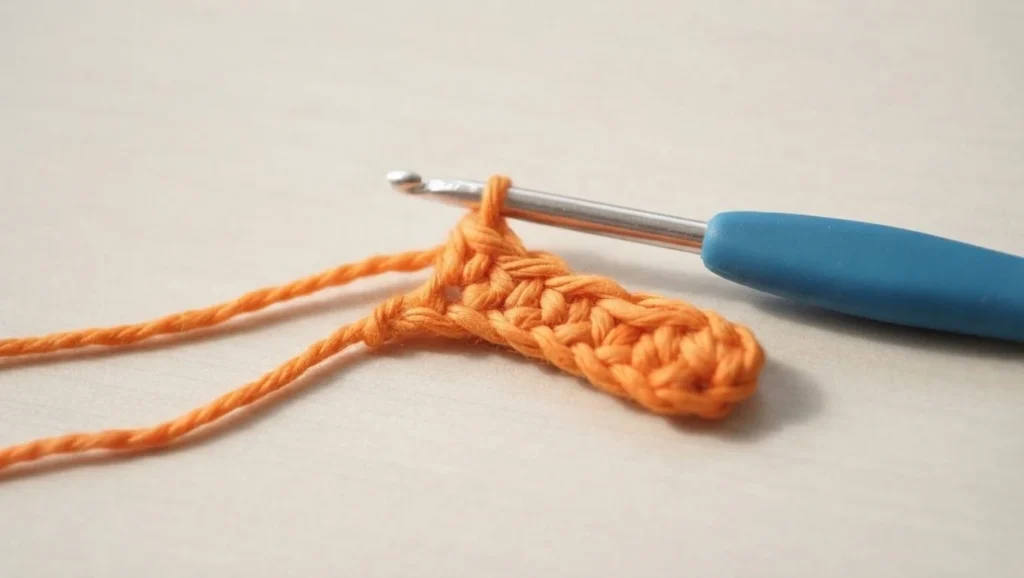
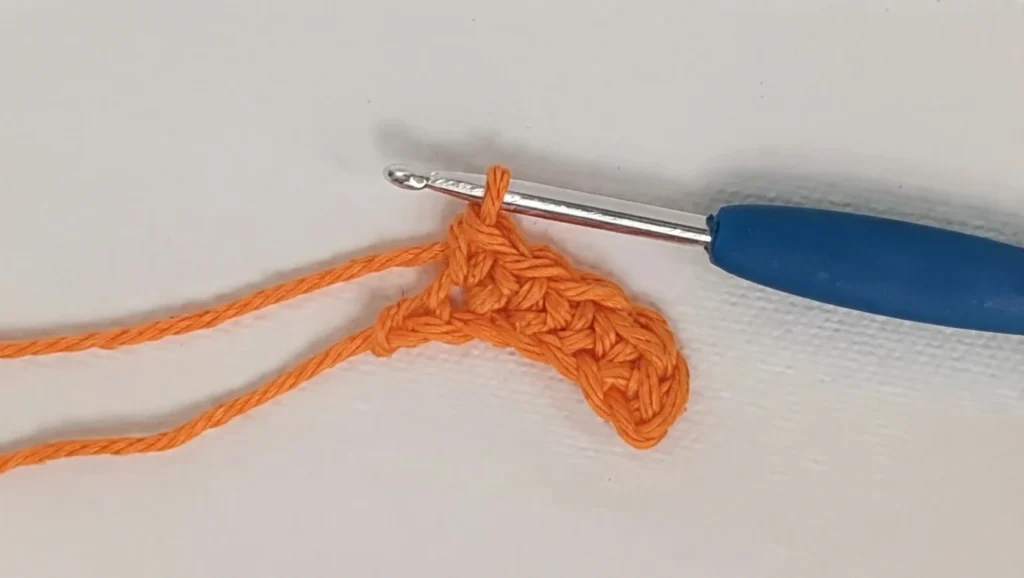
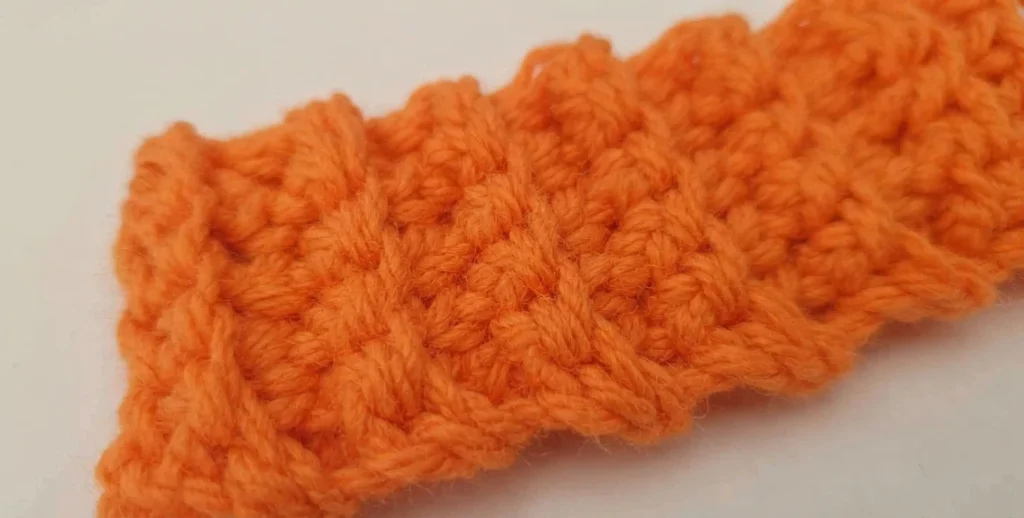
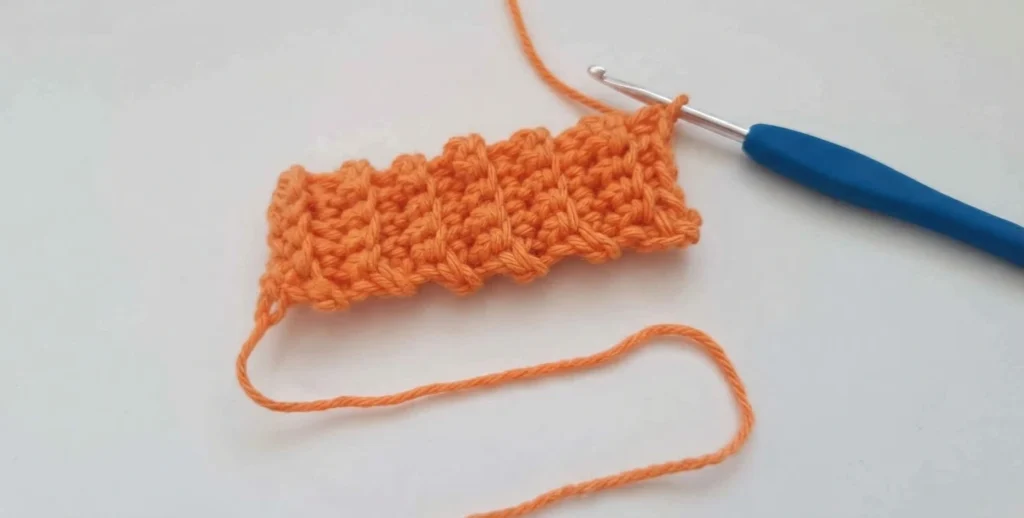
The head begins in orange yarn with a long 10 inch starting tail, a slip knot, and a chain of 6. Row 2 works single crochet back loop only across. Rows 3 through 12 repeat a chain 1 and 5 scBLO across. The yarn is not cut at the end of the head, because the body continues from it. The result at this stage is a rectangular panel that gets assembled later.
Worry Worm Body
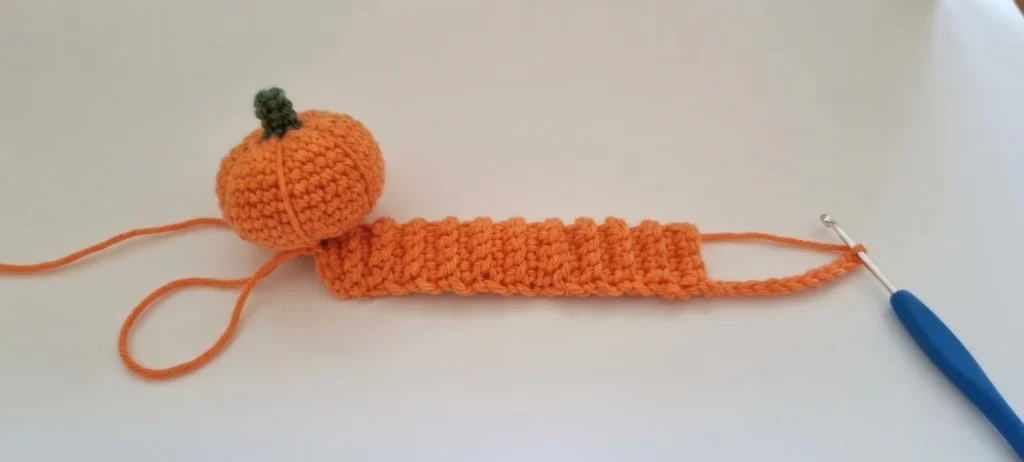
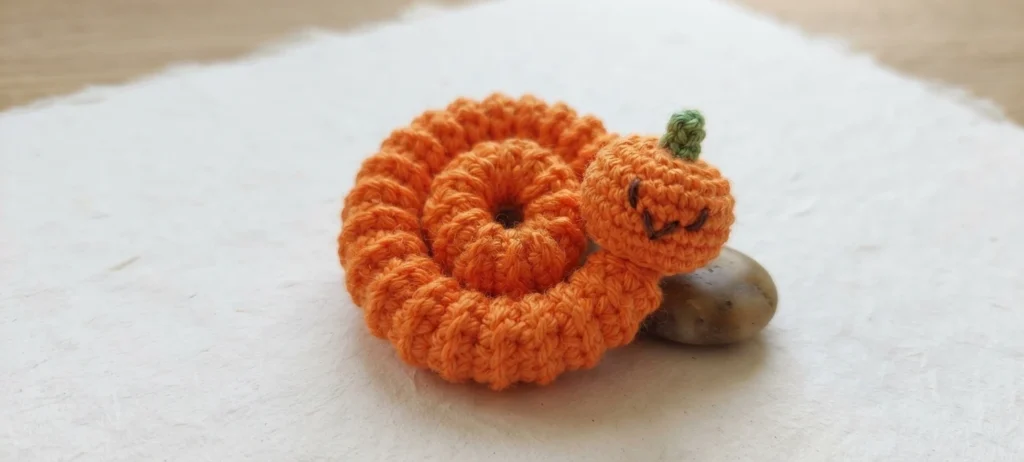
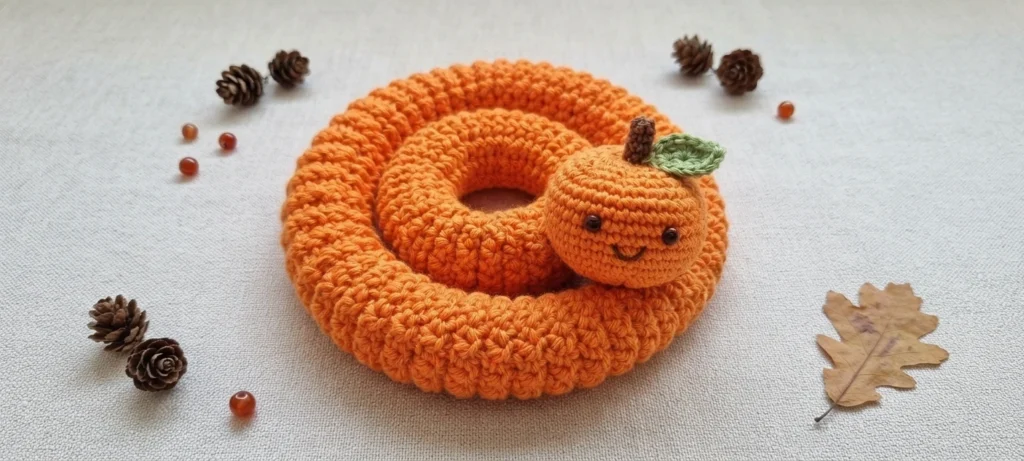
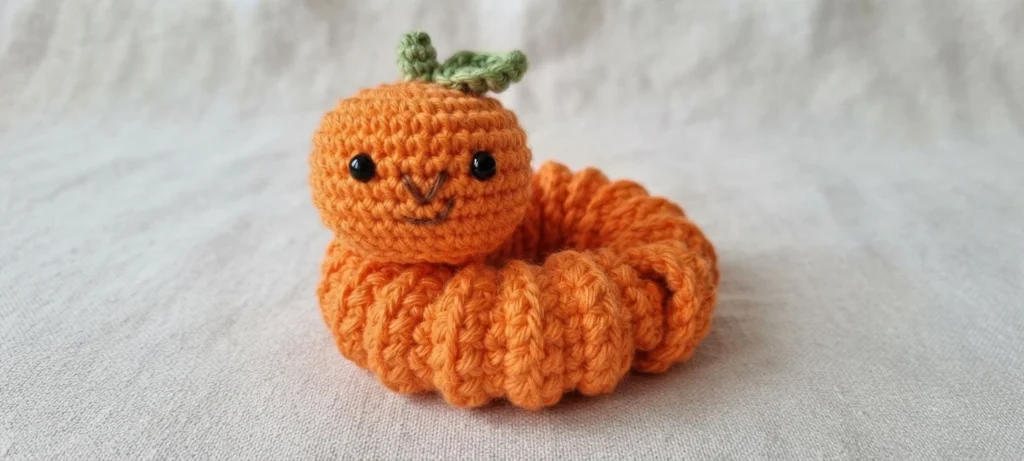
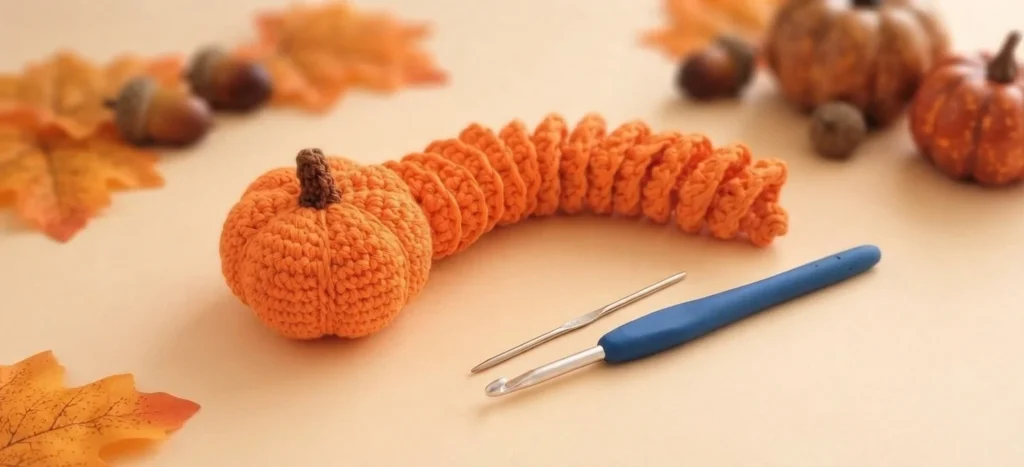
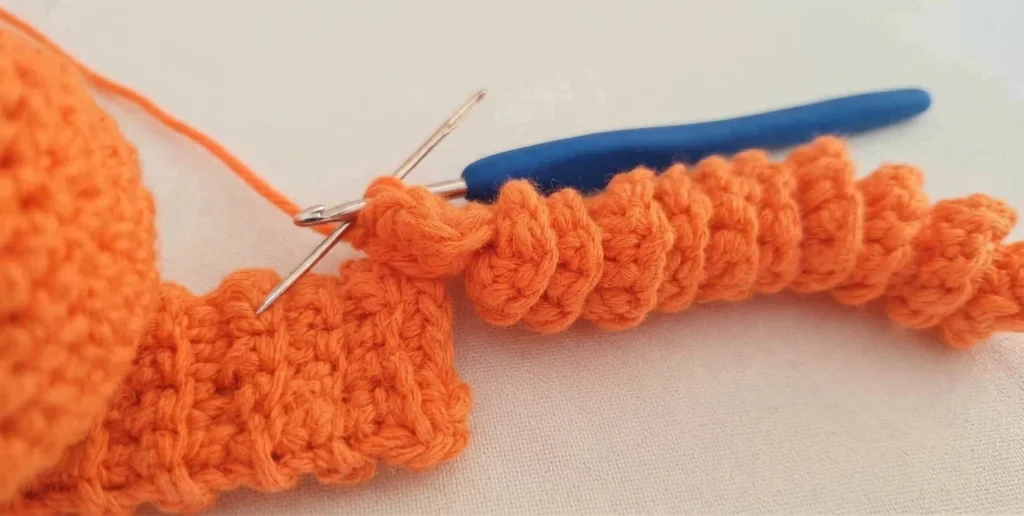
From the rectangular head, the body continues with a chain of 31, which the source describes as the center of the worm’s body. Four single crochets are placed in the second chain from the hook and in each chain stitch back up to the head. The body curls naturally as you work, and the curls are adjusted later. A slip stitch joins the top back to where the chain began, pulled tightly so the head does not flop, then the yarn is cut with a 4 inch tail and fastened off.
Assembling Pumpkin Head
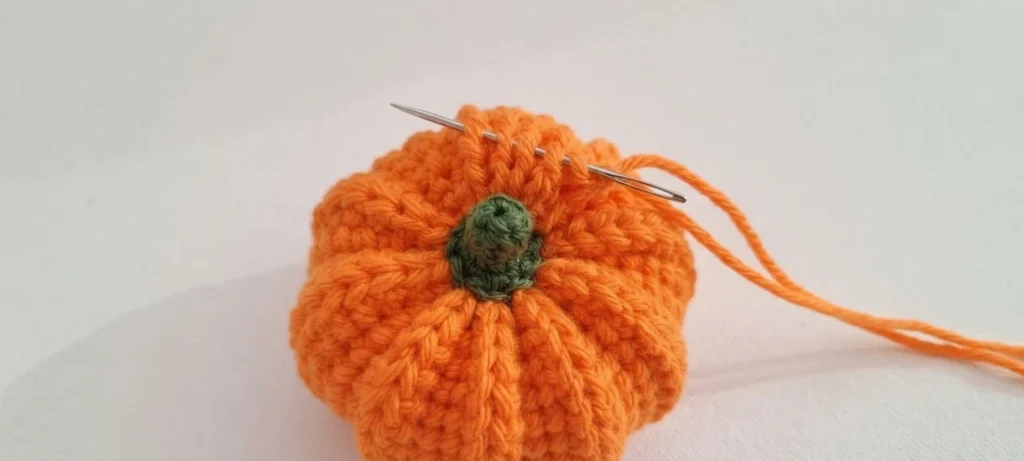
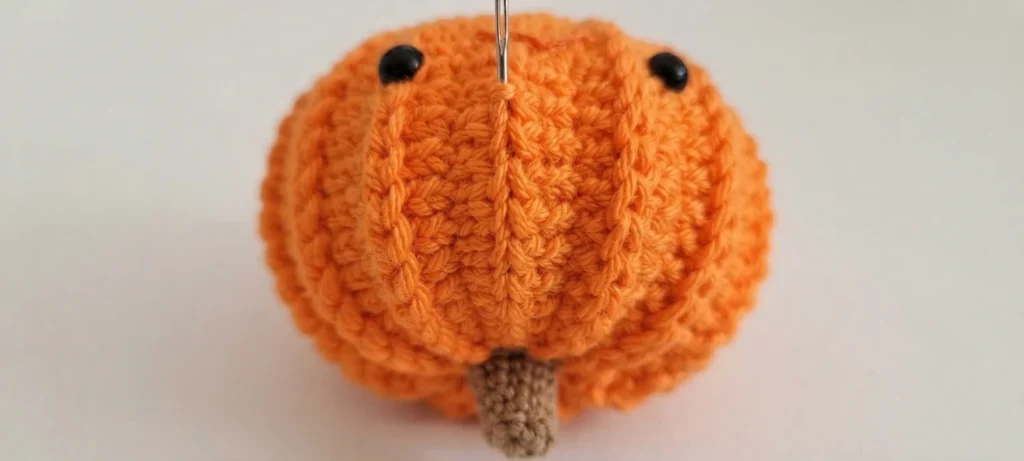
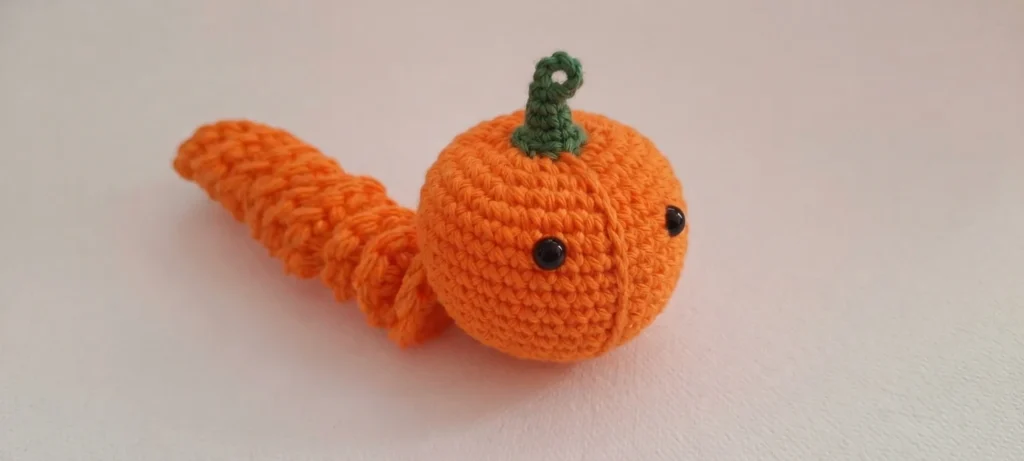
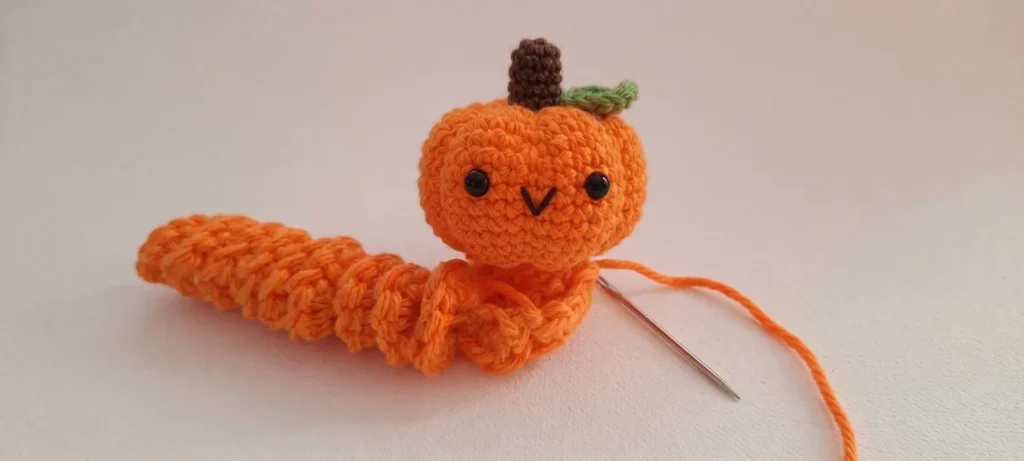
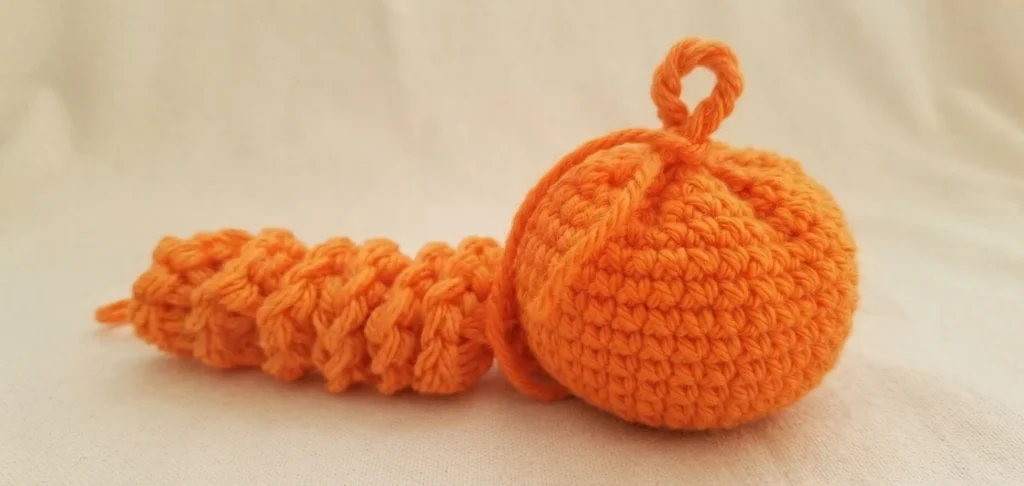
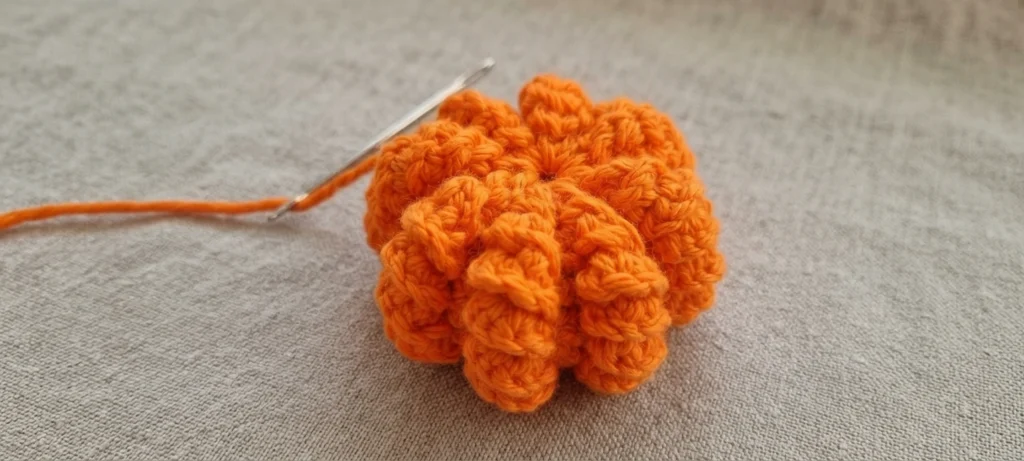
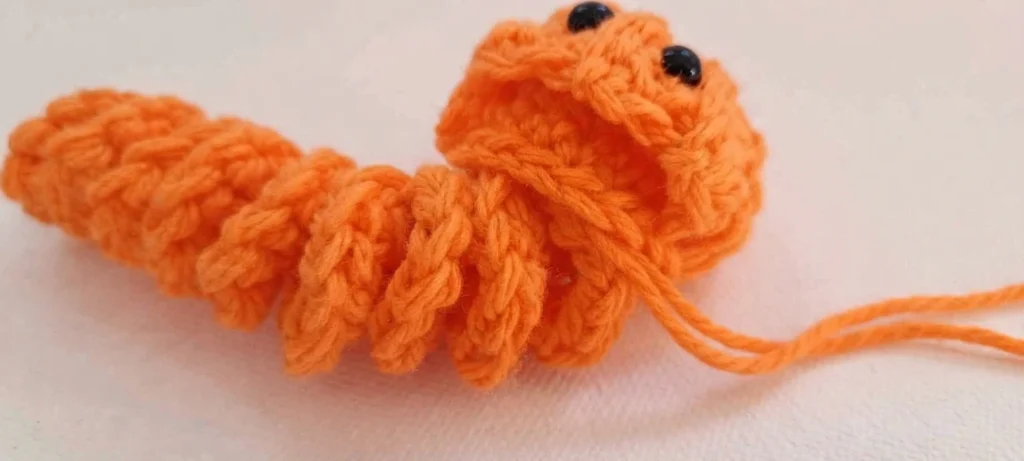
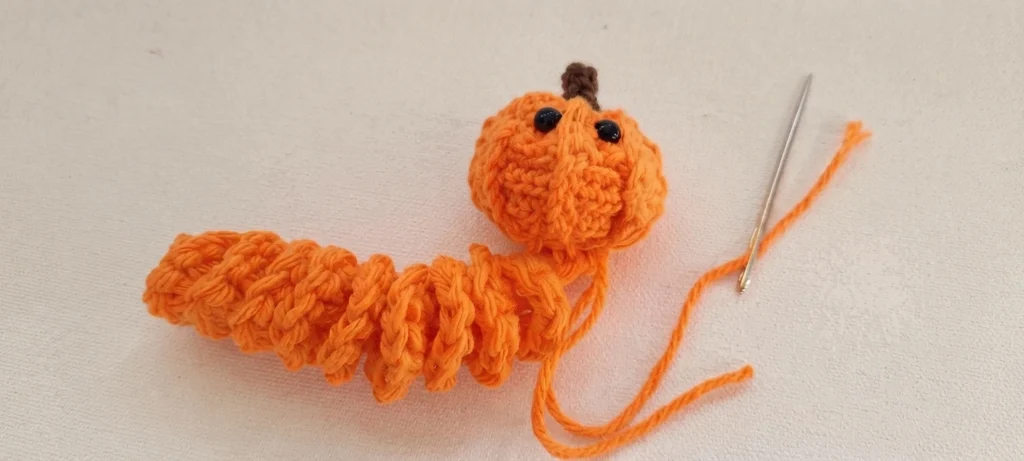
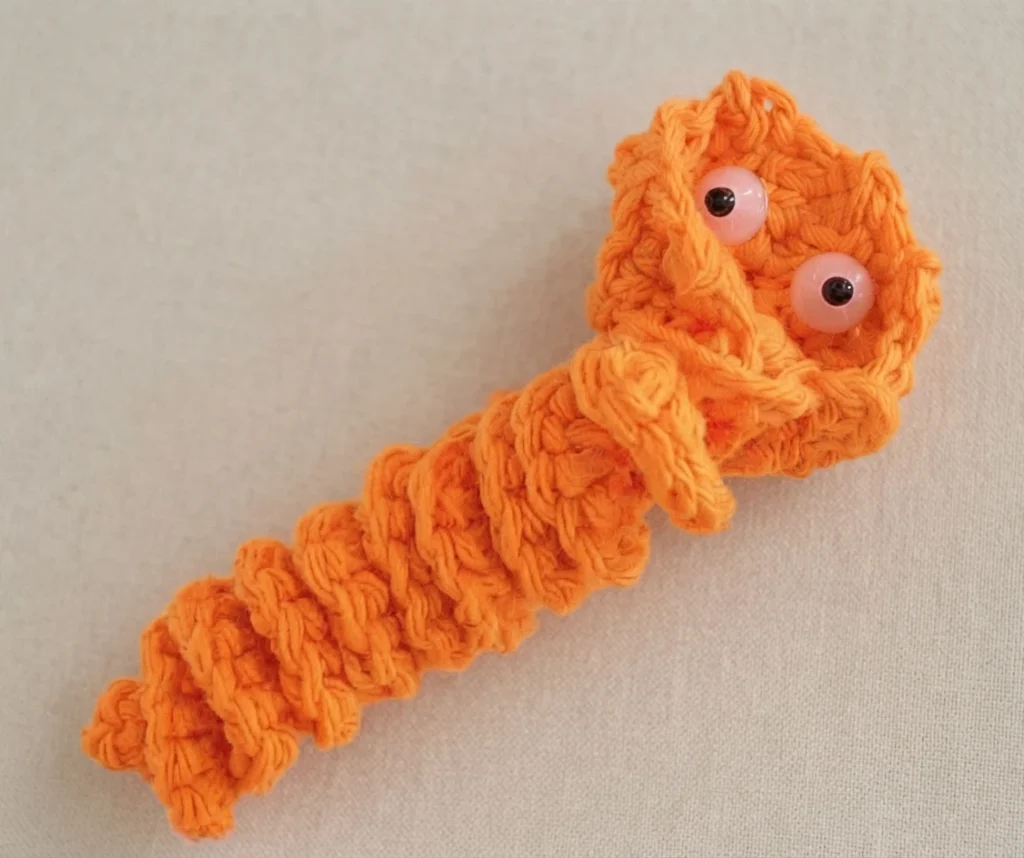
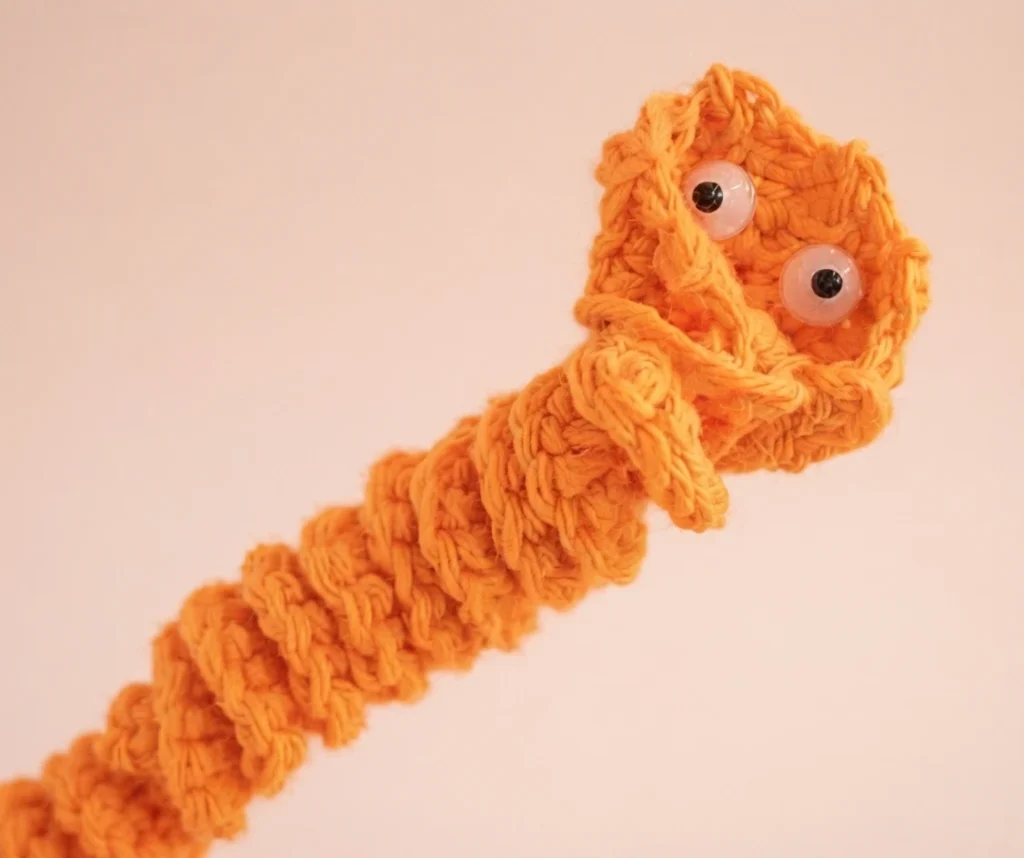
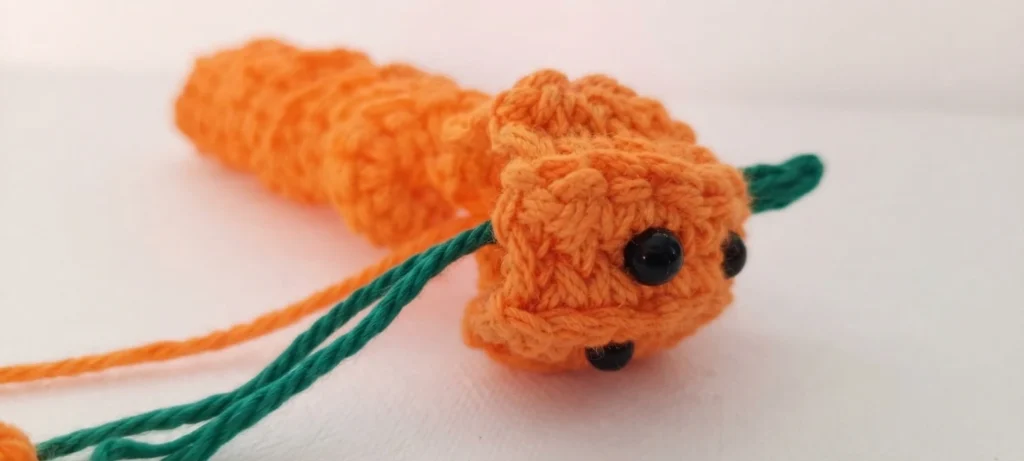
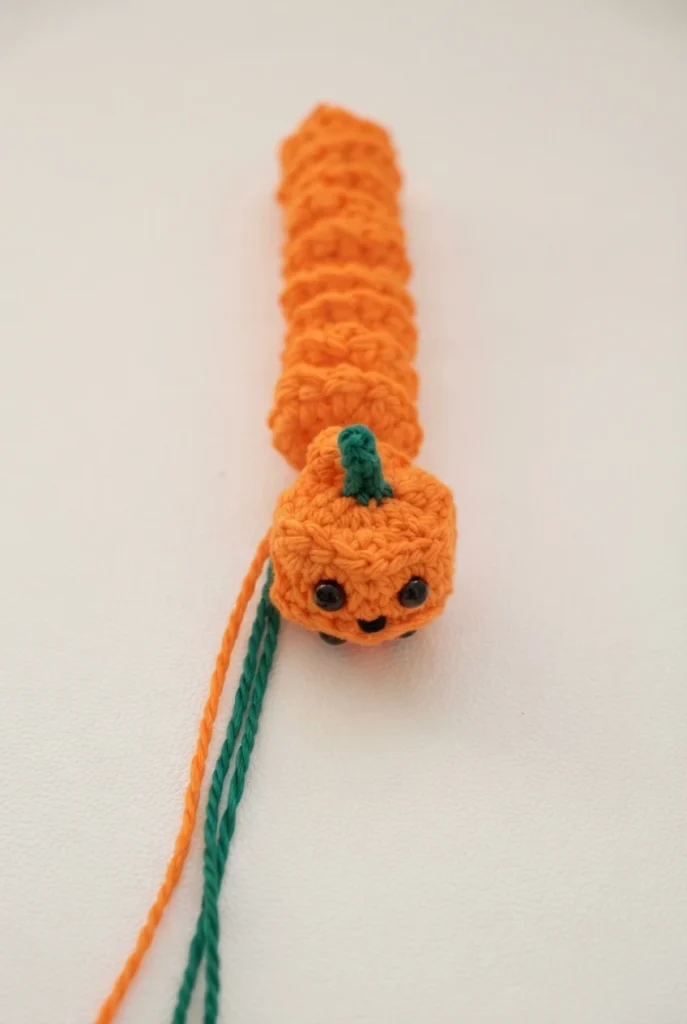
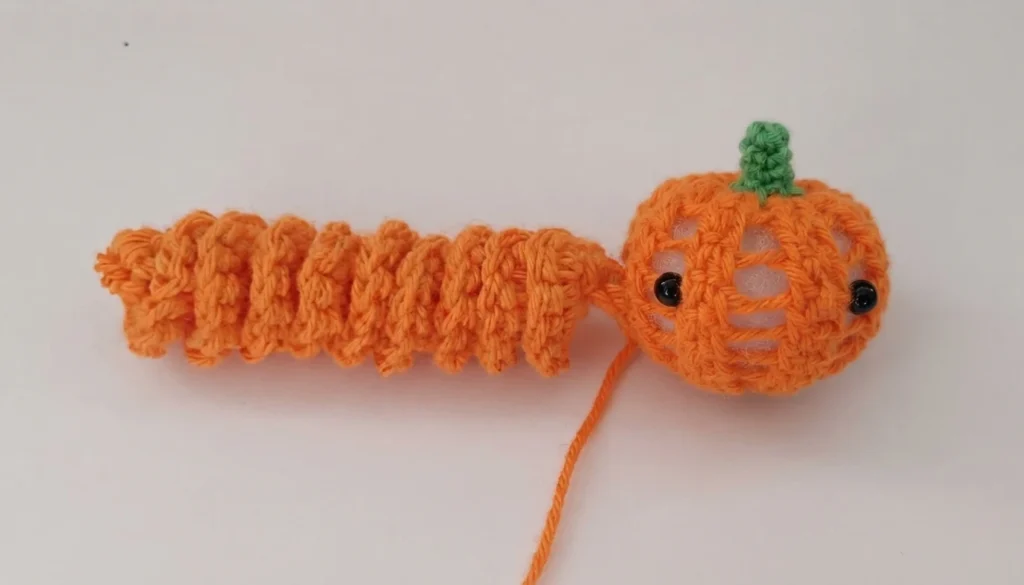
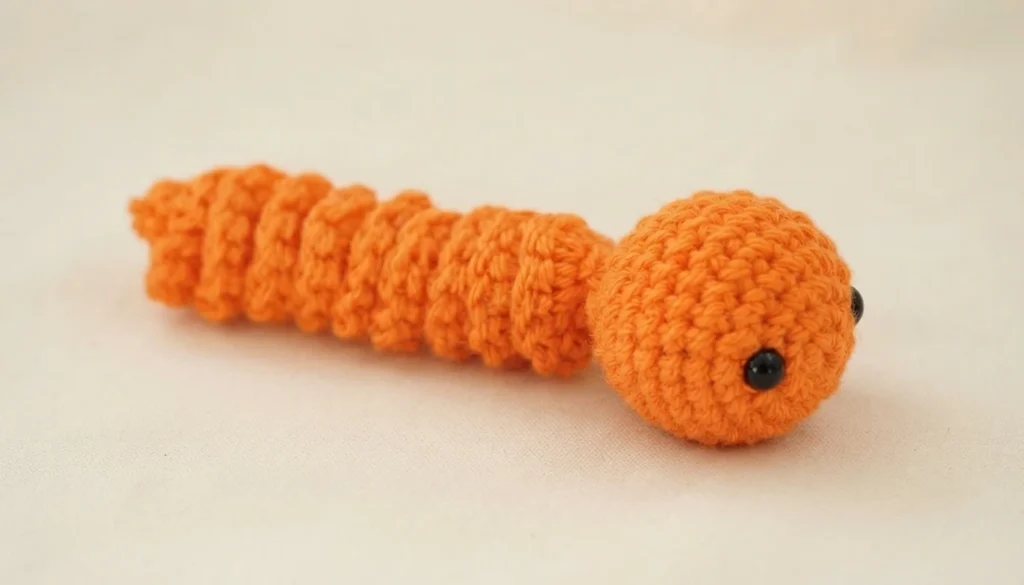
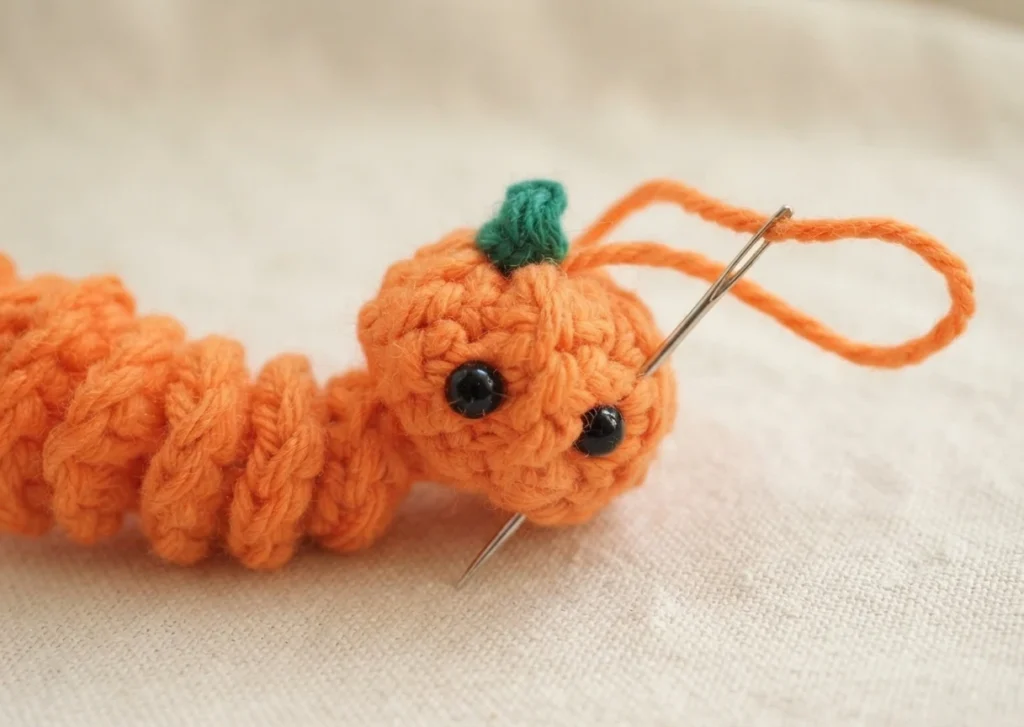
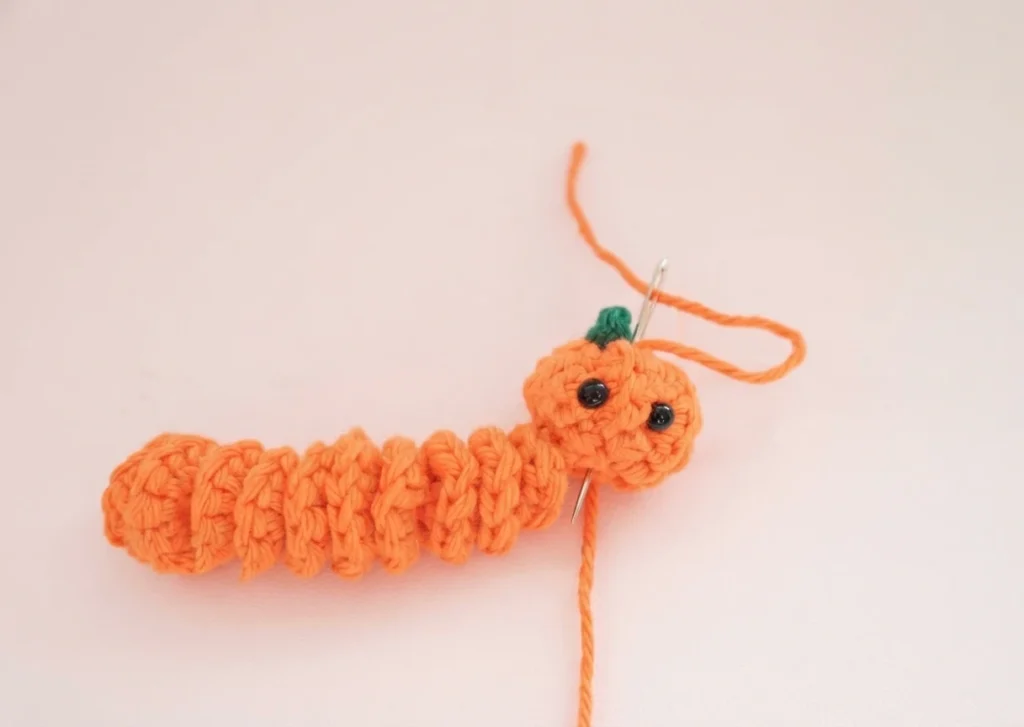
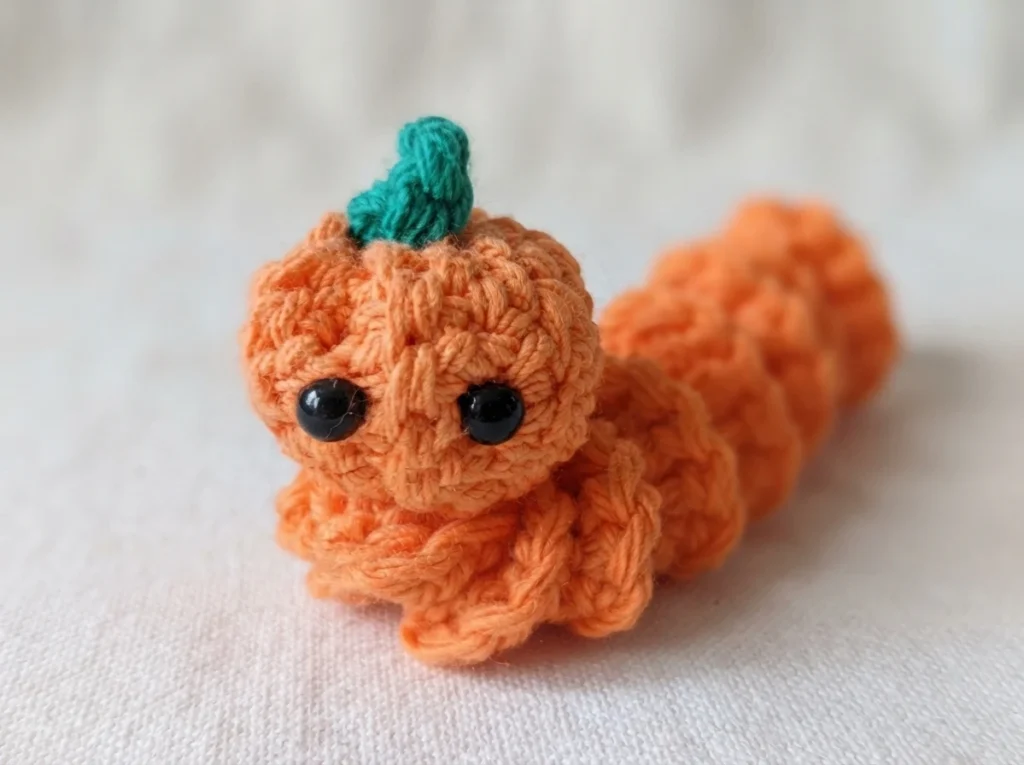
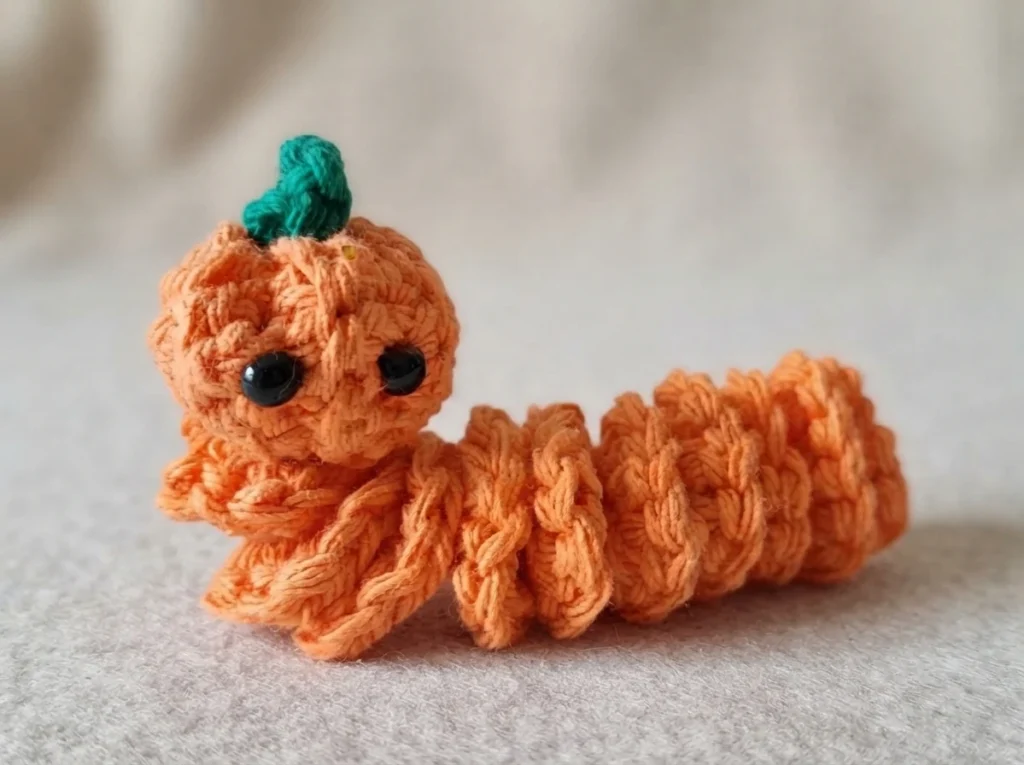
Assembly starts at the top, where the 10 inch beginning tail is threaded onto a darning needle and sewn through the top edge with a running stitch, then pulled tight to gather the opening. The source warns against pulling so hard that the yarn snaps, and notes the top can be tightened later while the stem is attached.
For the side seam there are two options. With a darning needle, the sides are joined using a mattress stitch, working on the right side of the rectangle and stitching into the inner loops only so the ridge stands out with raised v shapes. With a crochet hook, the sides are joined using slip stitches, connecting the chain stitch of one side to the back loop of the other. There is a video tutorial showing you how to join using slip stitches.
For the face, toy eyes go in the third stitch from the bottom and directly opposite the seam, leaving one ridge between the two eyes, secured from the back. Alternatives include glue-on googly eyes, sewn fiber art beads, a French Knot, or two dots drawn with a permanent marker. The stem’s two strands are then inserted separately, one or two stitches apart, and tied with a double knot inside the head before stuffing.
The head is stuffed from the bottom opening without overstuffing, the bottom is sewn closed with a running stitch, and finally the needle is passed vertically from the bottom center to the top center, catching a stitch and pulling back through to squash the pumpkin into its distinctive shape.
Finishing & Adjustments
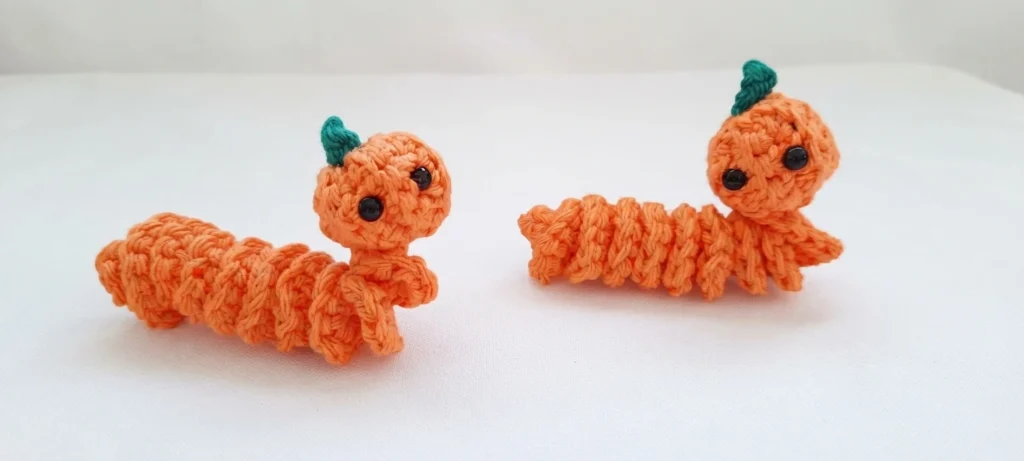
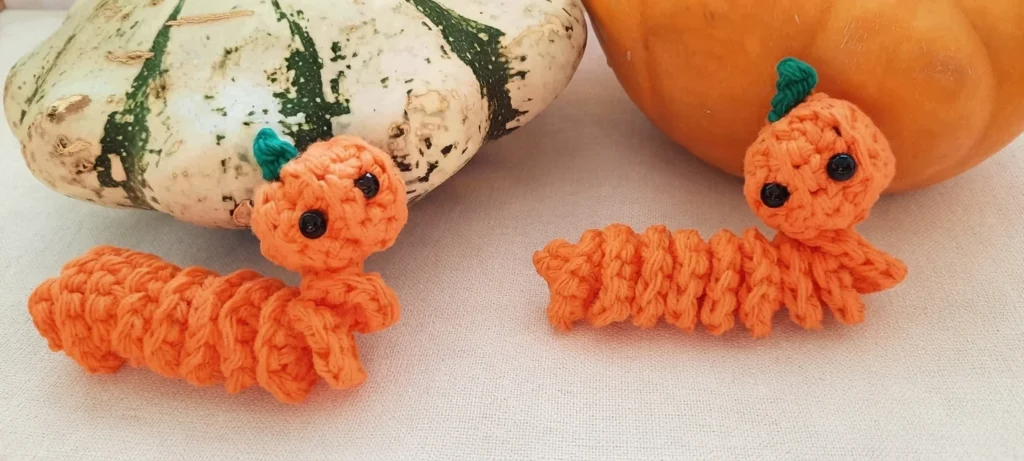
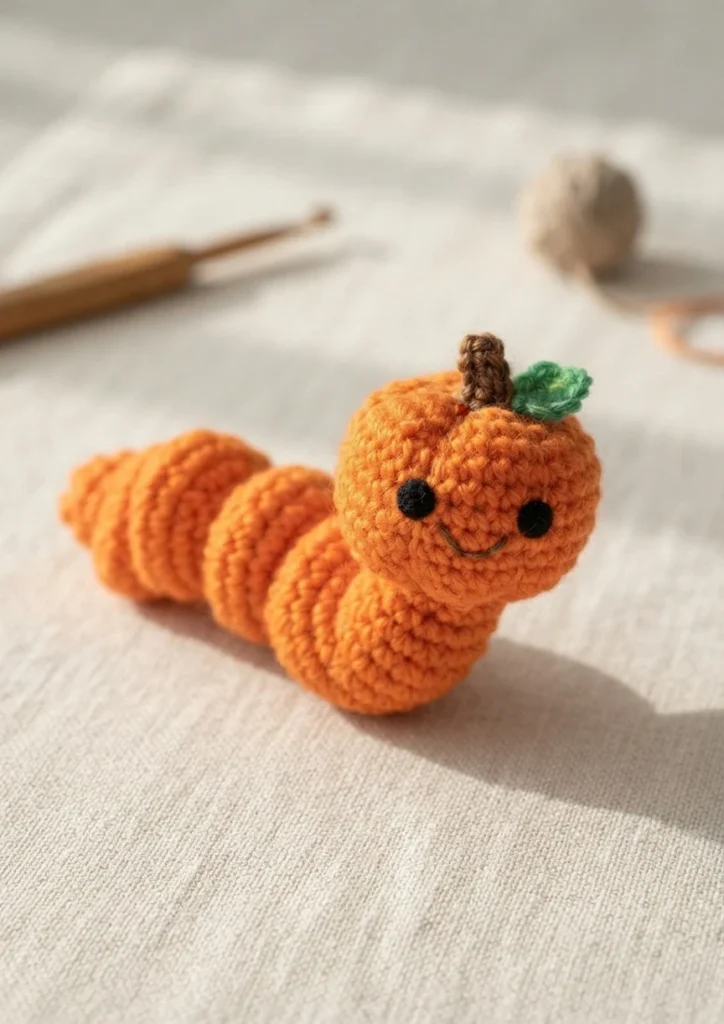
If the pumpkin top is not closed tightly enough, the source suggests sewing it closed with a tapestry or darning needle before pulling it through the bottom. Cut the yarn with a short tail and weave in the ends. If the worm did not curl as expected, running a finger along the curls places them in position, and a small twist helps them settle. The finished worm can then go into a plastic baggie or organza bag for distribution.
Done With Your Project?
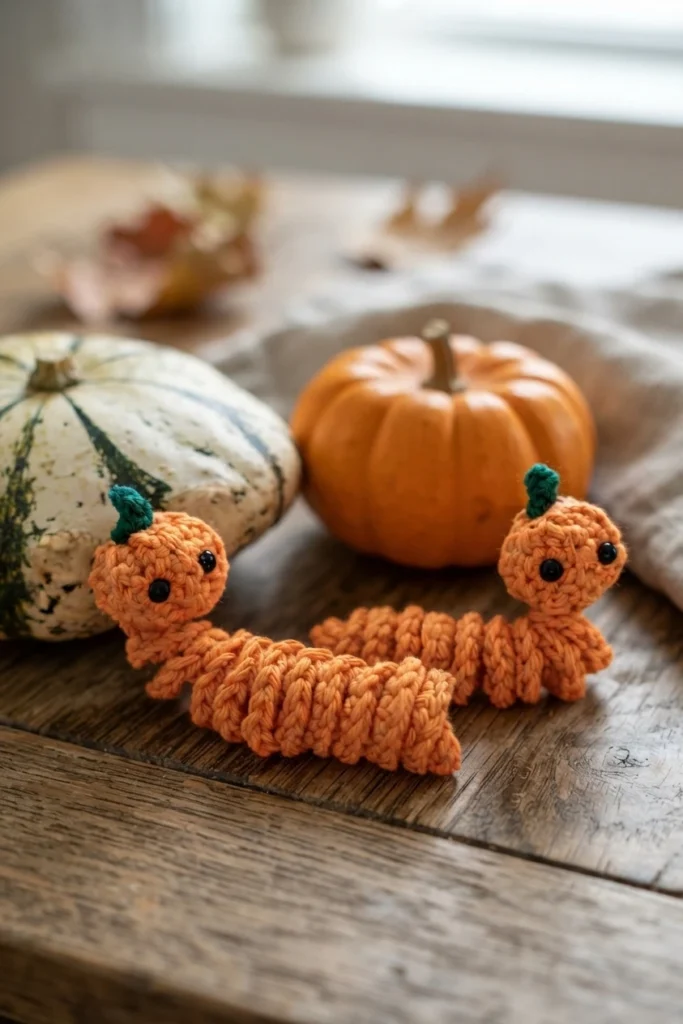
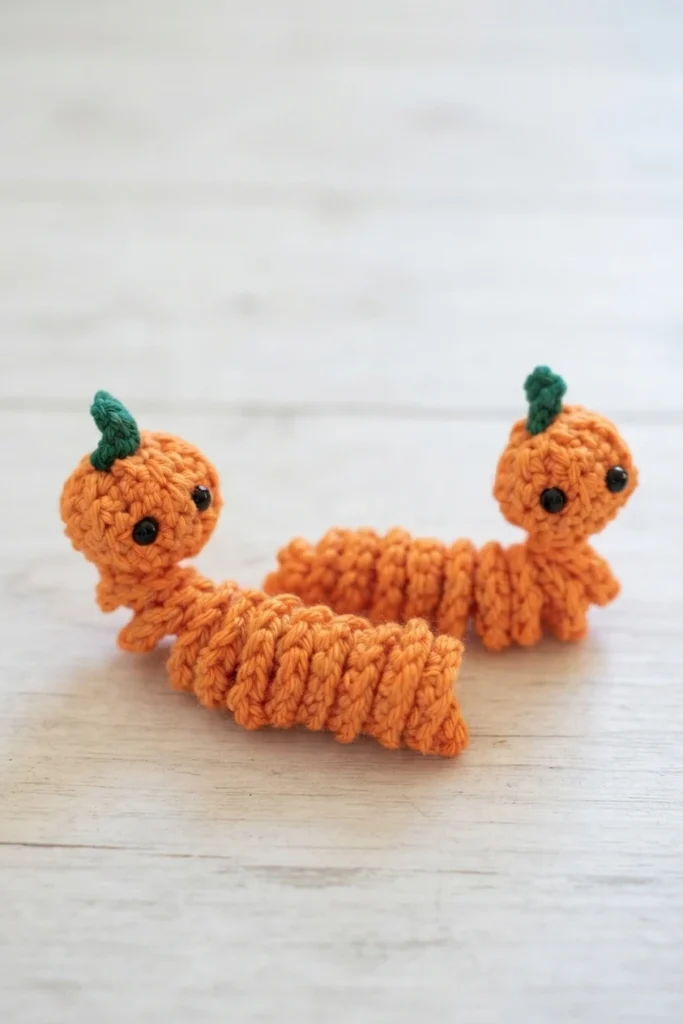
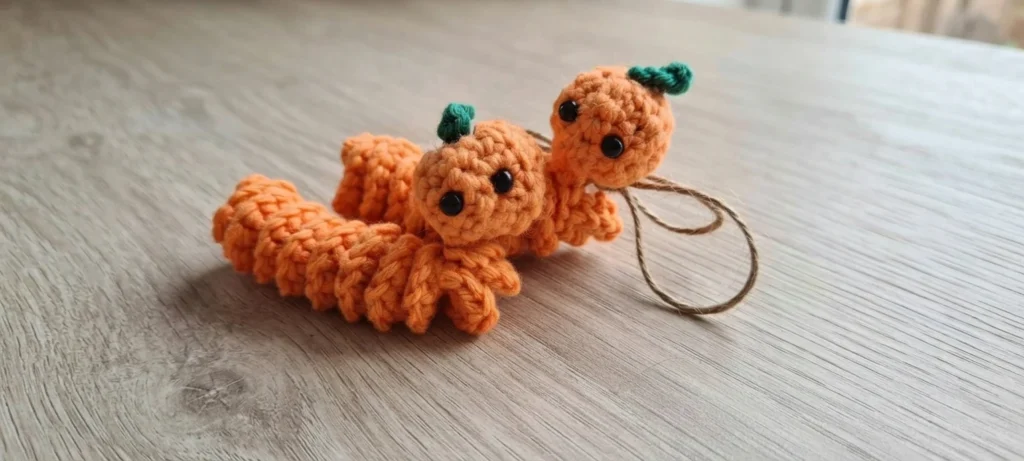
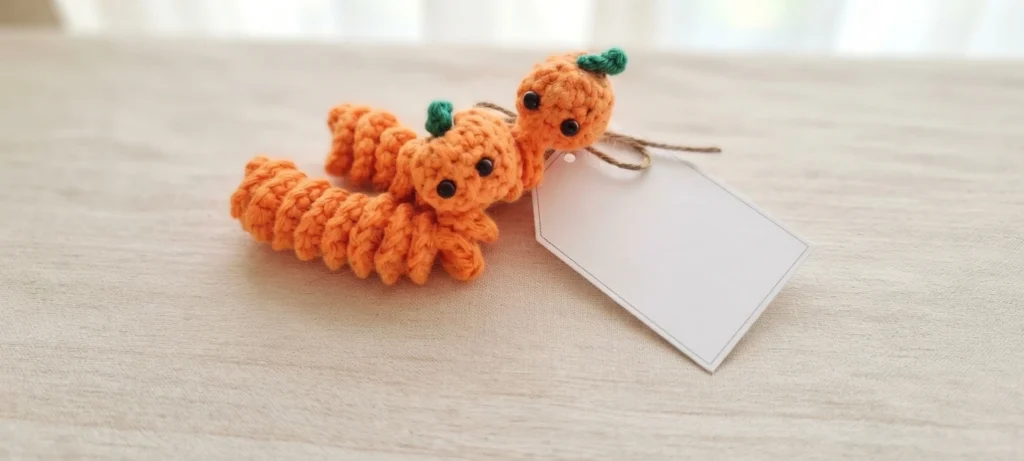
The source invites makers who finish the Pumpkin Worry Worm to share their make on social media and tag the designer. Questions and comments are welcome in the comment section, and the pattern or poem can be saved to Pinterest if you are not ready to work it yet. The source also offers free printable Halloween gift tags that can be downloaded and added to crocheted Halloween gifts.
Halloween Handmade With Love Gift Tags (FREE PDF Printable)
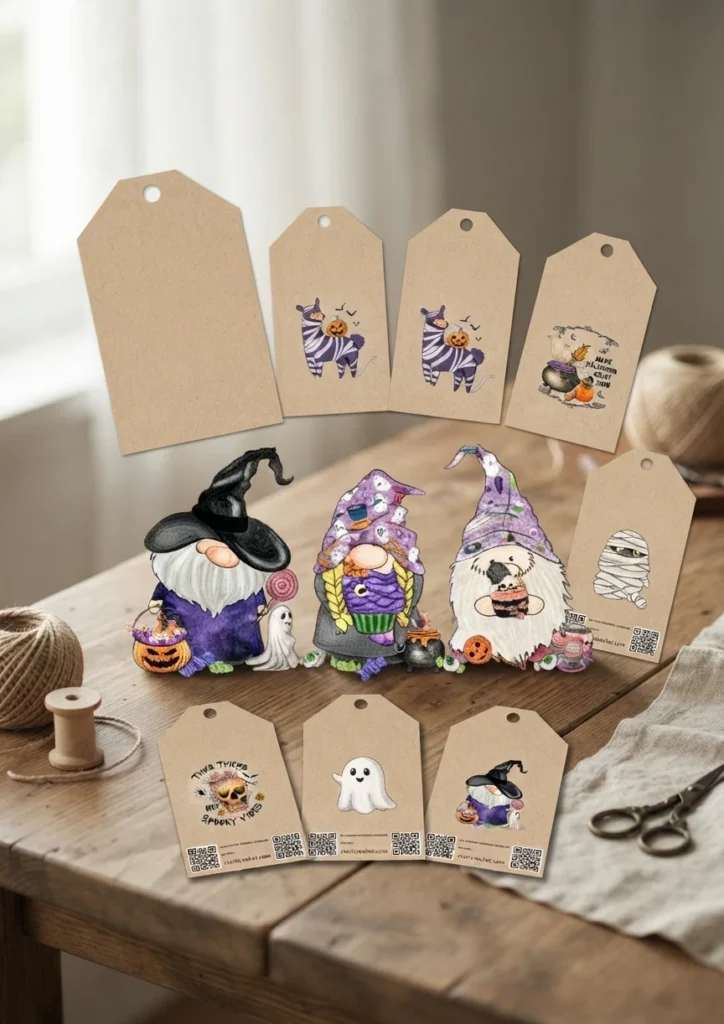
The designer provides these free printable gift tags for use with crocheted Halloween projects.
For more seasonal ideas, you might enjoy our overview of the Fall Pumpkin Coaster Crochet Pattern - Get Festive: Pattern Overview or a different take on the same idea in the Ravelry: Worry Worm Finger Puppet pattern by Divina Rocco: Pattern Overview.
Love Pumpkins?
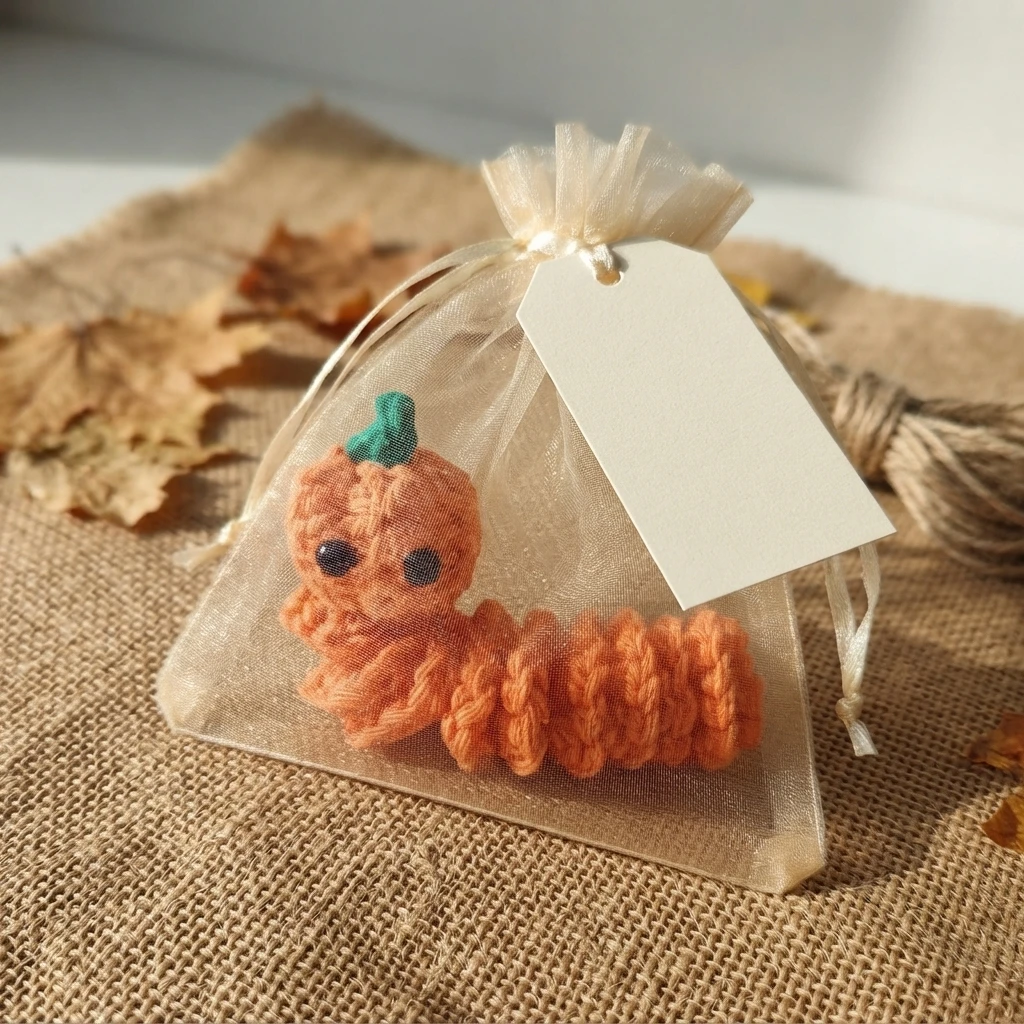
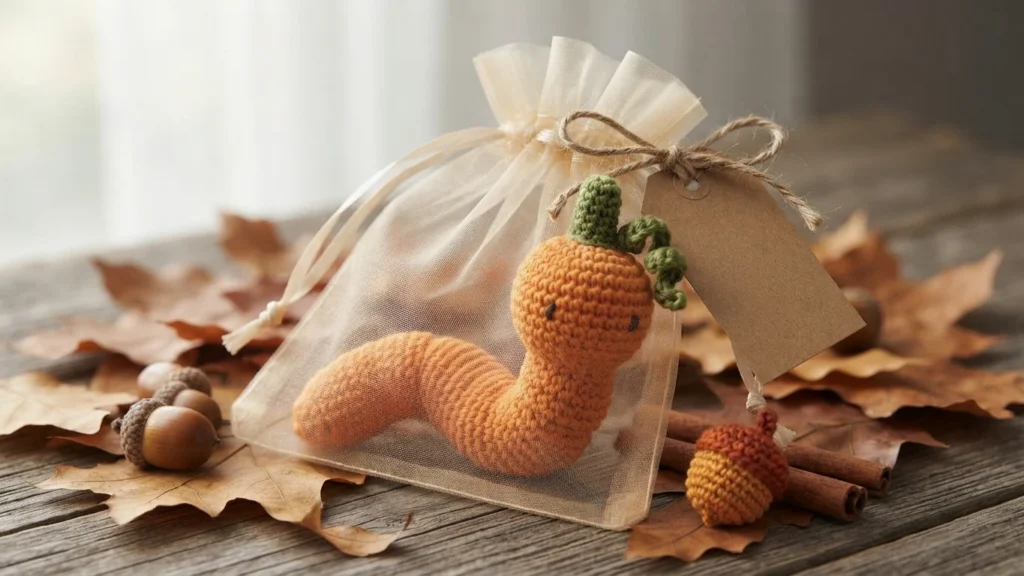
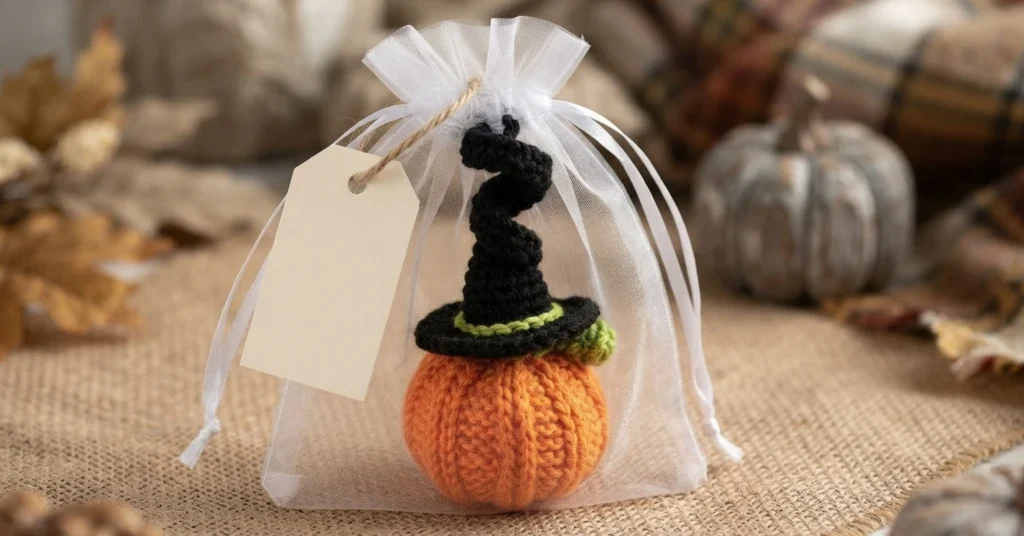
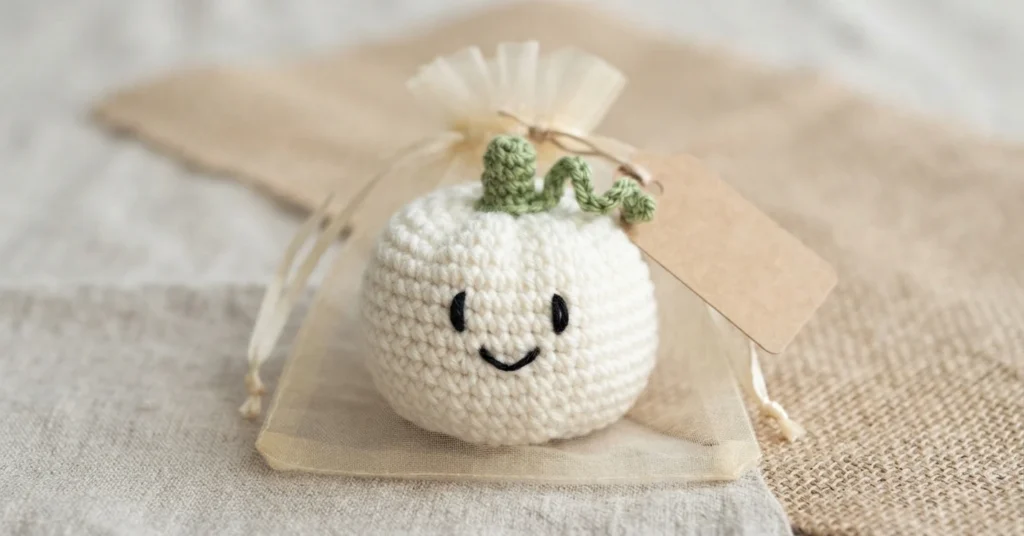
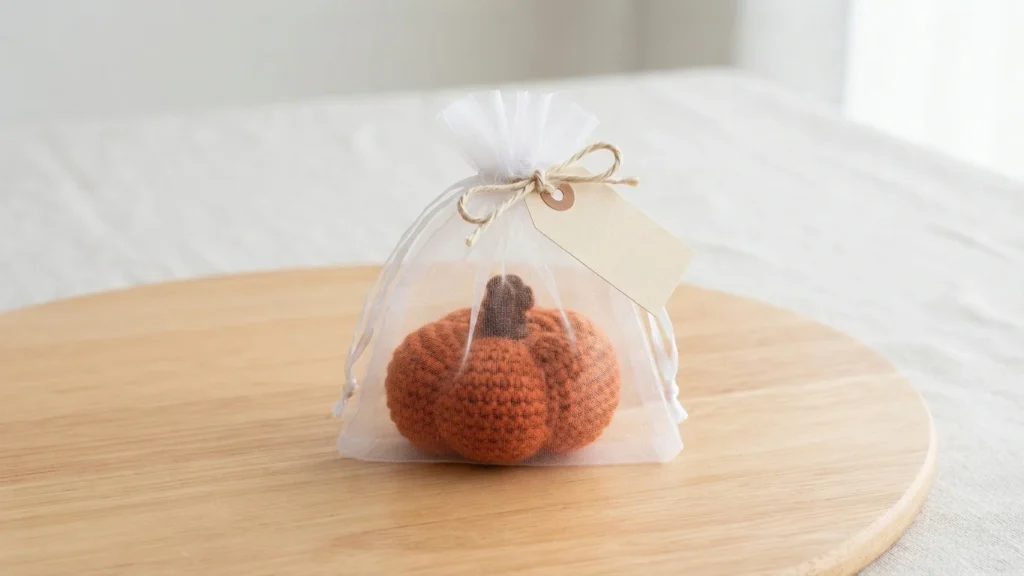
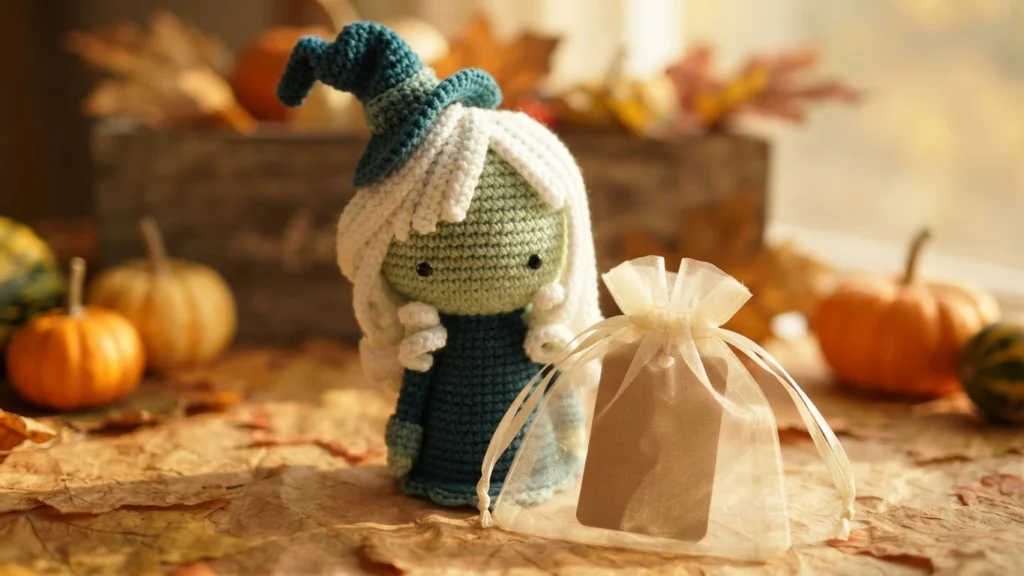
The source closes with a pumpkin bundle offer and links to further Halloween collections, including a pumpkin wind spinner pattern, ghost patterns, amigurumi Halloween patterns by Rokiki, and a broader Halloween pattern roundup. It also includes the designer’s standard disclaimer about pattern accuracy, a note that finished products may be sold with a link back or social tag, and a copyright statement reserving all rights to the pattern.