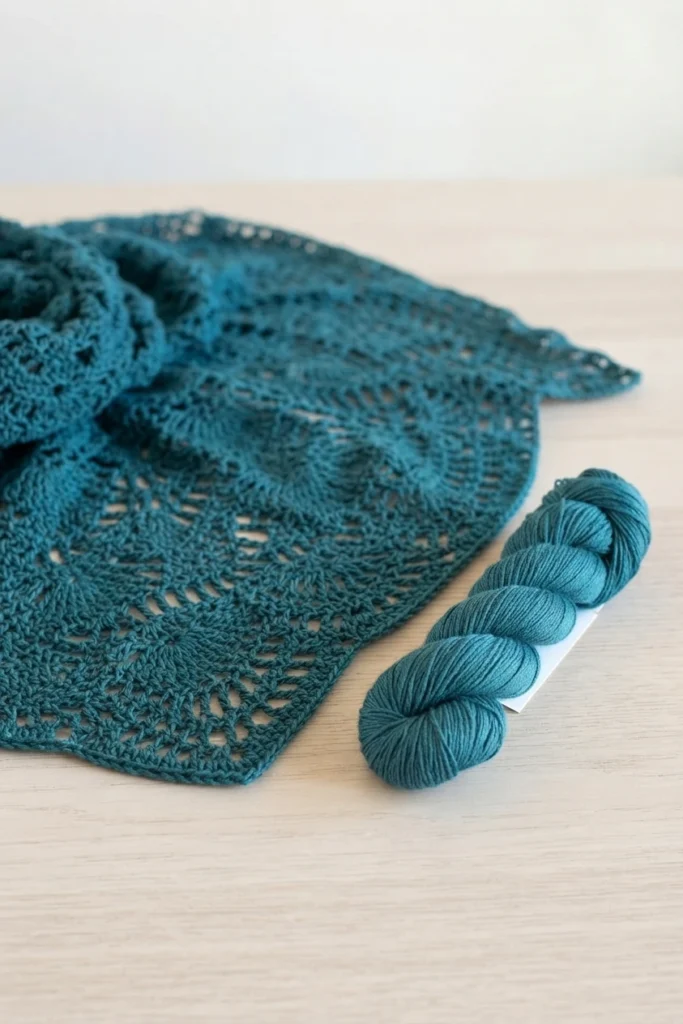
Project introduction
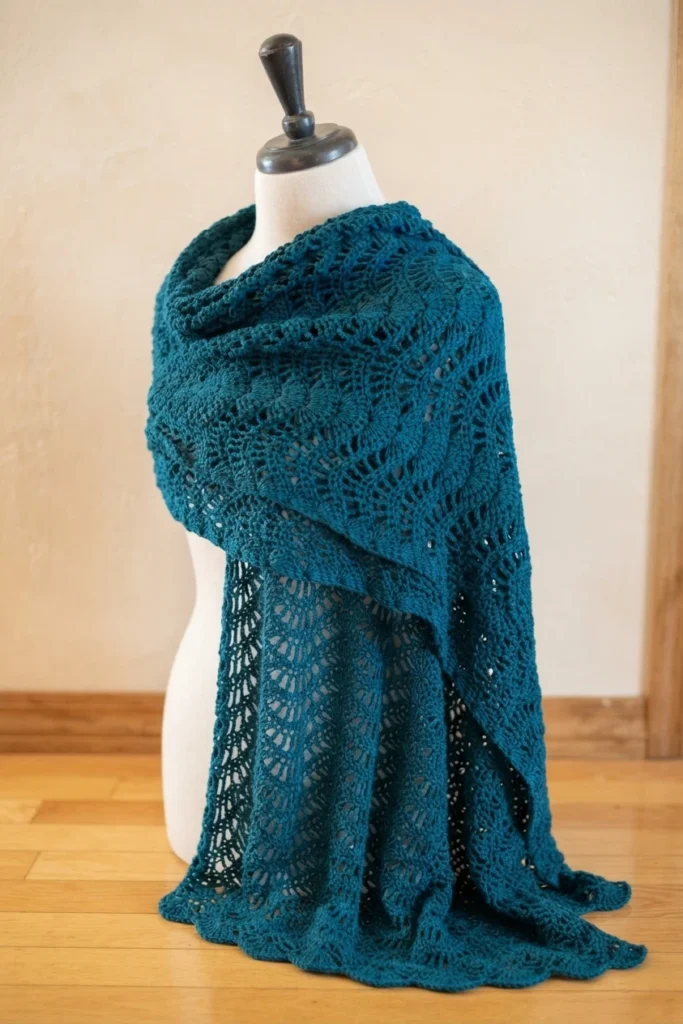
The Abigail Crochet Sideways Shawl features the Feather and Fan stitch, a lace technique known for creating a beautiful drape. This design is presented as a cherished keepsake. The distinctive wave effect arises from clustering stitches while strategically skipping others, resulting in a rippling texture. If you enjoy working with laceweight yarn, this pattern offers a suitable challenge. The original design is by Pattern Princess.
2024 Gift to Myself Crochet Along
This design was part of the 2024 Gift to Myself Crochet Along, which ran from January 2 through February 1, 2024. Underground Crafter joined forces with 14 crochet designers to release a new, permanently free pattern each Tuesday, Wednesday and Thursday. Every design matched the theme of making something for yourself and was created specifically for the event. All of the patterns in this CAL remain free forever on each designer’s blog, so they can still be found there.
The source also mentions other free downloads on its free PDF printables page and suggests signing up for the newsletter to be notified when new downloads are uploaded.
Written Pattern, Photo Tutorial, and Video Tutorial for the Crochet Stitches
The Feather and Fan stitch creates a rippling effect ideal for shawls, blankets, scarves and more. The source notes that the stitch becomes easier after a few rows because it repeats rows 2 and 3. A separate blog post on the Pattern Princess site covers how to crochet the Feather and Fan stitch, including a written pattern, photo tutorial and video tutorial. The source also links right hand and left hand YouTube videos showing the pattern worked in fingering weight yarn. You can find the full shawl pattern at Original designer’s pattern and instructions.
Crochet Feather and Fan Wavy Stitch
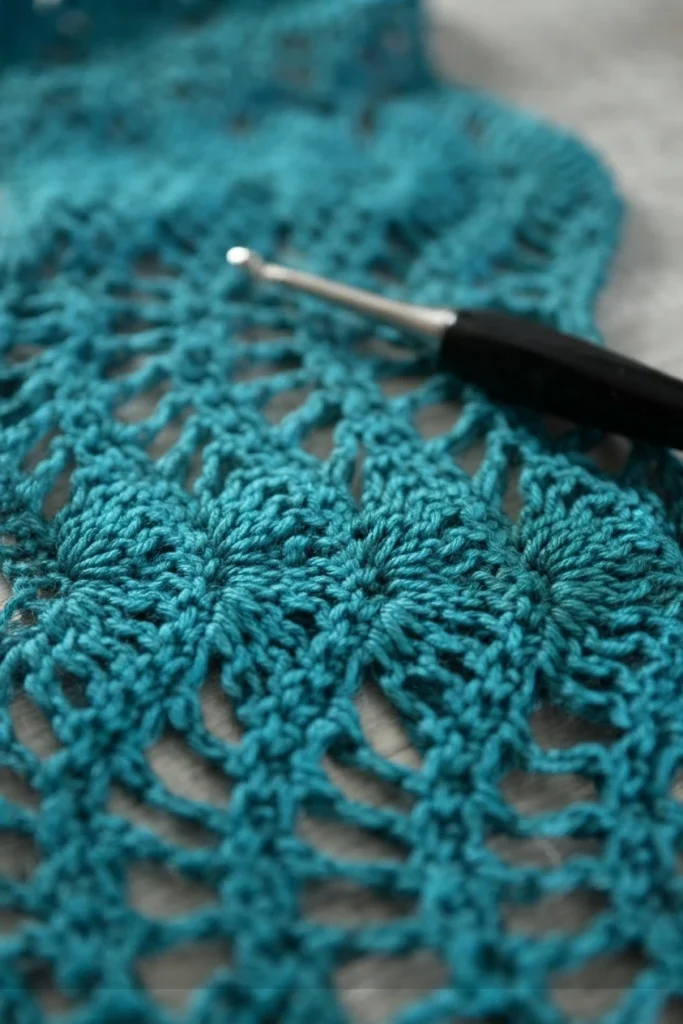
Feather and Fan is a well-known Shetland pattern. It is sometimes called Old Shell or Old Shale, a name that comes from the way the stitch resembles ocean waves rolling onto sand shales.
Yarn for Sideways Shawl
The sample shown in the source uses a solid color, and the source notes that a variegated yarn would also work well with the openwork. The fabric is described as breathable and airy, which means a wide range of yarn choices can work. Trying a different color is one way the source suggests making the project your own while still showing off the classic stitch.
What type of yarn?
The yarn used for this pattern is a cotton and acrylic blend. It is a number 2 fine yarn, and the source says it suits anyone who enjoys the intricacies of laceweight projects. The materials list names this yarn specifically as Twister Solid from Hobbii in color 107.
The source also notes that ad free printable PDFs of the pattern are sold on Etsy and Ravelry, while the blog carries the free version. These paid PDFs are separate from the free pattern on the blog.
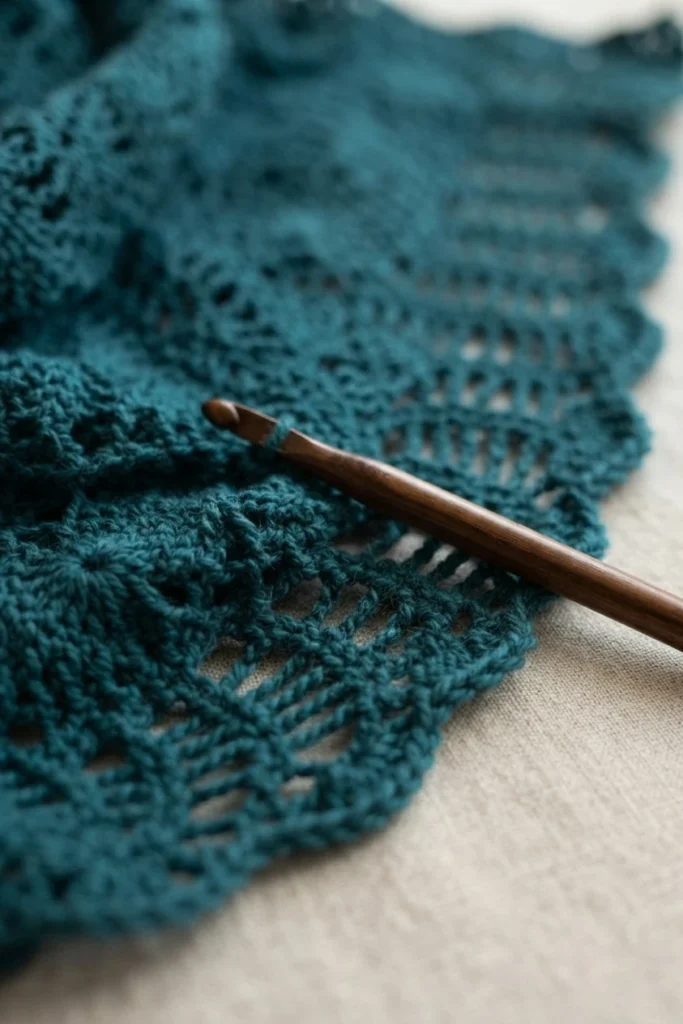
The source explains that the stitch pattern comes to life after washing and blocking, when the feather element opens up. Natural fibers with good stitch memory work best with this pattern, and wool and cotton blends are given as a good example. Synthetic yarns such as acrylic may not give the desired result.
The designer notes that this wrap was the first project she blocked, and that the 45% acrylic content in this particular yarn does not hold the blocking shape as well as she would like. More detail on blocking appears below the written pattern in the source.
Versatile Sideways Scarf Pattern Overview
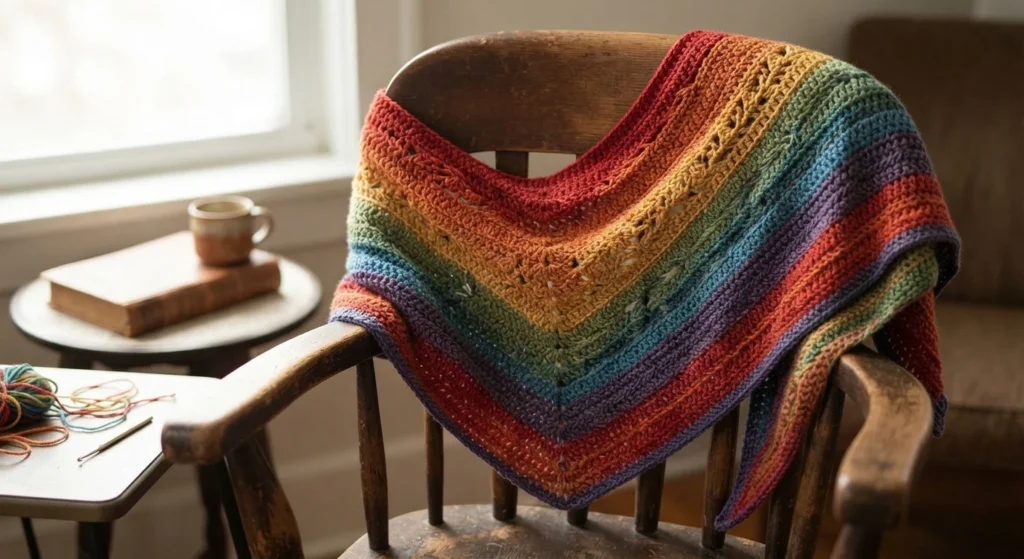
This design can be styled several ways. Wear it over the shoulder as a wrap, tie it in front and let it hang as a lacy scarf, or drape it over one shoulder for an elegant look. The source describes it as lovely with jeans on a casual day and just as gorgeous for an evening out.
Directions: Abigail Crochet Sideways Shawl Feather and Fan Stitch
Skill Level
The skill level is listed as Advanced Beginner or Intermediate. You should be able to work the treble crochet stitch and the single crochet stitch.
Size
The finished shawl measures 20 inches wide by 62 inches long. Width is changed by adding to or increasing the beginning chain stitches, and the pattern repeat is a multiple of 19 plus 20, so the minimum chain needs to be at least 39 stitches. Length is changed by adding or decreasing rows.
Materials Needed
- Twister Solid in color 107 from Hobbii (two yarn cakes, 437 yards each, 874 yards total)
- Crochet hook size H, 5.0 mm
- Yarn needle
- Scissors
The source notes that a link to the Hobbii yarn store can be found on its Savings Page.
Abbreviations
- CH = Chain
- SC = Single Crochet
- SK = Skip
- ST = Stitch
- STs = Stitches
- TR = Treble Crochet
- [ ] = Repeat Between
Treble Crochet Stitch
A treble crochet, also called a triple crochet, is taller than a double crochet. The source provides a full step by step tutorial for this stitch, along with other free crochet tutorials and special crochet stitches on the Pattern Princess site.
Pattern Notes
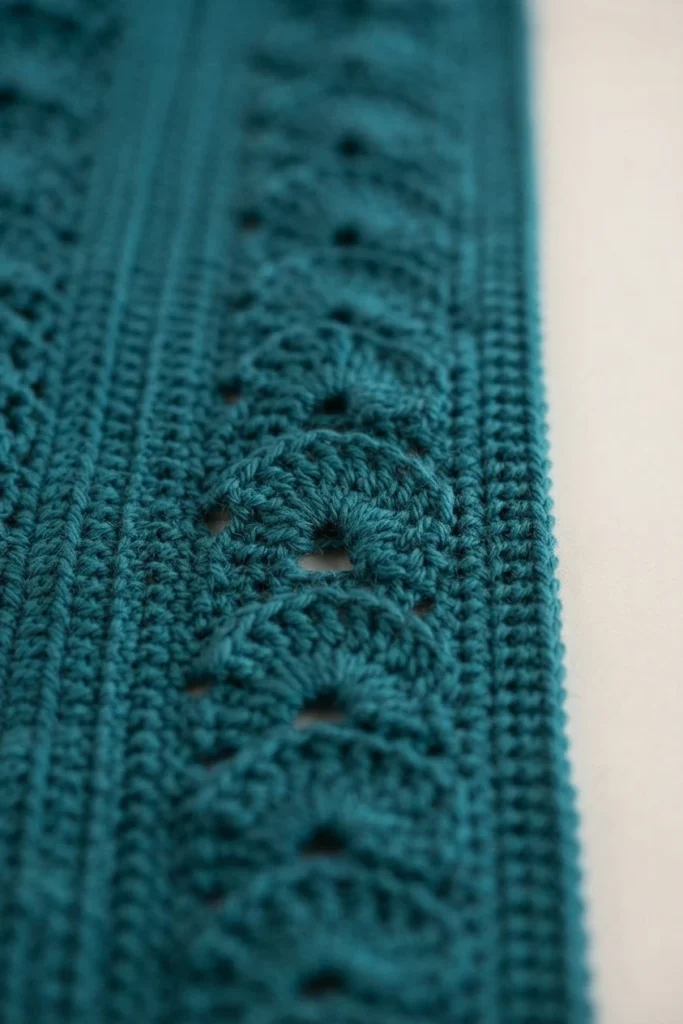
The source lists several notes that shape how the shawl is worked. You must turn your work at the end of every row. The chain four used at the start of row 2 and subsequent alternating rows counts as a treble crochet. Chain one for single crochet rows does not count as a stitch. Keep your stitches loose and place the last stitch in the top stitch of the previous row’s turning chain to help keep the sides straight. The pattern is written in U S Crochet Terms.
Row 2 uses treble crochet stitches to make soft peaks and valleys, while row 3 is simply single crochet across. Because row 2 skips stitches, working single crochet in each stitch of the first row helps the beginning look like the last row.
Feather and Fan Shawl Construction Overview
The shawl begins with a foundation chain of 77. From there, the fabric is built by repeating a two row sequence: one row that creates the peaks and valleys of the wave pattern, and one row of single crochet that settles the stitches. The source notes that as you repeat these rows, the feather and fan pattern starts to take shape. The full row by row instructions, including the exact stitch counts and repeats, appear in the original pattern from Pattern Princess, which is linked in the tutorial section above.
Finishing
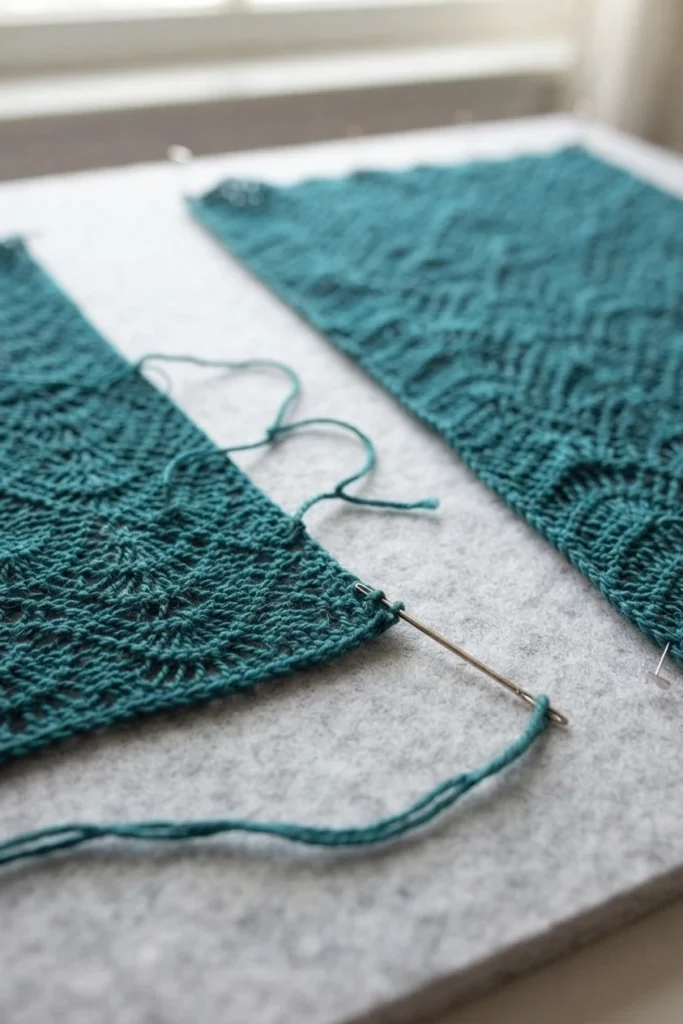
Once the shawl reaches the desired length, the source describes finishing the work by cutting the yarn with about a 12 inch tail, pulling the yarn through the last loop on the hook, weaving in loose ends with a yarn needle and snipping any excess. Blocking the shawl as desired is the last step.
Why Would You Block a Crochet Project?
Blocking is a crucial finishing step for many crochet projects. It shapes and sets the final dimensions of the item, and the source lists several benefits:
- Evening out stitches, especially in lace or openwork patterns, for a more polished look
- Setting the shape and dimensions of garments, shawls and accessories to achieve the intended drape and fit
- Removing wrinkles, creases or fold lines from the crocheting process or storage
- Adjusting size when a project comes out slightly smaller or larger than expected
- Aligning motifs, stitch patterns or color changes so they look uniform
- Removing sizing or stiffness from commercially produced yarn or crochet thread
- Correcting tension issues for a more consistent fabric
- Opening up lace and showcasing intricate details
Not every project needs blocking. The source says the decision depends on the type of project, the yarn used and personal preference, though blocking is valuable when appearance, drape and finish matter most.
Blocking a Crochet Project
Blocking is a process used to shape and set the final dimensions of a crochet project. The source notes it is especially important for items such as scarves, where the finished appearance and drape matter, and frames the material as a beginner friendly guide to blocking a crochet scarf.
Materials Needed
- Crochet scarf
- Rustproof pins
- Blocking mats or a clean, dry towel
- Spray bottle with water (optional)
- Measuring tape (optional)
Steps
The source walks through blocking a crochet scarf in a sequence of stages. It starts by making sure the scarf is clean, since blocking tends to be more effective on clean, dampened projects. Next, lay out blocking mats or a clean, dry towel on a flat surface as a place to pin the scarf into shape. Then pin the edges to the desired dimensions with rustproof T pins, smoothing out wrinkles and uneven areas as you go.
Gently manipulate the scarf into the desired shape, neatening any stitch patterns or motifs and keeping edges and corners straight and even. If the yarn allows, lightly spritz the scarf with water, which the source says is particularly helpful for natural fibers like wool or cotton because it helps the fibers relax and set. Leave the scarf in place until completely dry, which may take a day or more depending on the yarn and the humidity. Once dry, unpin it and check the dimensions, making small adjustments if needed.
The blocked scarf is then ready to wear. The source describes blocking as a simple yet effective technique that can make a significant difference in the final presentation of the work.
Free Shawl Crochet Patterns
If you enjoyed this Abigail Crochet Sideways Shawl overview, the source points to other lacy shawls worth exploring. Its roundup of 10 Best Sources for Lacy Crochet Shawl Patterns sits alongside named designs such as the Victoria Lacy Shawl, the Lacy Lindsey Crochet Shawl, the Blushing Beauty Shawl, the Stunning Easy Shawl and the Crochet Open Weave Summer Shawl. These are separate patterns from the same designer, Pattern Princess, and each is linked from the original source page.
Stay connected with Pattern Princess
Pattern Princess publishes crochet patterns, recipes, quilt patterns and other creative projects. The source invites readers to add Pattern Princess as a preferred source in Google Search so its new projects are easier to find.
Original designer’s pattern and instructions