Project introduction
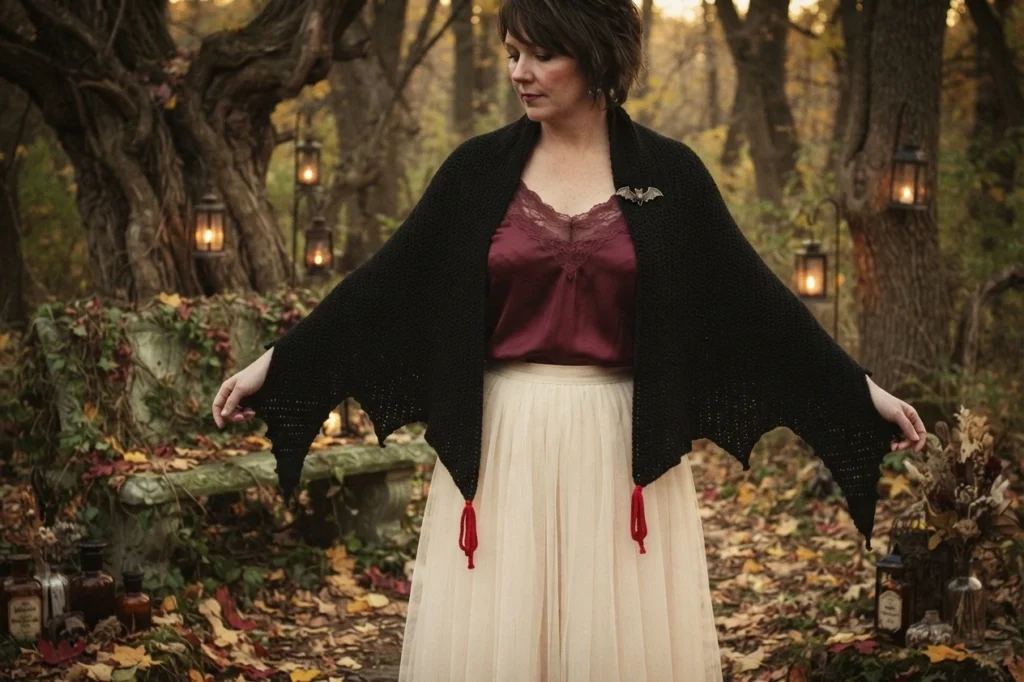
This is a pattern overview, not a full crochet tutorial. Jen Hayes Creations’ bat-shaped shawl combines a dramatic wing silhouette with a wearable wrap shape, making it a distinctive choice for a Halloween or vampire-inspired look. Its back lacing adds a striking detail. For the complete pattern and instructions, visit the Original designer’s pattern and instructions.
The Inspiration
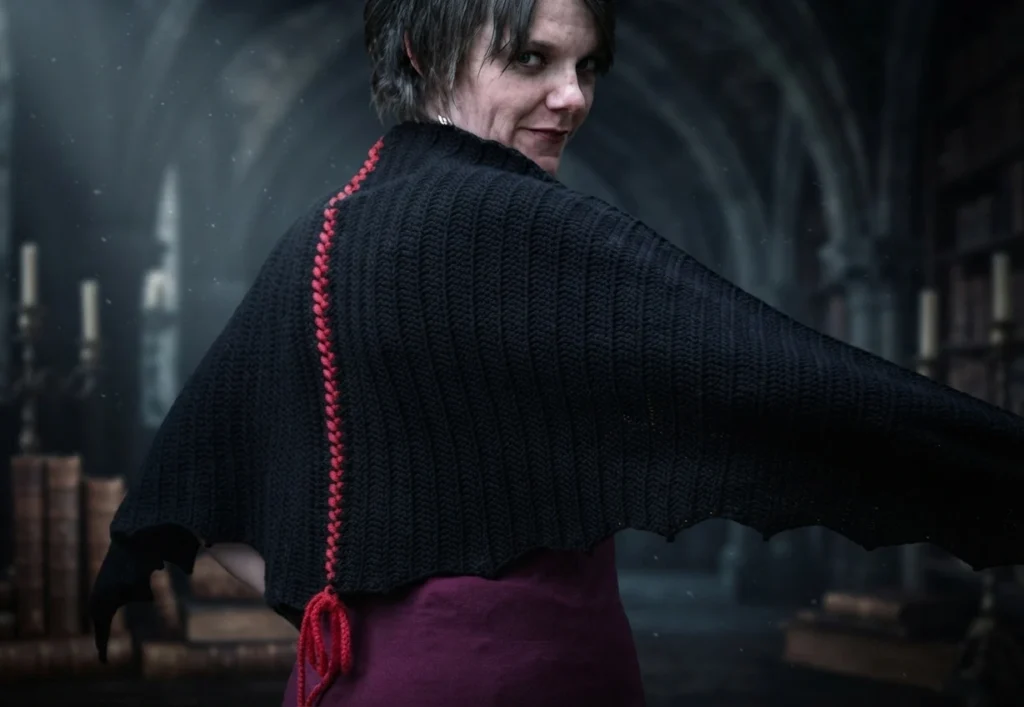
The idea grew out of swatching for other design concepts. A small knob at the end of a row suggested a wing, and the designer explored that possibility with sketches and further adjustments. Black yarn helped establish the bat-like look. The project later became a vampire costume shawl after the designer’s daughter expressed interest in wearing it for Halloween.
The finished concept blends wing imagery with the drape of a shawl. Its center rises at the back of the neck in a way that recalls a cloak, without forming a full collar. The fabric falls over the shoulders, curves inward and then outward near the bust, and hangs at the front. The front and back are asymmetrical, while i-cord lacing down the back is both a construction detail and a decorative feature.
The Yarn
The original design uses Yarnspirations Caron Simply Soft, a soft acrylic yarn described by the designer as silky, easy to care for, and suitable for a project that needs drape. The yarn is also available in a wide range of colors. The sample uses black for the wings and Harvest Red for the back cord, but the source does not require those colors as the only options.
The designer notes that this yarn’s relatively slick feel made the i-cord less familiar to work with, and that strands sometimes separated when the hook returned to a dropped loop. If you choose this yarn, pay attention to whether the hook catches all four plies of the loop. A little practice can help you get accustomed to how the yarn behaves; the original instructions remain the place to consult for the full technique.
The Pattern Overview
The listed difficulty is Advanced Beginner. The project is made from two separate wing pieces, worked in turned rows, then blocked and joined. The wing shaping combines increases and decreases with decorative points that help create the bat-wing outline. A separate i-cord is made in the second color and laced down the back. This description summarizes the project’s construction rather than reproducing the row-by-row pattern.
The pattern uses US crochet terminology. Its notes explain that the beginning chain 3 counts as a stitch and that stitch totals are provided at row ends. The designer states that the pattern was updated on 3.8.24 to remove accidentally duplicated rows and add tips, stitch explanations, and wording clarifications. Check the original pattern for the current instructions and all details needed to work the project.
Difficulty
The designer lists the pattern as Advanced Beginner. Familiarity with double crochet, working turned rows, and following shaping information will be useful. The overview does not replace the full instructions, particularly for the decorative points and the separate i-cord.
Materials
Gather the complete supply list below before beginning. The quantities and yarn specifications are those given for the original sample.
- Size H/8 (5.0 mm) crochet hook.
- Stitch markers, scissors, tapestry needle, pins, and blocking mats.
- Yarnspirations Caron Simply Soft, worsted weight 4-Medium, 100% acrylic, 315 yds/288 m and 6 oz/170 g per skein.
- Color A, Black: 3 skeins.
- Color B, Harvest Red: 1 skein.
Gauge
Before blocking, the stated double crochet gauge is 17 stitches and 9 rows over 4 inches (10 cm), using a size H/8 (5.0 mm) hook. Gauge is a useful reference when comparing your fabric with the designer’s specifications. Follow the source pattern for guidance on checking gauge and any adjustments.
Finished Measurements
After blocking, the sample measures 71 inches (180 cm) wide at its widest point and 20.5 inches (52 cm) tall. These are the source’s finished measurements for the blocked shawl, not a guarantee of the size another crocheter will achieve.
Design Notes
Rows are turned, and the starting chain 3 counts as a stitch. The designer’s pattern places the completed stitch count at the end of each row. Keep these conventions in mind as you read the instructions, since they affect how to interpret the row openings and the supplied stitch totals.
Abbreviations/Stitches Used
The pattern uses these US terms and abbreviations: ch means chain; dc means double crochet; dcdec means double crochet decrease; MR means magic ring, also called a magic circle or adjustable ring; rep means repeat; sc means single crochet; sl st means slip stitch; and st(s) means stitch(es). I-cord names the separate cord used for the back detail. Refer to the source for its linked i-cord tutorial and the complete stitch guidance.
Special Stitches
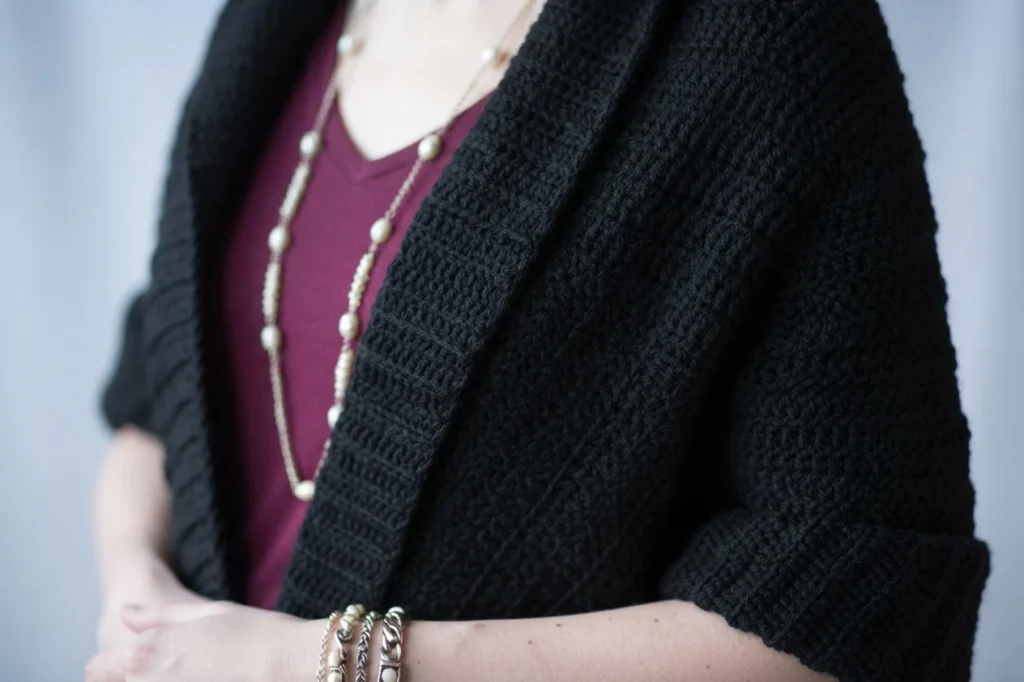
A double crochet decrease, abbreviated dcdec, combines work across two neighboring stitches into one decrease. The original pattern provides the full stitch definition. Since the decrease contributes to the wing shaping, use that explanation rather than relying on a different decrease technique if you want to follow the designer’s instructions closely.
Let’s Make Our Shawl!
The pattern is organized into the wing pieces, the i-cord, and assembly. The source notes that it was revised on 3.8.24 to remove duplicate rows and add clarifications. The following sections give a brief construction overview only. For the actual crochet instructions, use Jen Hayes Creations’ linked pattern rather than treating this article as a substitute.
Wings
Make two wing pieces in Color A. Each is built from turned rows of double crochet, with increases and decreases shaping the expanding and tapering areas. Repeated decorative points contribute to the outline. When the pieces are complete, the source directs crocheters to fasten off, weave in the ends, and block them before assembly. The original instructions include the exact row sequence and stitch counts.
I-Cord
Make one i-cord in Color B for the laced back. Its length can be adjusted to personal preference; the designer describes using it to lace the back and tie a bow with a knot for security. The source includes finishing details for keeping the cord tubular and joining its ends. Consult the original pattern for the complete method and use a stitch marker as directed there if you need to secure the working loops while checking length.
Assembly
Once the wings are blocked, place them with their flat edges beside one another and lace the cord down the back. The original design describes a shoe-lacing look, with the cord crossed through openings along the joined edges. The crossing direction and spacing can be arranged to suit your preference. At the bottom, the source ties the cord into a bow and secures it with a knot.
Alternate Assembly
If you prefer not to have visible lacing, the source offers a simpler alternative: seam the two wing pieces together down the middle using a tapestry needle and a length of yarn. This creates a different back finish while keeping the two shaped pieces joined.
Reach Out, Share, and Follow Along!
For the designer’s sharing and use terms, check the original post. Jen Hayes Creations states that finished items may be sold with credit and a link to the pattern post. The source also limits sharing of its photos or pattern material and does not allow copying, republishing, distribution, or translation without permission. These terms apply to the designer’s work, so consult the source directly before sharing its materials.
3 thoughts on “Bat Wing Crochet Shawl: Pattern Overview”