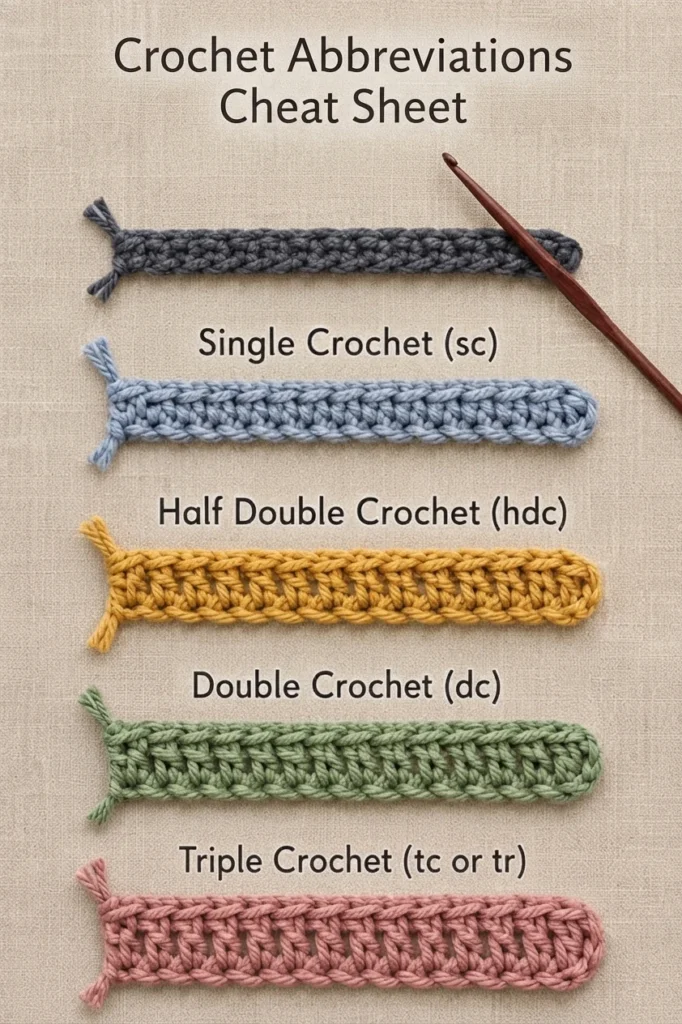
Confused by sc, dc, hdc, or tr? This Crochet Abbreviations Cheat Sheet covers every stitch, US vs. UK terms, and how to read patterns easily.
Unfamiliar shorthand can interrupt your reading when a crochet pattern is underway. This overview organizes common abbreviations by what they describe, from stitch names to placements and pattern directions. For the complete reference, visit the original crochet abbreviations guide. The linked reference is by Crocht, and this article is a summary rather than a project pattern or full stitch tutorial.
Crochet Abbreviations Cheat Sheet
Abbreviations shorten written directions, but some stitch names change between US and UK terminology. Check which system a pattern uses before following its directions. The table below lists the equivalents given in the source reference, pairing each US term with its UK counterpart:
| US stitch name | UK stitch name with the same short form |
|---|---|
| sc, single crochet | dc, double crochet |
| hdc, half double crochet | htr, half treble crochet |
| Double crochet (dc) | tr, treble crochet |
| Treble crochet (tr) | dtr, double treble crochet |
| Double treble crochet (dtr) | trtr, triple treble crochet |
A short form can look familiar while naming a different stitch than you expect. Follow the terminology the pattern states instead of matching letters alone. Confirming this before you start keeps you working the stitch directions in the correct system.
Crochet Abbreviations vs. Crochet Symbols
Written abbreviations and chart symbols deliver crochet directions in different formats. An abbreviation is a shortened term inside text, such as sc for single crochet, ch for chain, or dc for double crochet. A chart symbol is a small diagram or icon, and each one stands for a specific stitch.
Many recent patterns include both written directions and a symbol chart, so you can follow whichever format you prefer. Symbols live in charts, while abbreviations appear in written instructions, so check which format you are reading rather than treating the two as interchangeable.
How to Read Crochet Abbreviations in a Pattern Overview
Written directions are usually read from left to right, like a sentence. Each short form tells you the stitch to make and where to place it. The examples below explain the notation; they are not a complete set of project directions:
- sc in next st: make a single crochet in the next stitch.
- ch 3: make three chain stitches.
- dc 5 in ch-2 sp: work five double crochet stitches into the space made by two chain stitches.
- rep from * to end: repeat the directions marked with an asterisk until the row or round ends.
Most patterns list the abbreviations they use before the instructions begin. When a short form is unfamiliar, refer back to that key, and confirm whether the pattern uses US or UK terminology if a stitch name could be ambiguous. These examples are for decoding shorthand, not a substitute for the original directions.
Basic Crochet Stitch Abbreviations
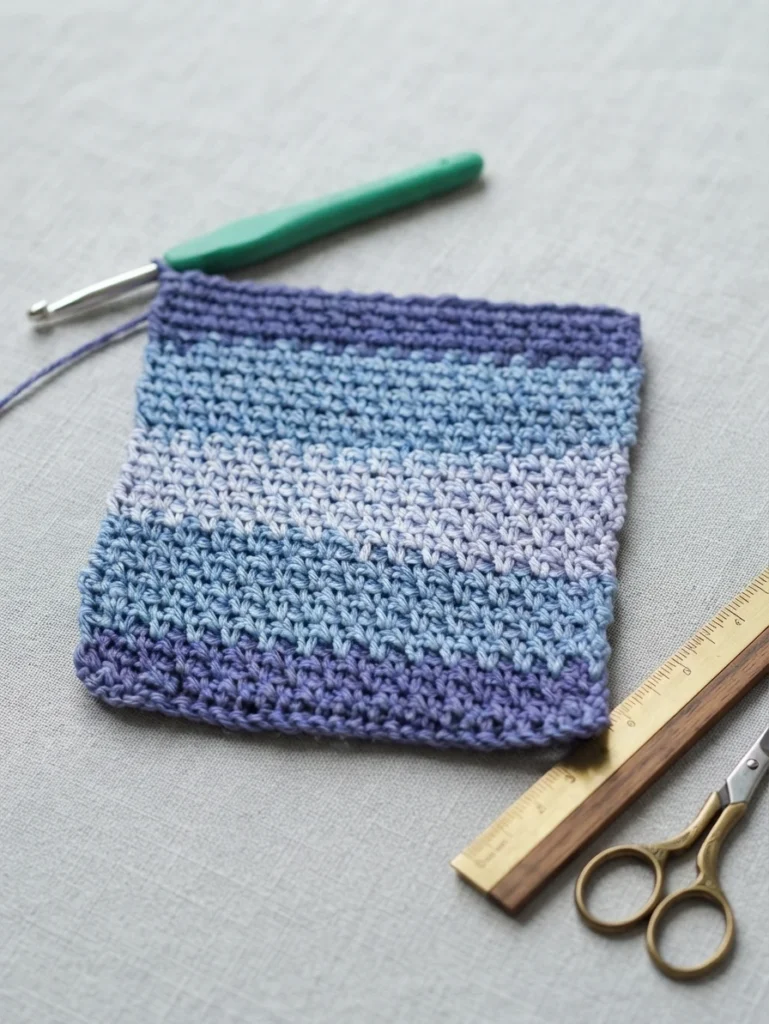
These common short forms name stitches and, in some cases, note their general height or typical use. The notes below follow US terminology. Check the terminology a pattern states before applying a familiar short form.
| Short form | Meaning and reference note |
|---|---|
| ch | Chain, a foundation stitch used to begin most crochet projects |
| sl st | Slip stitch, used to join rounds or move across stitches |
| sc | Single crochet, a short, dense stitch commonly used for amigurumi |
| hdc | Half double crochet, a medium-height stitch |
| dc | Double crochet, a tall stitch that works up quickly |
| tr | Treble crochet, a tall stitch often used for lace |
| dtr | Double treble crochet, an extra-tall stitch |
| trtr | Triple treble crochet, one of the tallest decorative stitches |
Foundation Stitch Abbreviations
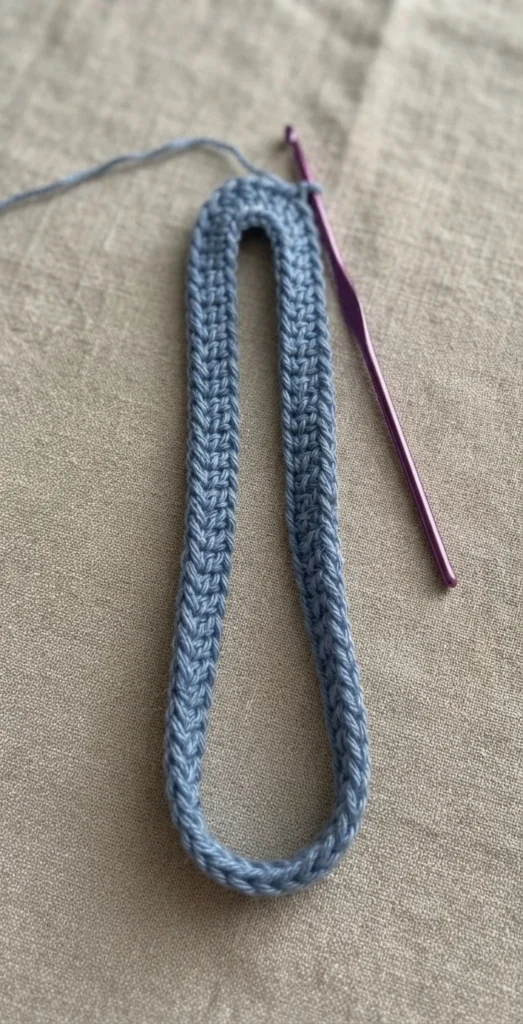
Foundation-stitch terms describe ways of forming a foundation at the same time as a crochet stitch. The source reference gives these meanings, but does not provide step-by-step directions for working them:
- fsc: foundation single crochet, creating the foundation chain and first row together.
- fhdc: foundation half double crochet, combining a chain and half double crochet in one step.
- fdc: foundation double crochet, creating a chain and double crochet together.
- ftr: foundation treble crochet, described as a stretchy foundation using treble crochet.
Loop & Placement Abbreviations
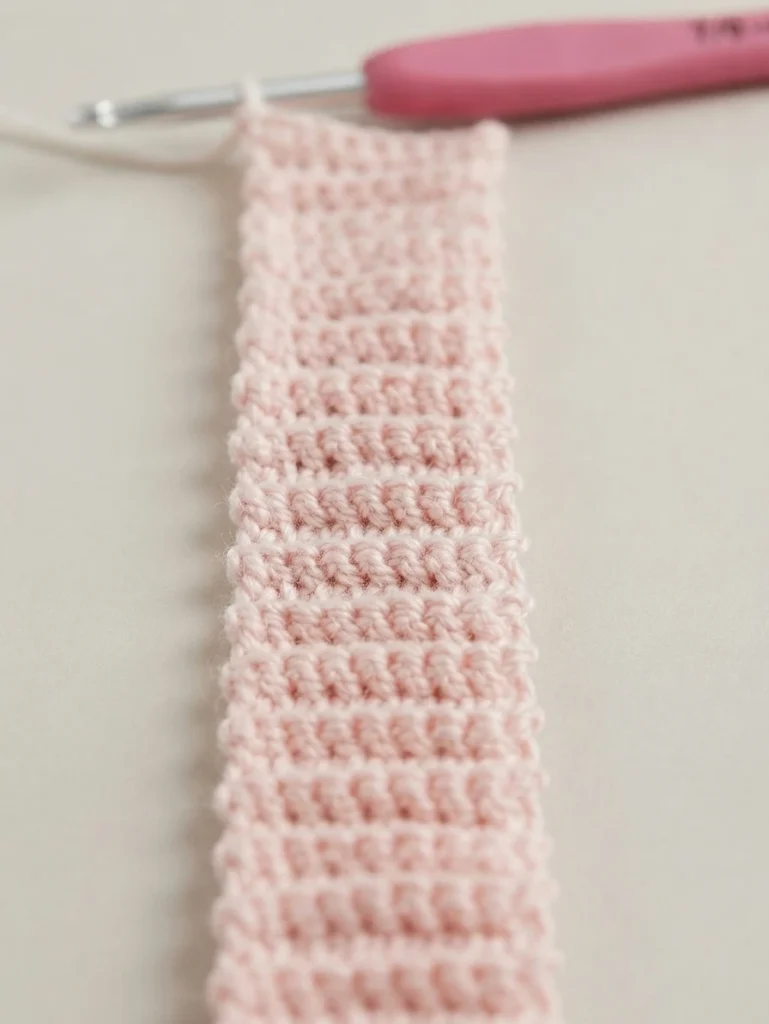
These short forms point to a loop or a post where the pattern tells you to work. BLO means back loop only, and FLO means front loop only. BL and FL refer to the back loop and the front loop. BP means back post, while FP means front post. A post is the long, vertical body of a stitch from the previous row.
Loop and post directions identify different locations. For example, an instruction referring to a loop is not the same as one telling you to work around a post. Use the abbreviation together with the surrounding stitch directions to identify the intended placement.
Front & Back Post Stitch Abbreviations
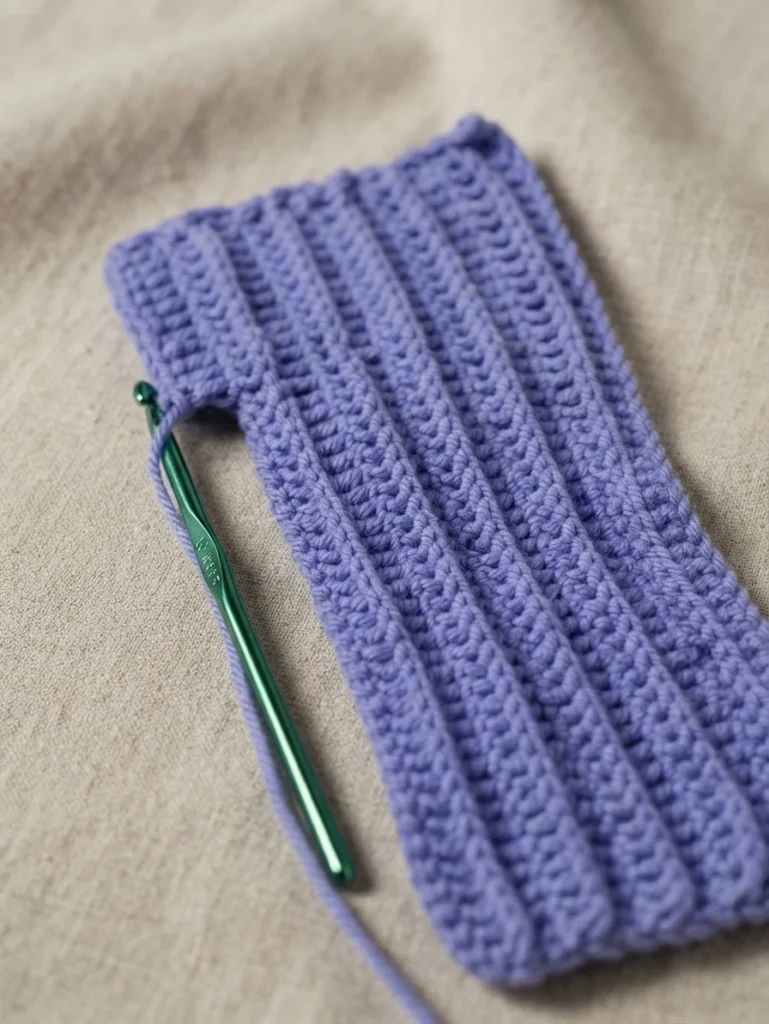
Post-stitch abbreviations pair FP or BP with the name of a stitch. FP indicates the front post, and BP indicates the back post. These terms specify placement, while the rest of a pattern provides the instructions for its row or round.
- FPsc / BPsc: front post or back post single crochet.
- FPhdc / BPhdc: front post or back post half double crochet.
- FPdc / BPdc: front post or back post double crochet.
- FPtr / BPtr: front post or back post treble crochet.
- FPdtr / BPdtr: front post or back post double treble crochet.
Increase & Decrease Abbreviations
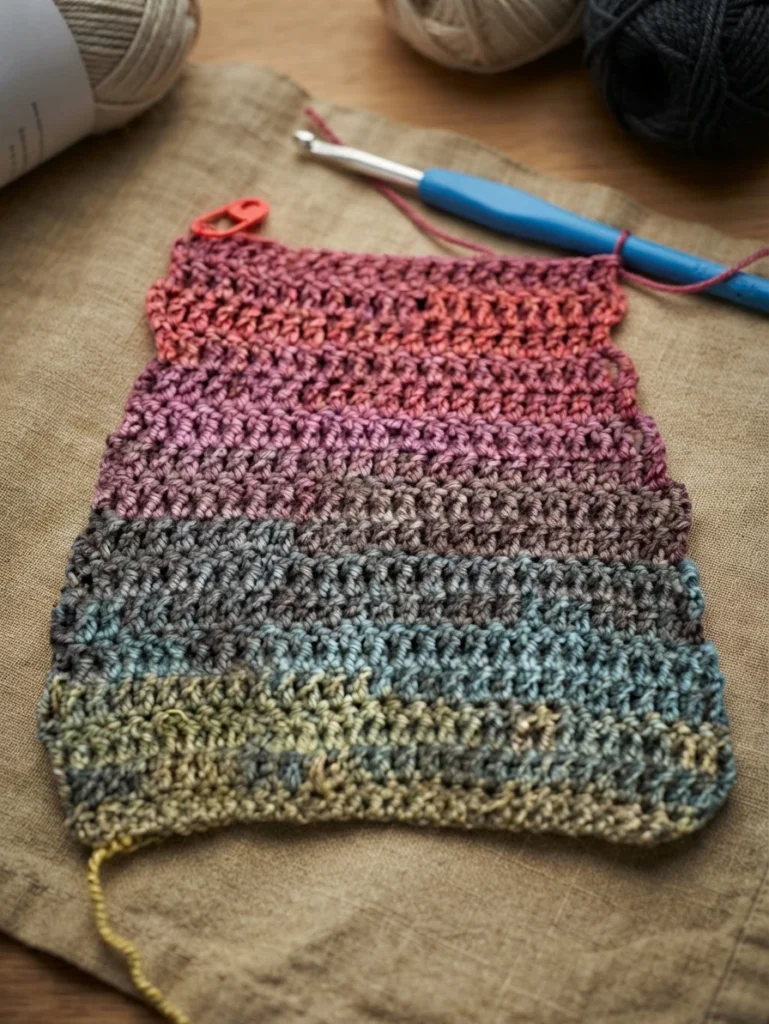
Increase and decrease terms describe changes to the stitch count. An increase works multiple stitches into one stitch, while a decrease combines stitches. The numbered forms show whether two or three stitches are joined, and inv dec names the invisible decrease associated with amigurumi.
- inc: increase, making multiple stitches in one stitch.
- dec: decrease, combining stitches to reduce the stitch count.
- sc2tog, hdc2tog, dc2tog, tr2tog: single, half double, double, or treble crochet 2 together, respectively.
- sc3tog, dc3tog: join three single crochets or three double crochets, respectively.
- inv dec: invisible decrease, described as a nearly invisible decrease used in amigurumi.
These abbreviations identify the kind of change, but they do not supply every placement and method detail for a given project. Follow the pattern’s directions for how and where to work the increase or decrease.
Textured Stitch Abbreviations
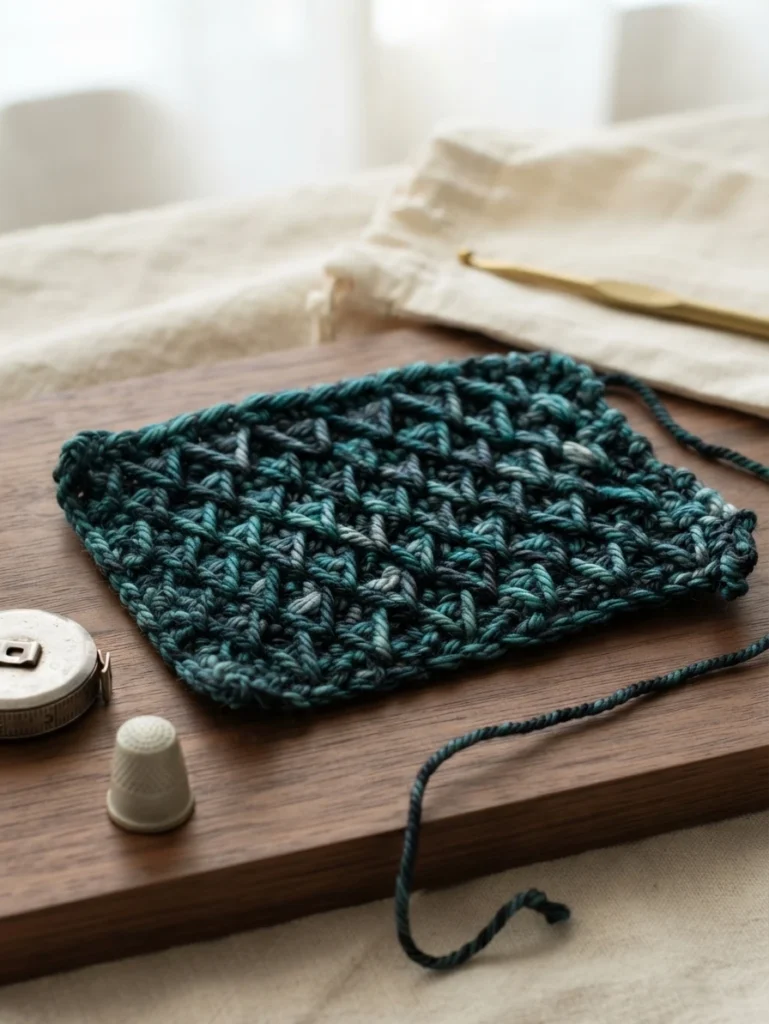
These short forms name raised, rounded, fan-shaped, or looped decorative stitches and stitch groups:
- puff / ps: puff stitch, a raised stitch made by pulling up multiple loops.
- bob: bobble stitch, a rounded textured stitch.
- pc: popcorn stitch, a raised stitch made from completed stitches.
- cl: cluster stitch, made by working multiple partial stitches together.
- shell: shell stitch, a fan-shaped group of stitches.
- picot: picot stitch, a small decorative loop.
A pattern may add its own notes about how it uses these terms, so check its key for project-specific notation. This overview identifies the terms but does not explain how to make each stitch.
Amigurumi Stitch Abbreviations
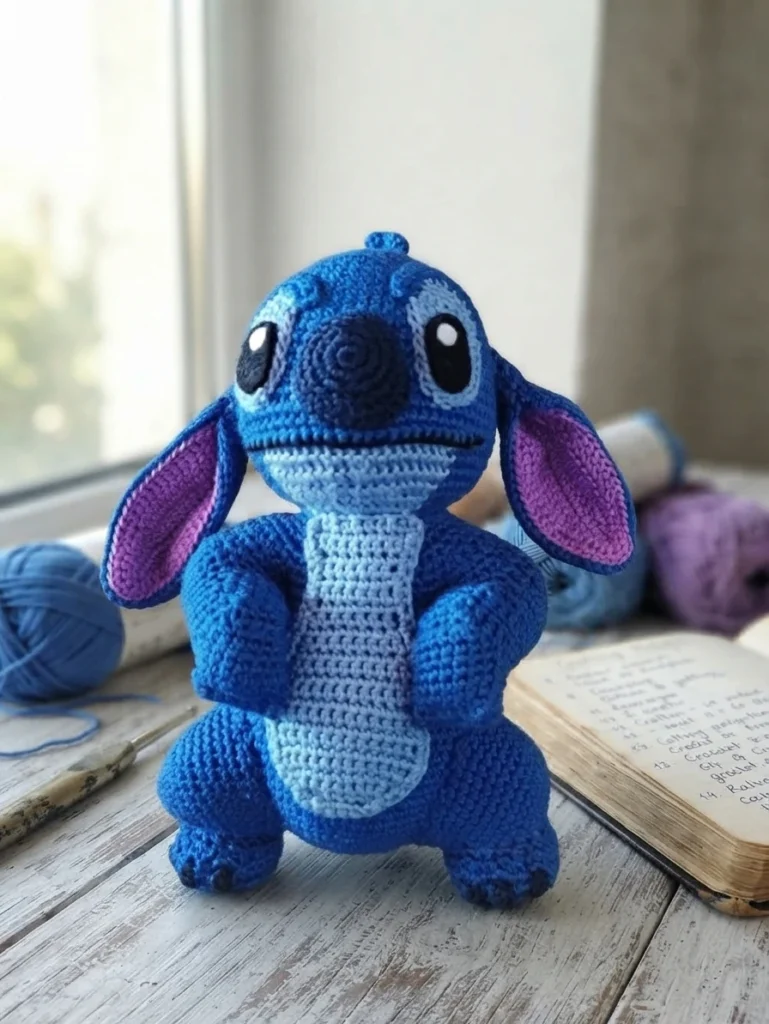
Three terms in the reference are worth recognizing in amigurumi directions. MR or MC means Magic Ring or Magic Circle, an adjustable starting loop. FO means fasten off, or finish and secure the yarn. Inv dec means invisible decrease, listed as an invisible decrease for amigurumi. The pattern determines where these terms appear and how its directions use them.
Pattern Instruction Abbreviations
Patterns also shorten directions about order, position, fabric sides, and handling the work. Use this table as a quick lookup, and check a pattern’s own key if it gives further context.
| Abbreviation | Meaning |
|---|---|
| alt, approx, beg, bet | Alternate, work every other stitch or row; approximately, an estimated measurement or stitch count; beginning, the start of a row or round; between, work between stitches |
| ch-sp, cont, ea, foll | Chain space, a gap formed by chain stitches; continue; each, every stitch or row; following, the next stitch or row |
| hk, join, lp | Hook being used; join stitches, usually with a slip stitch; loop on the hook or in a stitch |
| PM, prev, rem, rep | Place marker; previous stitch or row; remaining stitches or rows; repeat instructions |
| RS, sk, SM, st | Right side, the front of the fabric; skip, leave a stitch unworked; stitch marker, move or use a marker; stitch, an individual crochet stitch |
| sp, tog, turn | Space, a gap between stitches; together, work stitches together; turn, flip the work |
| WS, yo | Wrong side, the back of the fabric; yarn over, wrap yarn over the hook |
Some similar-looking terms carry distinct meanings. RS and WS describe the front and back sides of the fabric. PM tells you to place a marker, whereas SM refers to a stitch marker. Ch-sp means a gap created by chain stitches. These are pattern terms, not a list of required project supplies.
Measurement abbreviations identify units, but a unit alone does not state a project’s finished size or materials:
- cm: centimeters
- g: grams
- in: inches
- m: meters
- mm: millimeters
- oz: ounces
- yd: yards
You do not need to memorize every term before reading a pattern. Keep the abbreviation key nearby, check whether the pattern uses US or UK terminology, and look up unfamiliar shorthand as it appears. This overview groups the reference terms for quick scanning; use the linked guide for the complete reference.