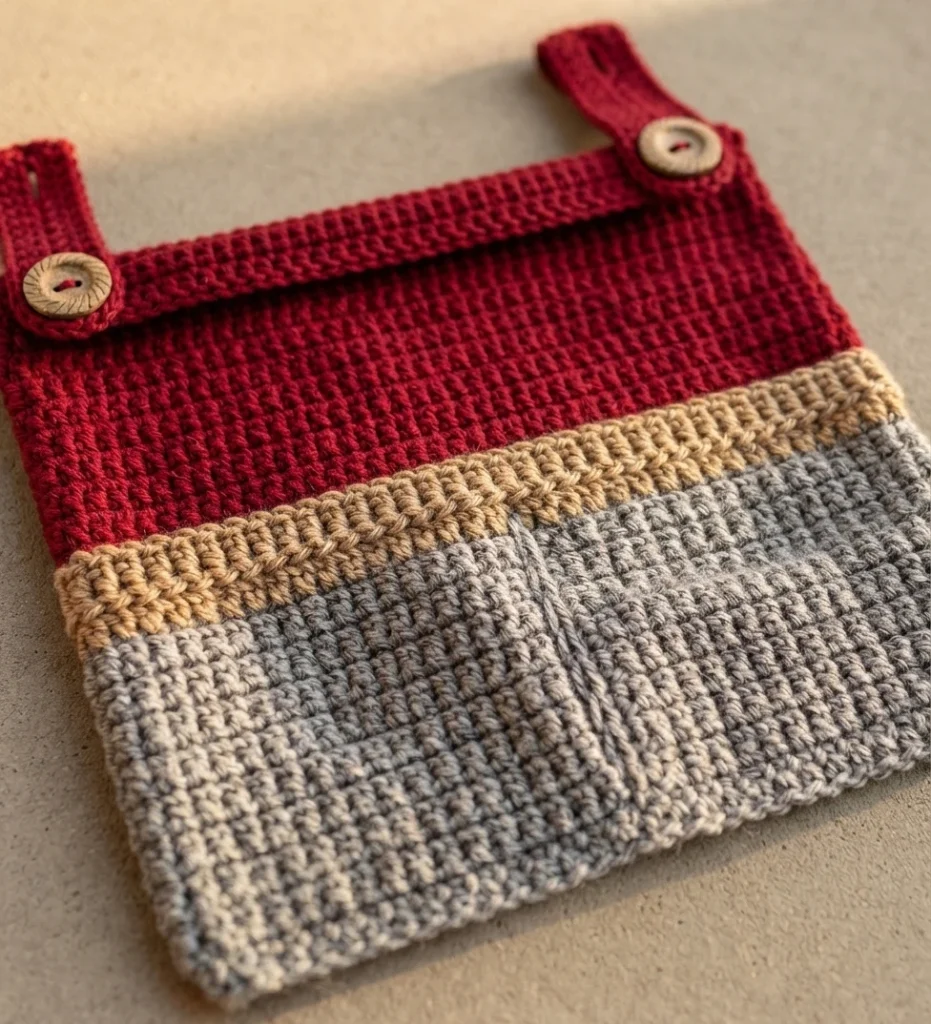
Project introduction
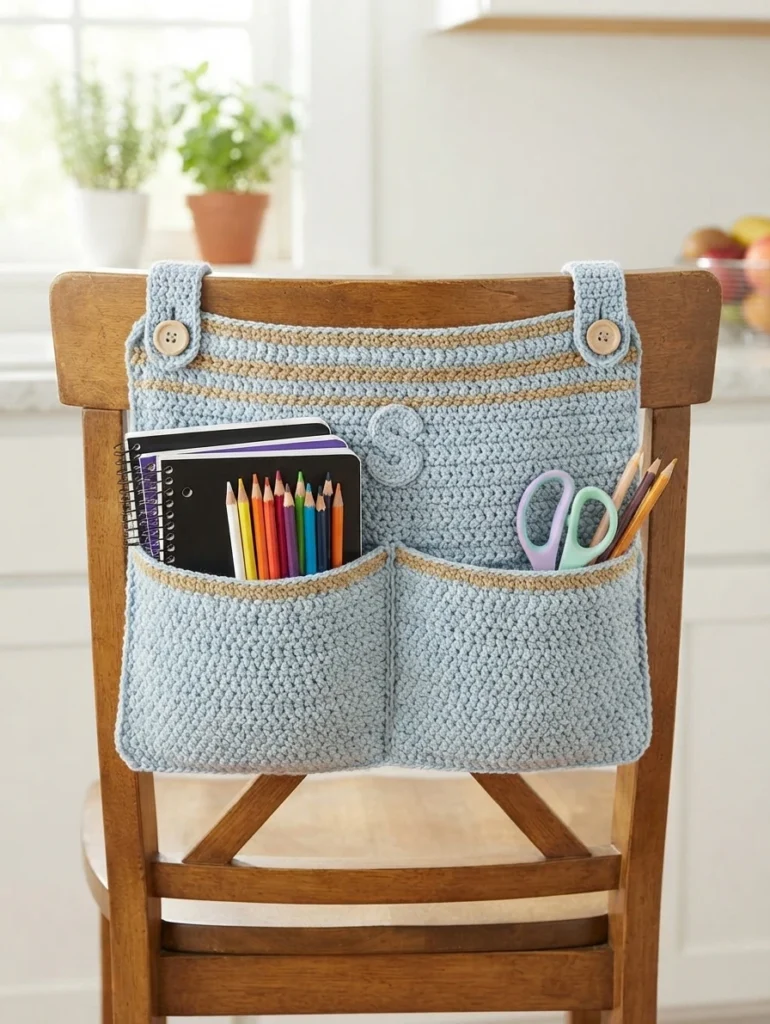
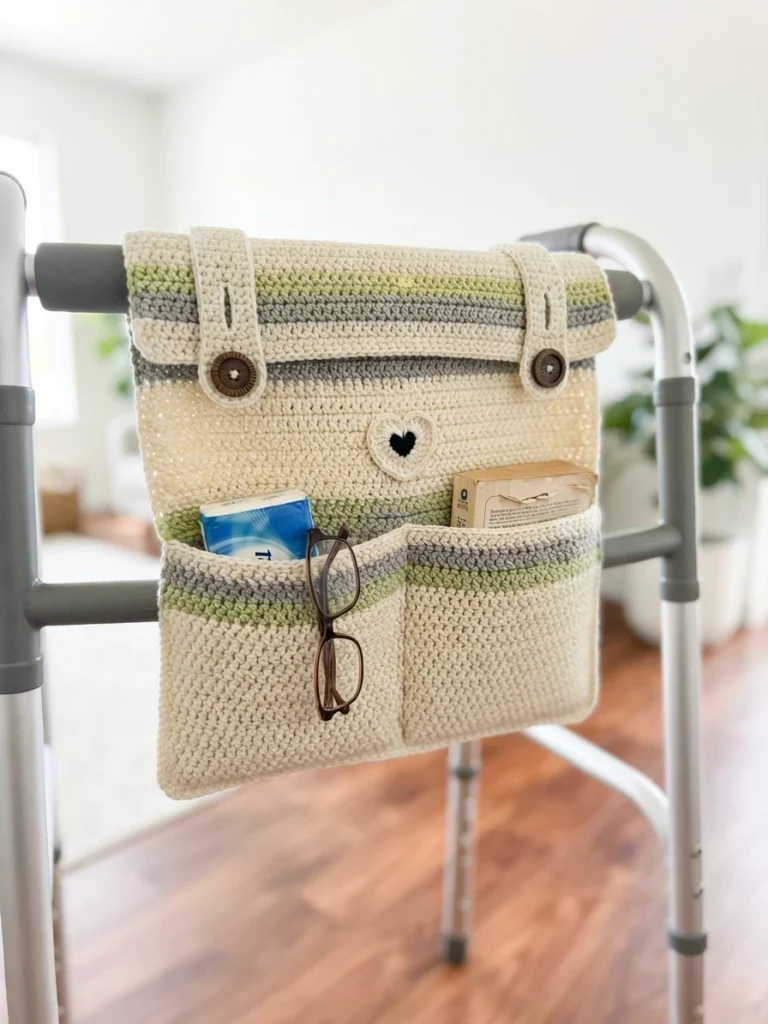
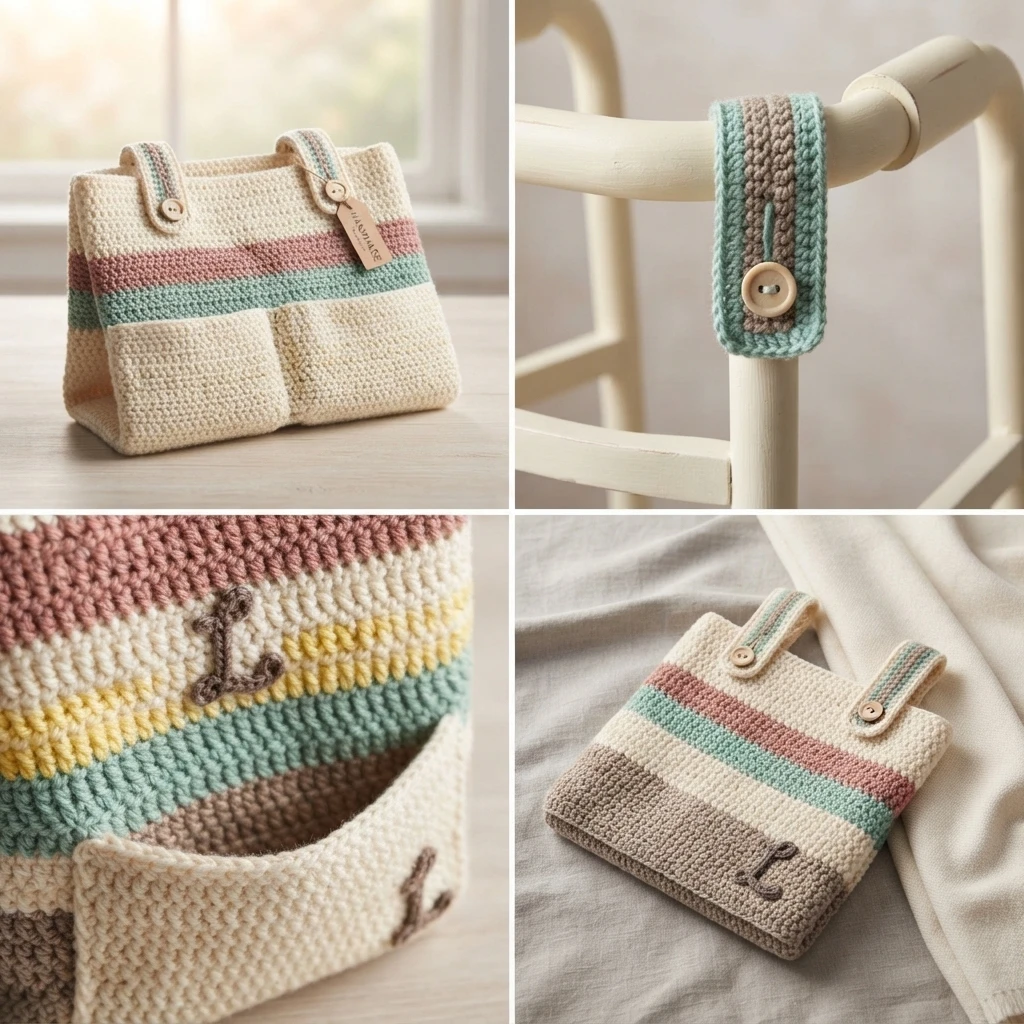
This pattern overview explains the Walker Pocket from Orchid and Bee’s, a practical crochet tote that hangs on a walker and keeps small essentials close at hand. It is an overview, not a full tutorial, so use it to decide if the project suits your walker, yarn, and skill level. For the complete row by row directions, follow the Original designer’s pattern and instructions.
The idea began when people who work in nursing homes and assisted living homes asked for a walker pocket for the people they support. The designer wanted more than a plain holder, so she chose textured stitches that look polished and ready for everyday use. The finished piece can be personalized with an applique or letters, which makes it a thoughtful gift or a useful donation when someone wants an option beyond blankets, hats, and scarves.
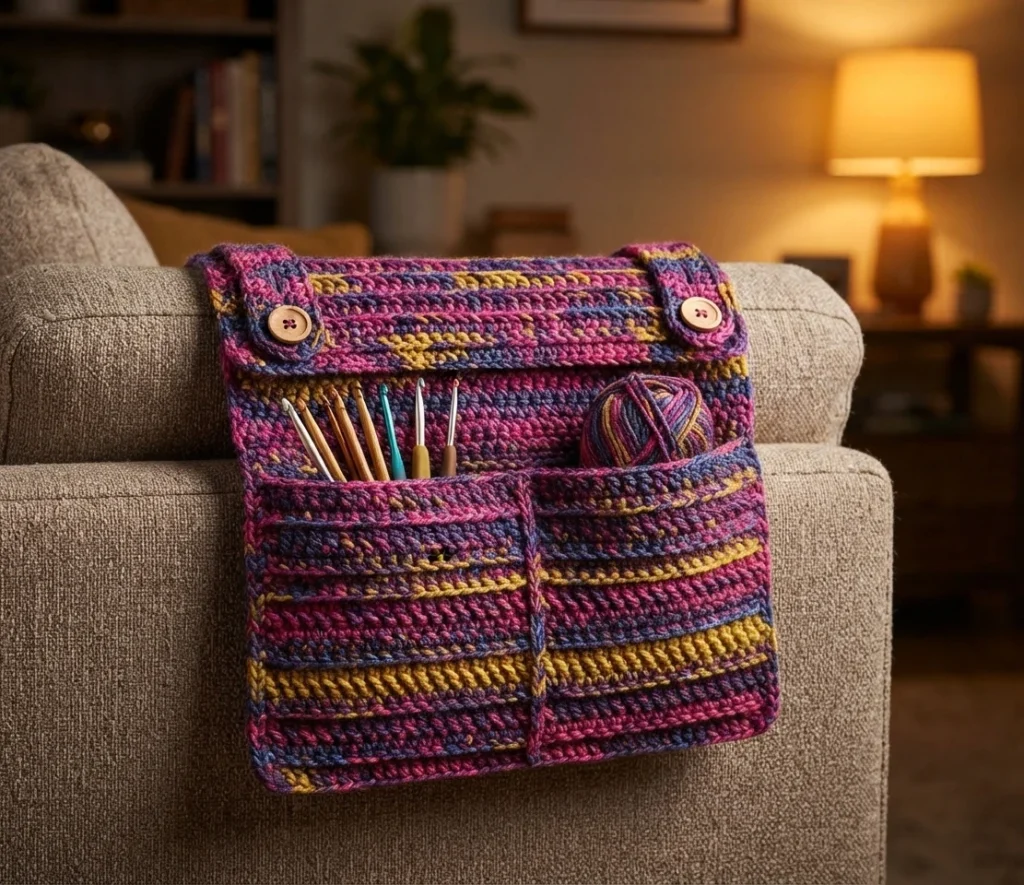
Testers who already used a walker, or who lived with someone who did, helped show how useful the design can be in daily life. One tester worked in an ombre yarn, while another tester said the pocket replaced grocery bags tied to a walker. Because every piece is made separately, the height and length can be adjusted for a particular walker. Longer straps can also adapt the idea for a wheelchair, and the finished holder can sit over a chair, recliner, or couch.
Pattern format and preparation
This overview covers a beginner/intermediate design written in American Standard Terms, so United States stitch names apply throughout. The source notes that beginning and turning chains do not count as a stitch, a detail that matters when you check your work against the original. The designer presents the pattern as a free pattern on the Orchid and Bee’s website. Use the original page for the complete instructions, since this overview does not replace that source.
Gather the supplies below before you start, and read the original notes for any choices that depend on your walker style. The list follows the source, including optional items that change how the straps attach or how sturdy the finished tote feels. Keep a needle nearby for sewing panels and straps, and test button placement on your own walker before you sew anything permanently.
- Worsted Weight 4 yarn, 285 yds - 350 yds
- Hook H or 5mm
- Needle
- Scissors
- Hot glue, optional for extra security if you prefer glue over sewing straps and buttons
- Buttons, 1 1/4 in, 6 or more if needed for your walker style, if using buttons to attach
- Velcro, optional if you do not want to use buttons
- Fabric backing, optional for extra sturdiness
The abbreviation list uses Ch for chain, Sc for single crochet, Dc for double crochet, Sk for skip a stitch, Sp for space, Hdc for half double crochet, and CSFS for Camel Stitch Front Side. St and Sts mean stitch and stitches, while the number forms show where to place a stated count. Two textures give the bag its look. Lemon peel alternates single crochet and double crochet, and camel stitch works a half double crochet into the third loop on the front side, rather than the usual top loops.
The finished size is approx. 15 inches wide and approx. 14 inches tall before being folded over the top, with pockets approx. 6 inches deep. The sample fits a walker that is 19 inches wide. Folding over the top four inches leaves roughly 9 to 10 inches in the front. For gauge, the foundation chain uses multiples of 2 plus 1, the swatch size is approx. 6in square, and the rate is approx. 4 st per inch. Change the beginning chain for width and change rows for height.
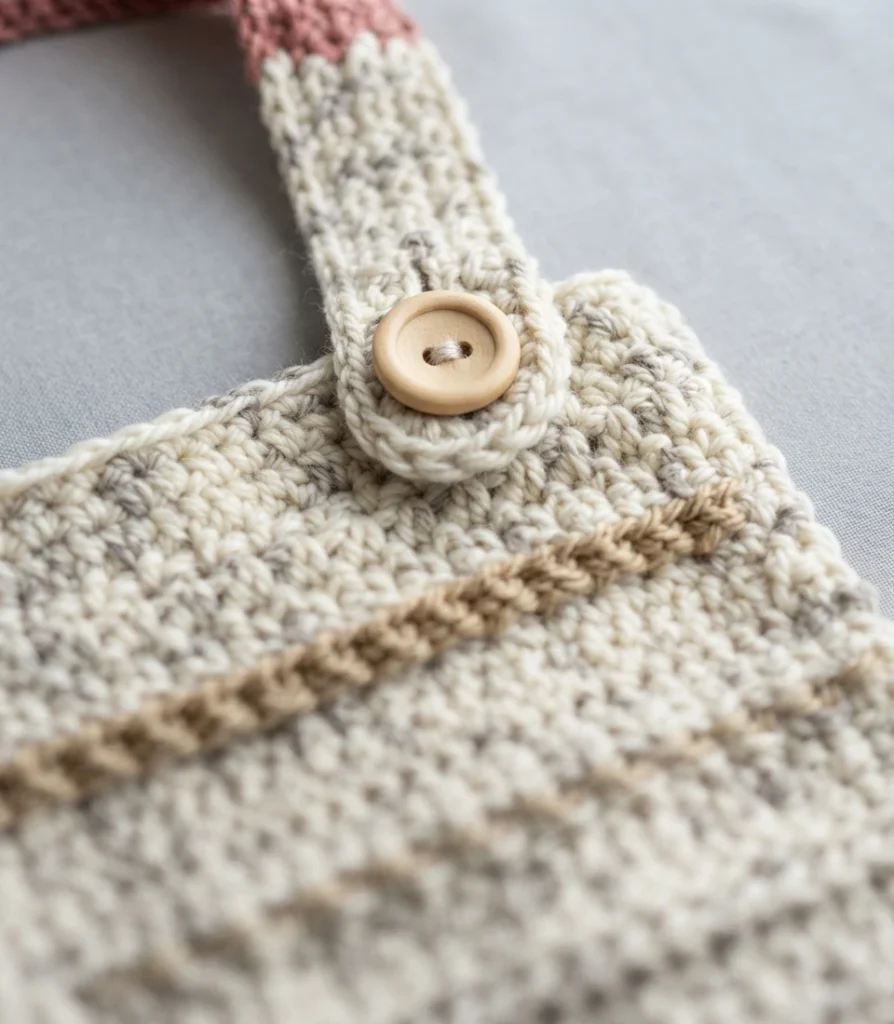
Construction uses separate pieces, so you can make the number of straps your walker needs. The set includes a main panel, a pocket panel, 10 inch straps, with 2 or more if needed or desired, and 3 inch straps, with 3 or more if needed or desired. Assembly generally joins the pocket to the main panel, adds a center line that divides the pocket, and places straps at the top and lower back. Buttons secure the top straps, while lower straps wrap around the walker legs.
For a stronger holder for heavier items, the source suggests sewing fabric to the back sides of each panel and the straps, or trying two strands of yarn. It is made for lightweight items, such as tissues, reading glasses, or a small book. You can add a second pocket panel, add rows for deeper pockets, use longer straps, use tie strings that tie and knot, or use Velcro for easier assembly. Finish by testing the fit, checking tension, and adding an applique or letters if you want a personal touch.
Crochet Cardinal Applique or Pocket Pal Amigurumi: Pattern Overview