Project introduction


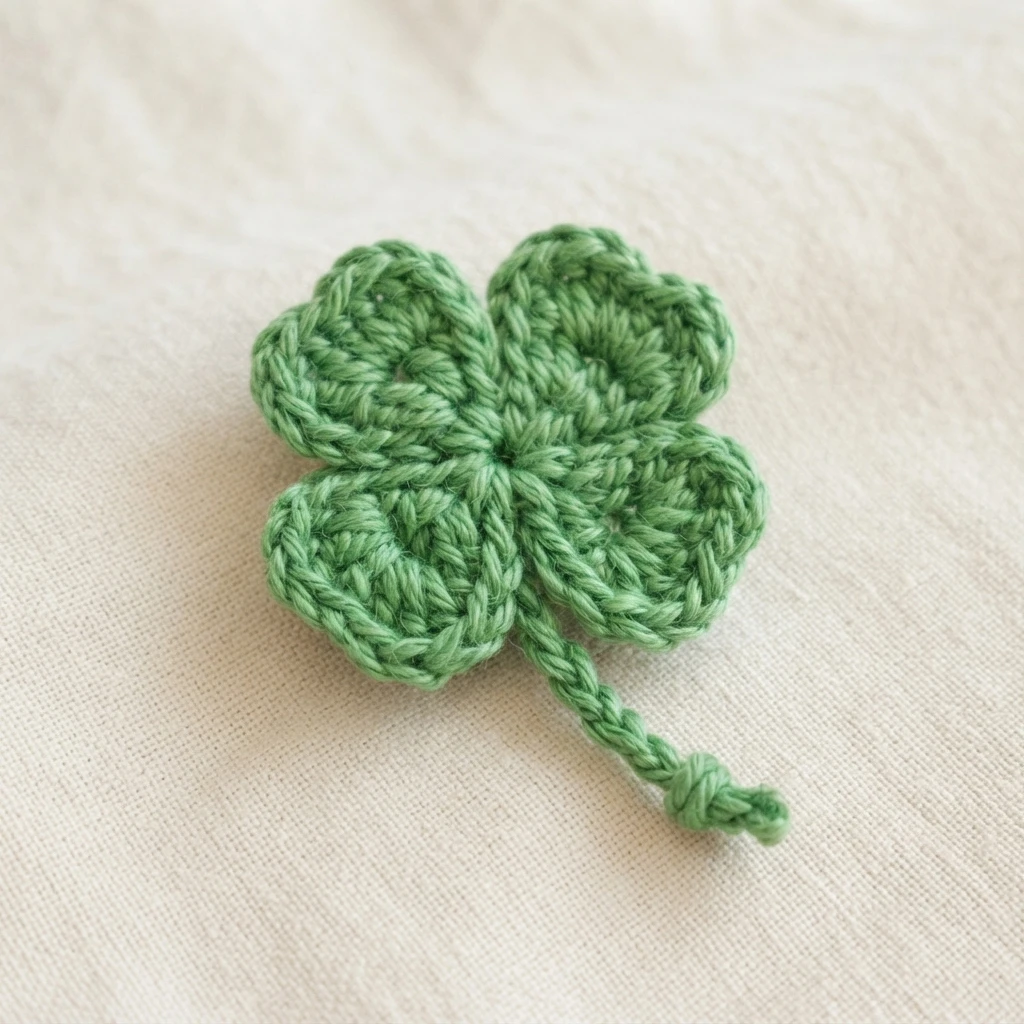
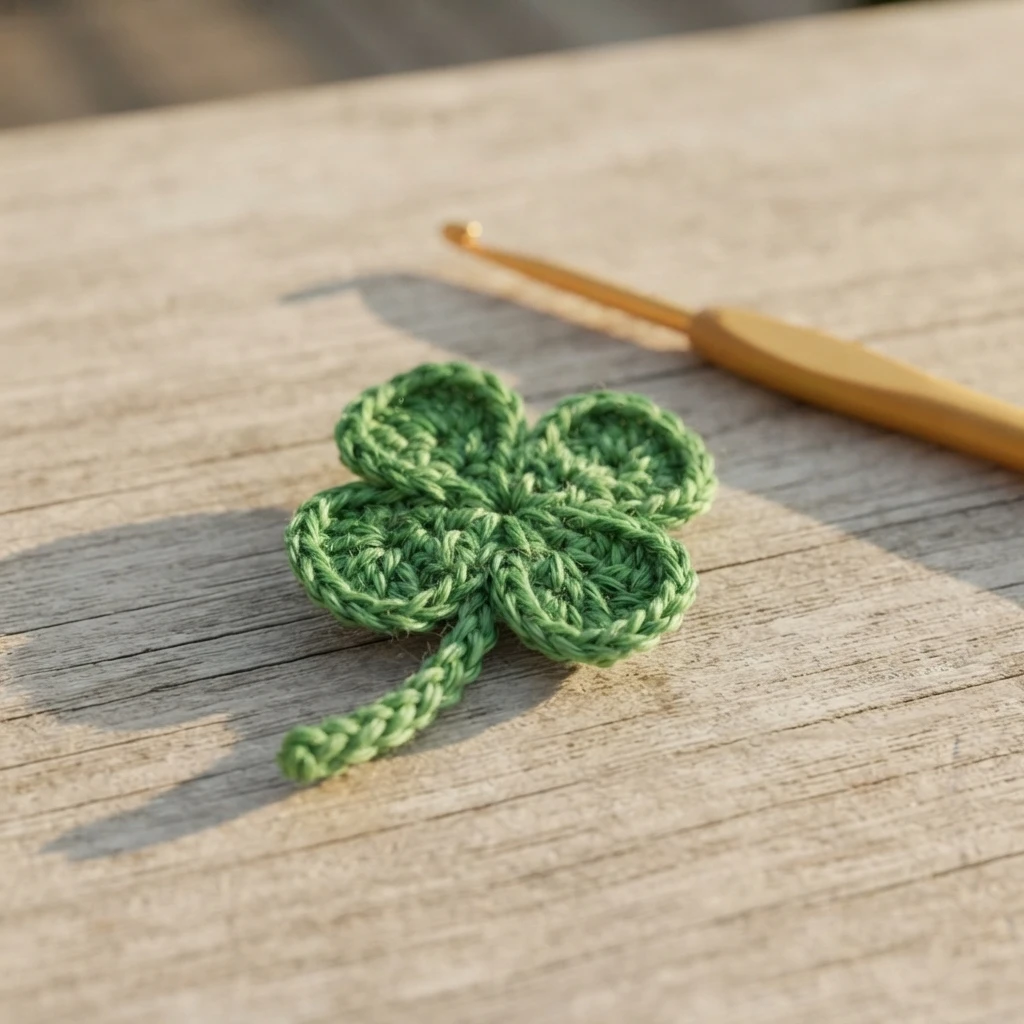
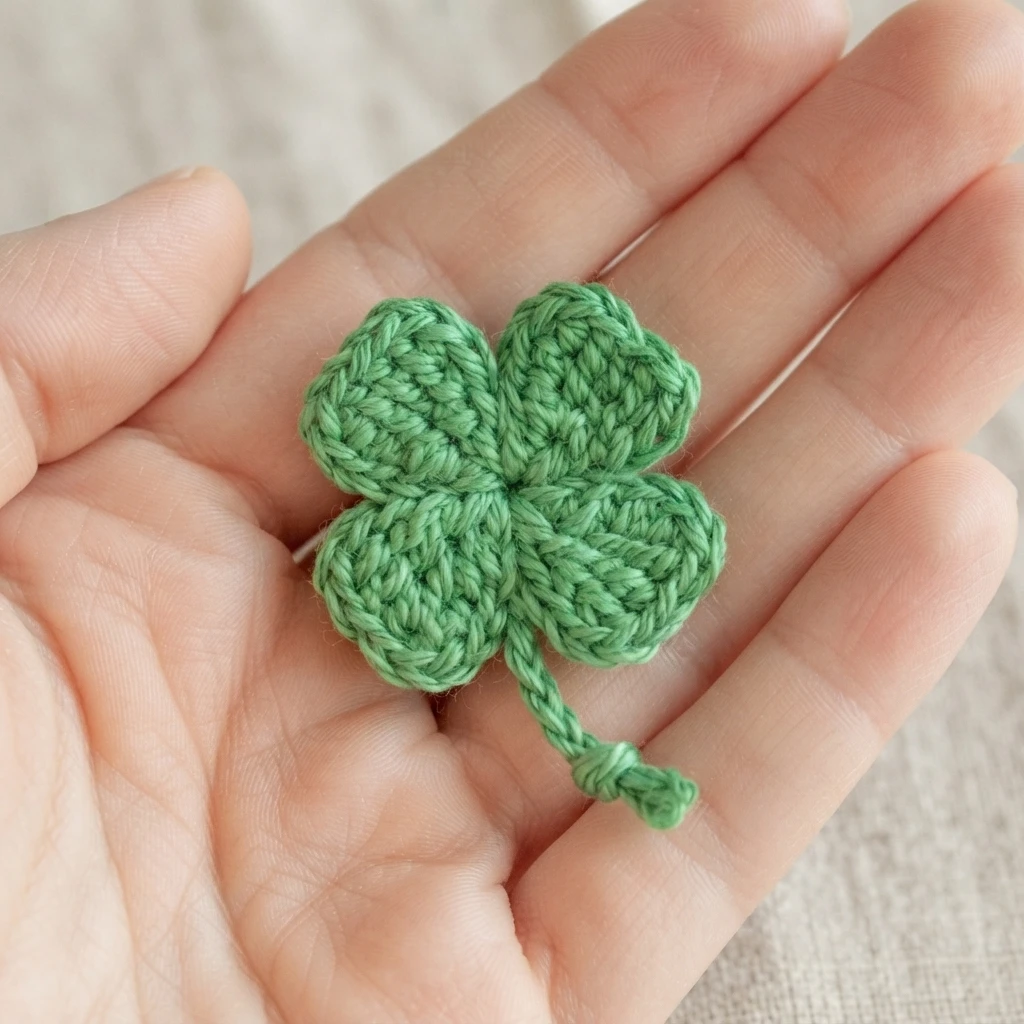

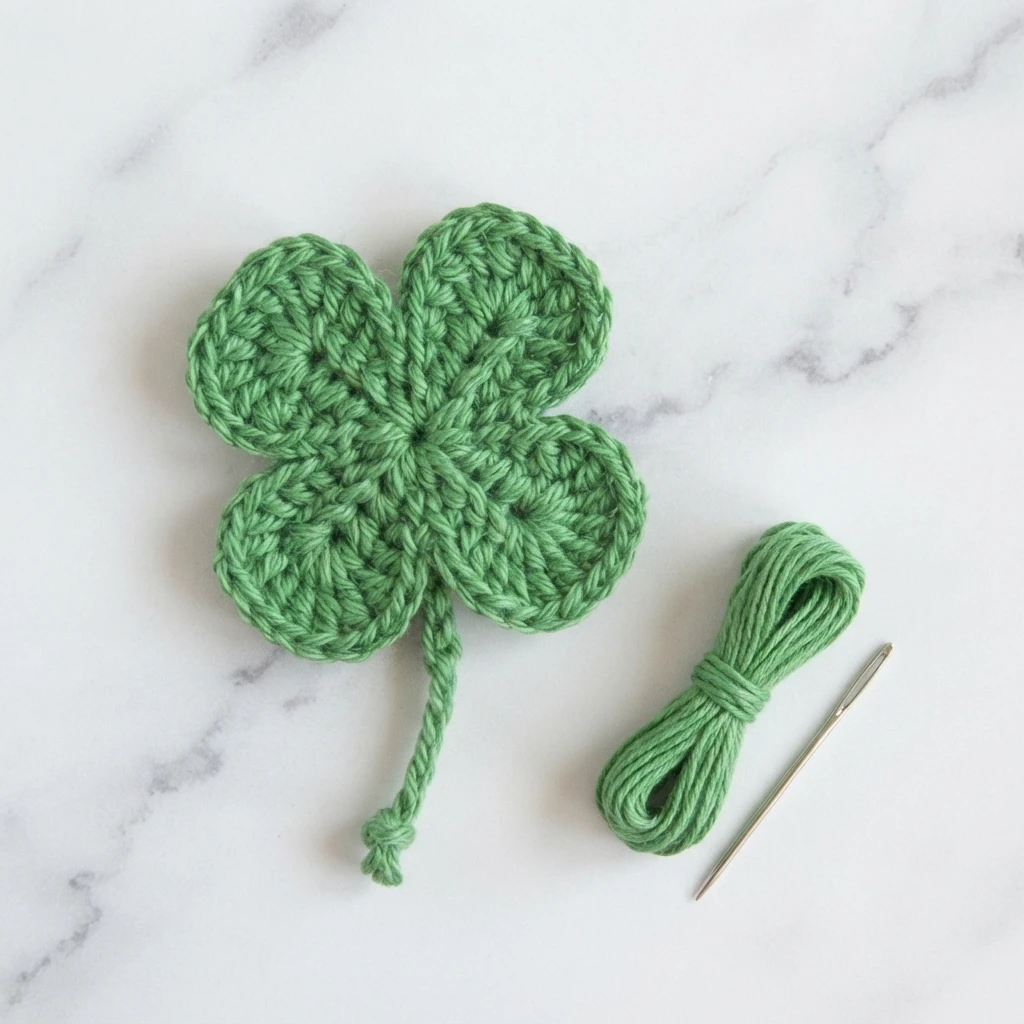

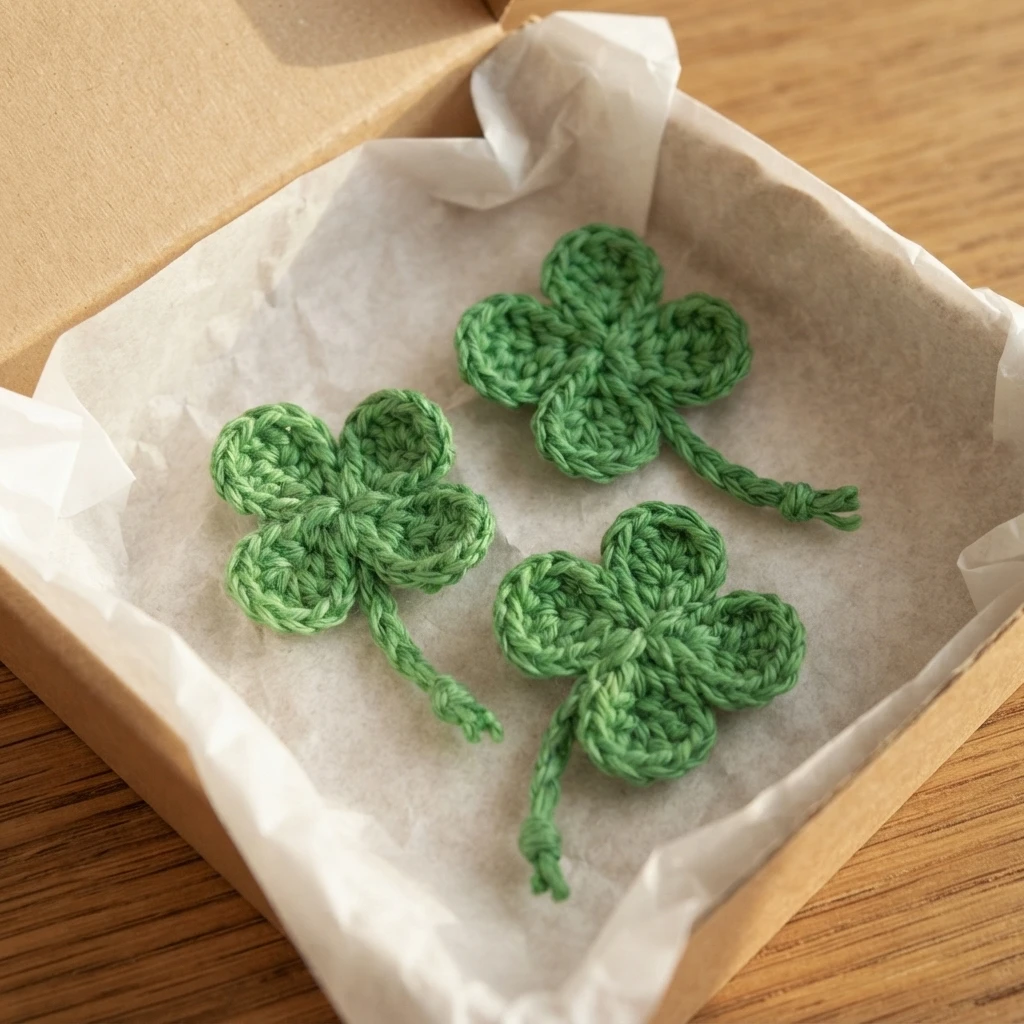

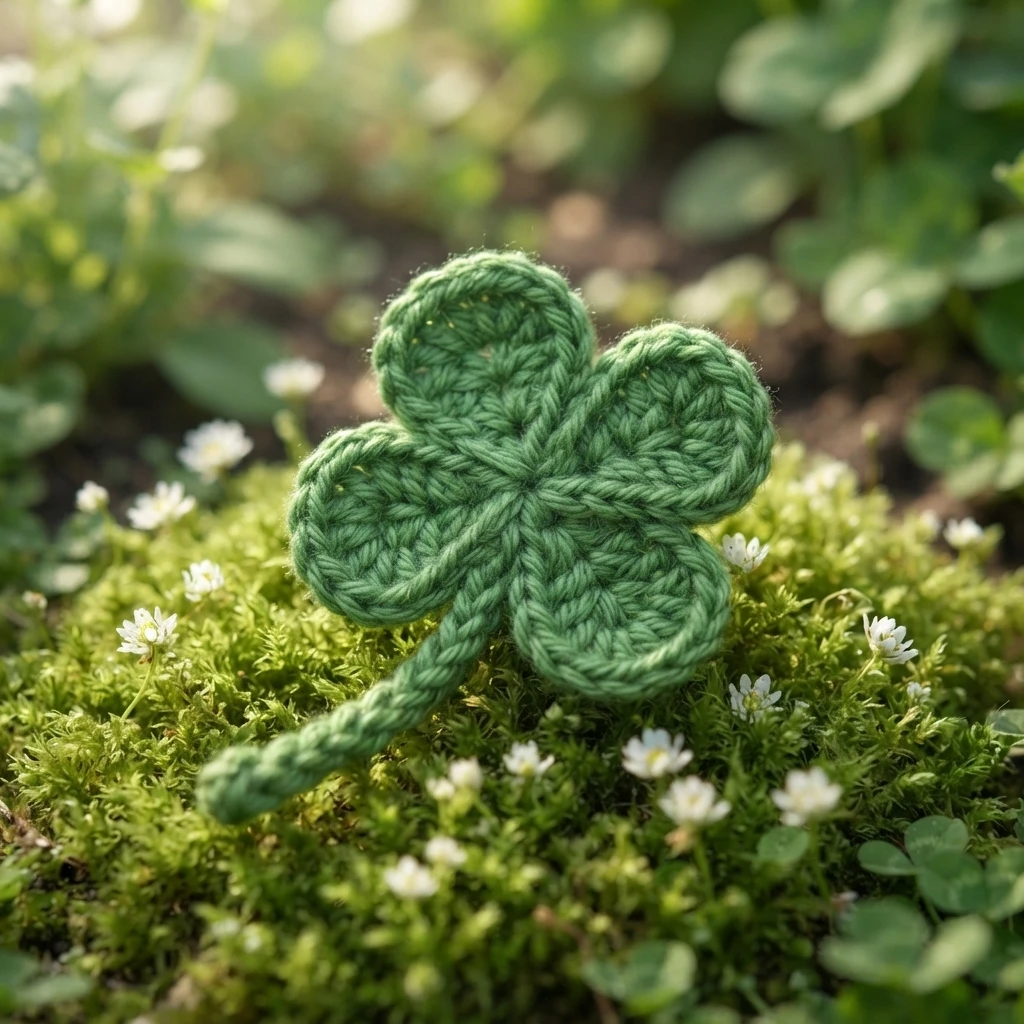


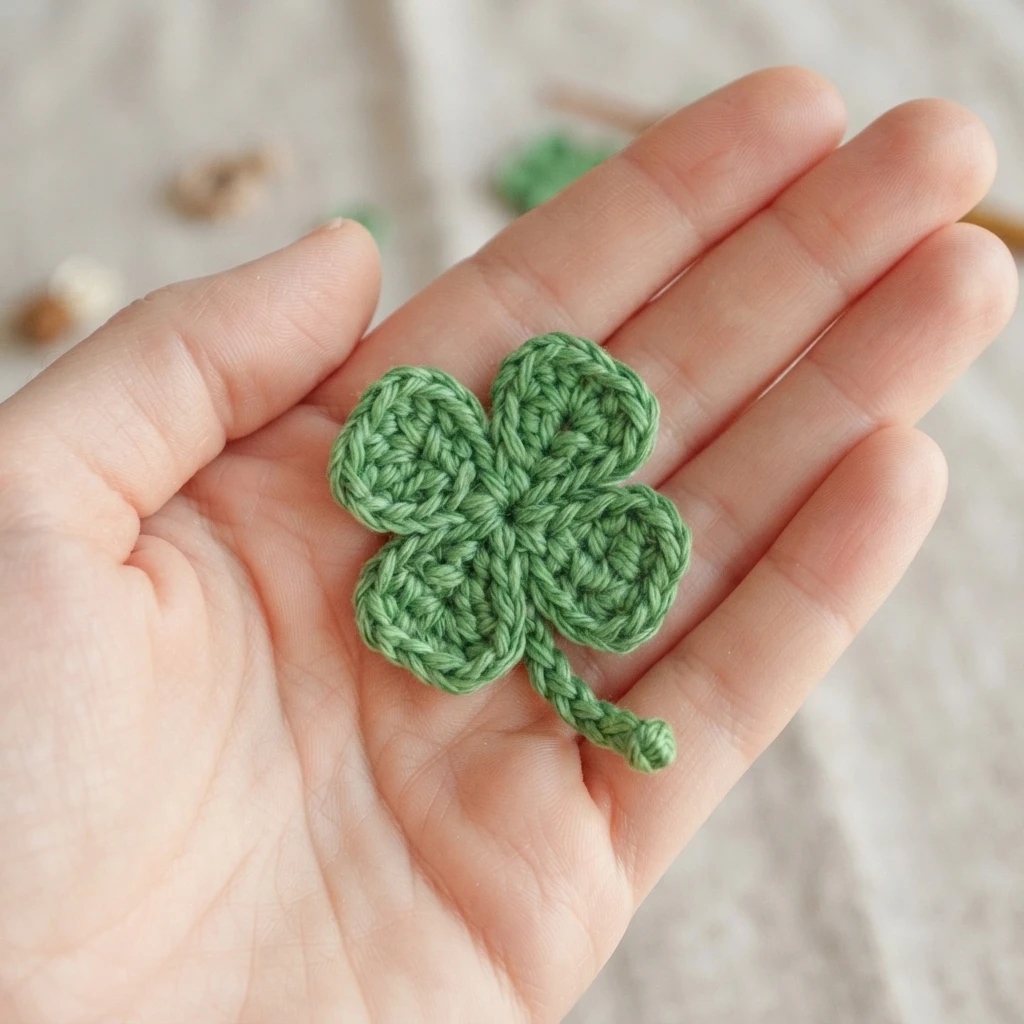


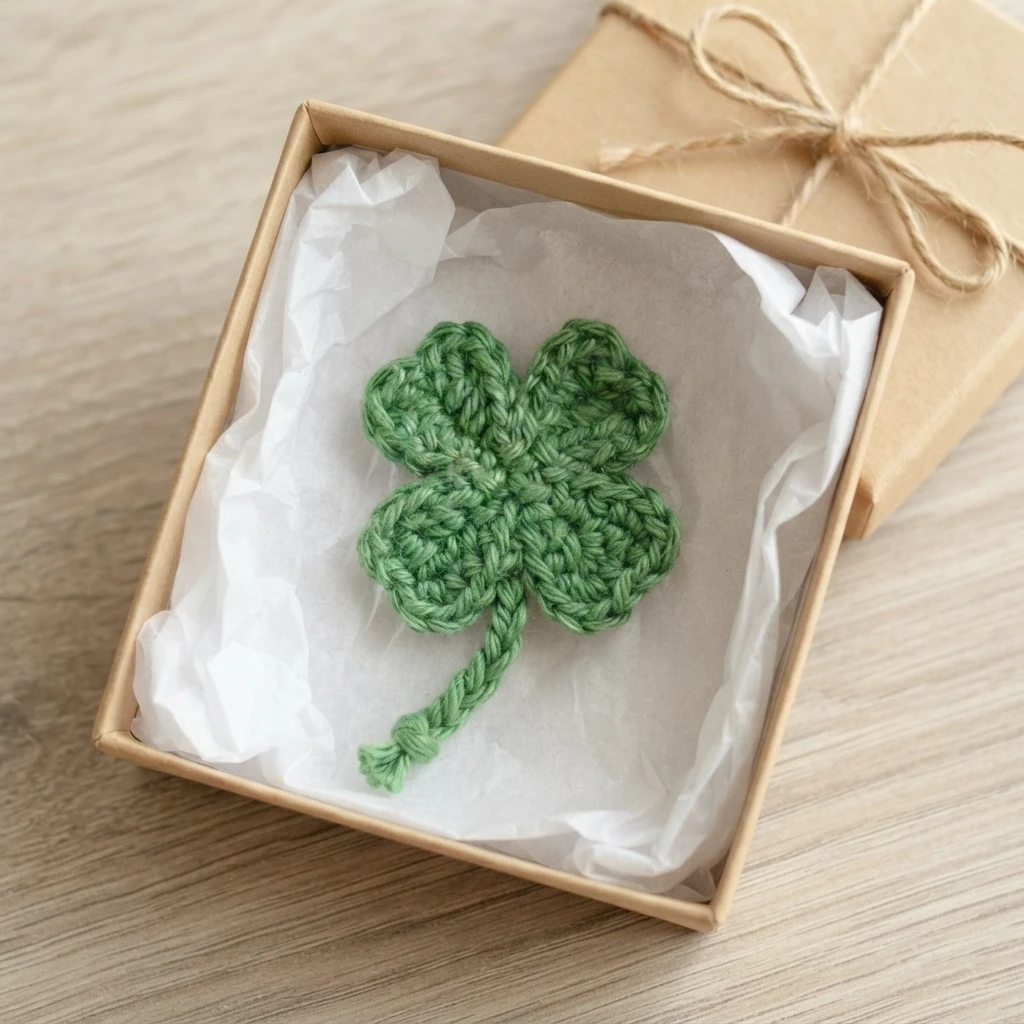


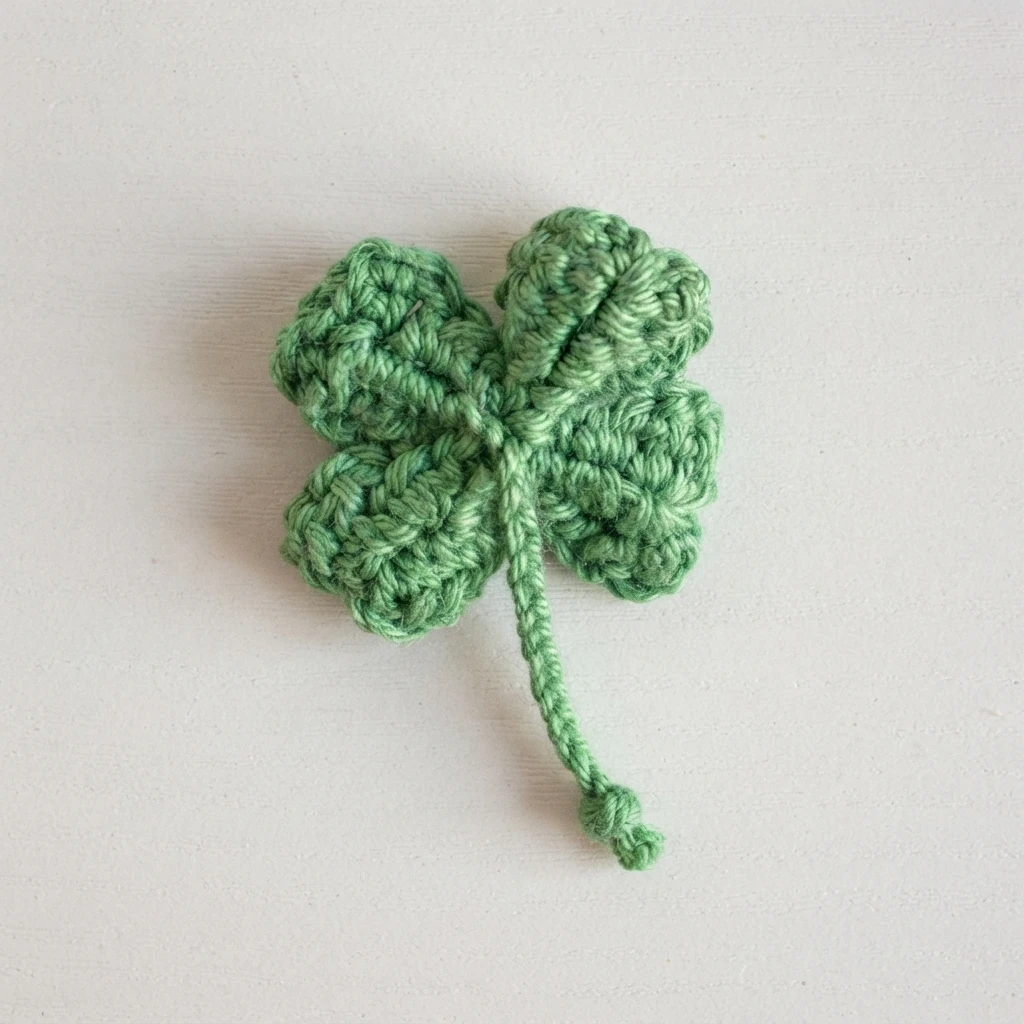


This article is a pattern overview of the Four-Leaf Lucky Clover, a free design by Lalylala Amigurumi (Lydia Tresselt), and it is not a full tutorial. It describes what the project is, what you need, and how the piece is built, so you can decide whether it suits your plans. The complete row-by-row instructions remain on the designer’s own page, linked below.
In the source material the four-leaf clover is a charm for the turn of the year. Each of its four leaves is said to stand for something special: the first for faith, the second for hope, the third for love, and the fourth for luck. The plant is rare in nature, estimated at about 1 in 5,000 clovers, and it has long carried protective and fortunate meanings in Celtic mythology.
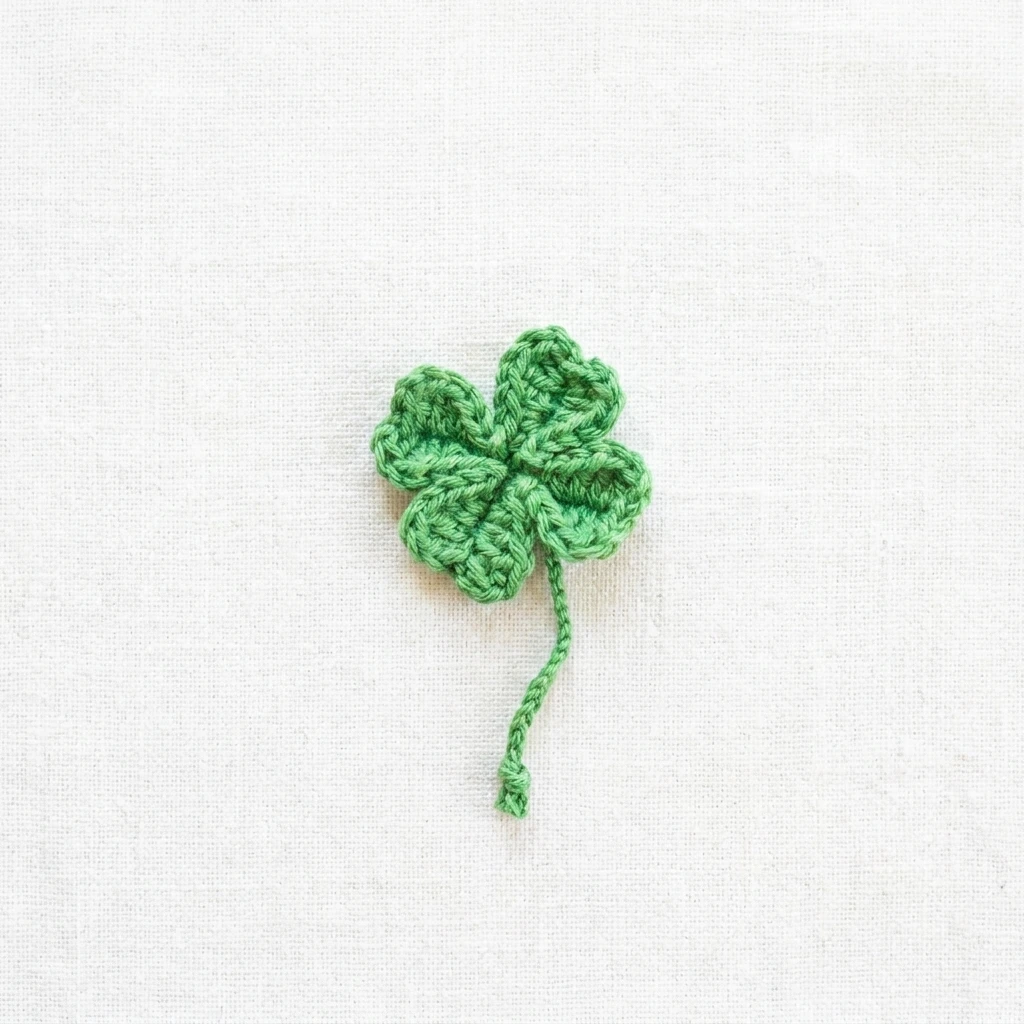
The finished clover is a flexible little make. The source suggests working it as a brooch, a keychain, a pocket talisman, or a gift for someone you want to wish well. Because it uses only small amounts of yarn, it is an excellent way to use up leftover bits from earlier projects, and a batch of clovers makes a thoughtful gesture for celebrations.
The original design and the full written pattern belong to Lalylala, and you can find them at the Original designer’s pattern and instructions on the designer’s website. Start there when you are ready to crochet, since this overview explains the project rather than repeating the step-by-step pattern.
Construction is clever and compact. You begin with two short foundation chains that are joined with a slip stitch into a small cross, giving the clover four arms to build on. Each petal is then worked directly onto one arm using a graduated mix of single crochet, half double crochet, and double crochet stitches, with a small chain-and-slip-stitch point shaping the tip of each leaf.
The first petal is started before the remaining three are completed around the cross. To finish, the long yarn tails left at the center are braided into a stem, knotted to your chosen length, and trimmed, with the remaining ends woven in.
A note on use: the design and pattern are copyrighted by Lalylala Amigurumi, and finished items made from this pattern cannot be sold. You may make as many as you like for personal, non-profit, or charity purposes, but the pattern itself may not be published, reproduced, or altered without the author’s written permission.
Pattern format and preparation
The source publishes this clover as a free crochet pattern on the designer’s own page, and nothing in the source describes a paid printable or PDF version. The free access you can rely on is the web version; no price, purchase, or download format is stated. Always check the source page to see exactly which formats are free.
The pattern is written in US crochet terminology, and the source supplies a short abbreviation key: chain is ch, single crochet is sc, half double crochet is hdc, double crochet is dc, and slip stitch is slst. Instructions between degree marks are worked into the same stitch, and bracketed repeats are worked as many times as the number after the closing bracket.
The source lists a short, approachable set of tools and yarn, which is part of this project’s charm for beginners. Gather everything below before you start your first chain:
- 2.25 mm crochet hook (US B/1, UK 13)
- Darning needle for weaving in ends and guiding tails toward the center
- Scissors
- Sport or baby weight yarn (size 2 - fine) in green, teal, or any color of your choice; the designer’s samples use leftover Scheepjes Catona and Yarn and Colors Must Have, both 100% mercerized cotton with 50g / 125m (2oz / 137yd) per ball and a gauge of 10×10 cm (4×4 inch) = 26 sts x 36 rows
The source states that you may use every yarn weight or color of your choice, so treat the sport weight sample as a suggestion rather than a requirement. Leftover scraps are ideal here, since the clover consumes only a small quantity of yarn. If you substitute a different weight, your clover will simply turn out larger or smaller than the sample.
Because the piece is worked from separate foundation chains, keep your starting tails long; they become the braided stem, so skimping on length makes the finish harder. Review the abbreviation key once before starting, and you will find the rhythm of the petal sequence easy to follow on the designer’s page.
If this small project appeals to you, related reading on PatternCrochet includes Autumn Leaf C2C Crochet Chart: Harvest Blanket CAL Square Overview: Pattern Overview and Leaf Coasters pattern by Katherine Laight: Pattern Overview, both of which explore other leaf-inspired crochet ideas.