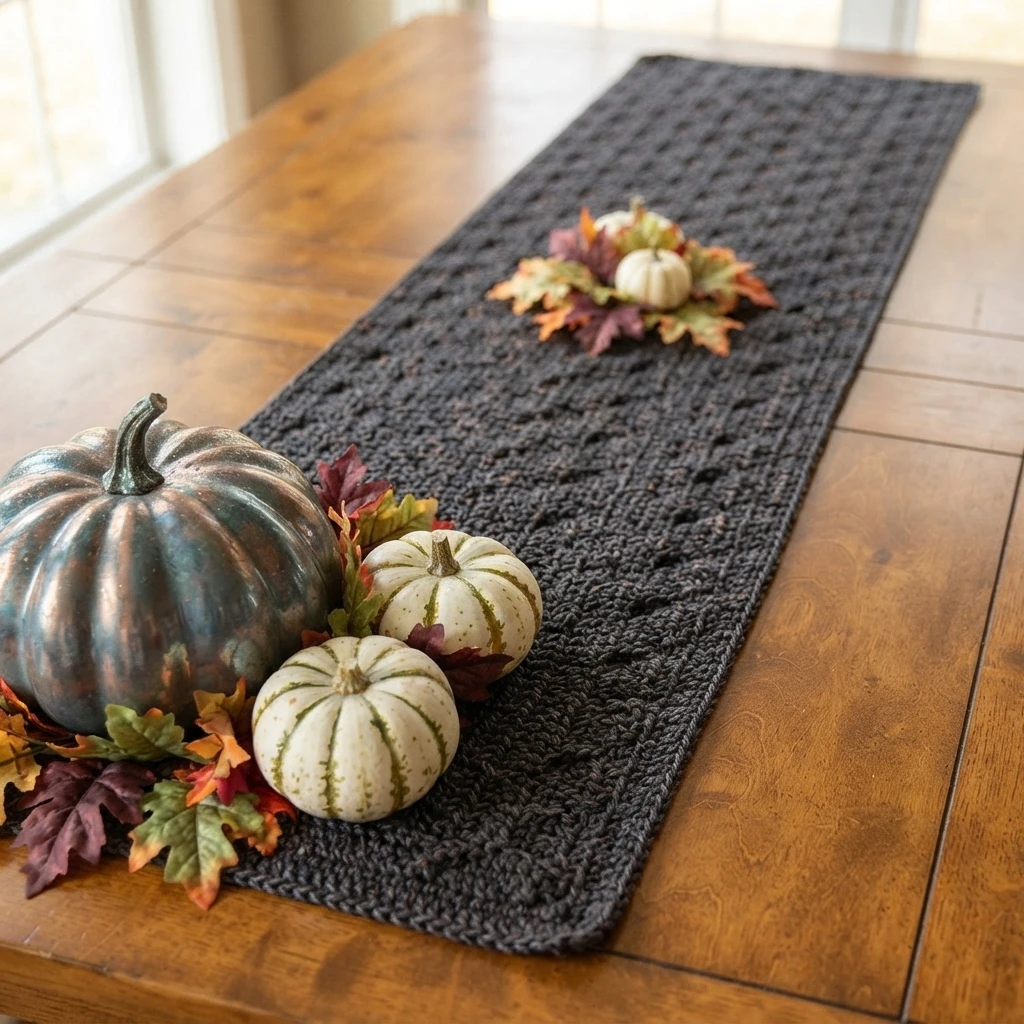
Fall Table Runner Crochet Pattern Overview
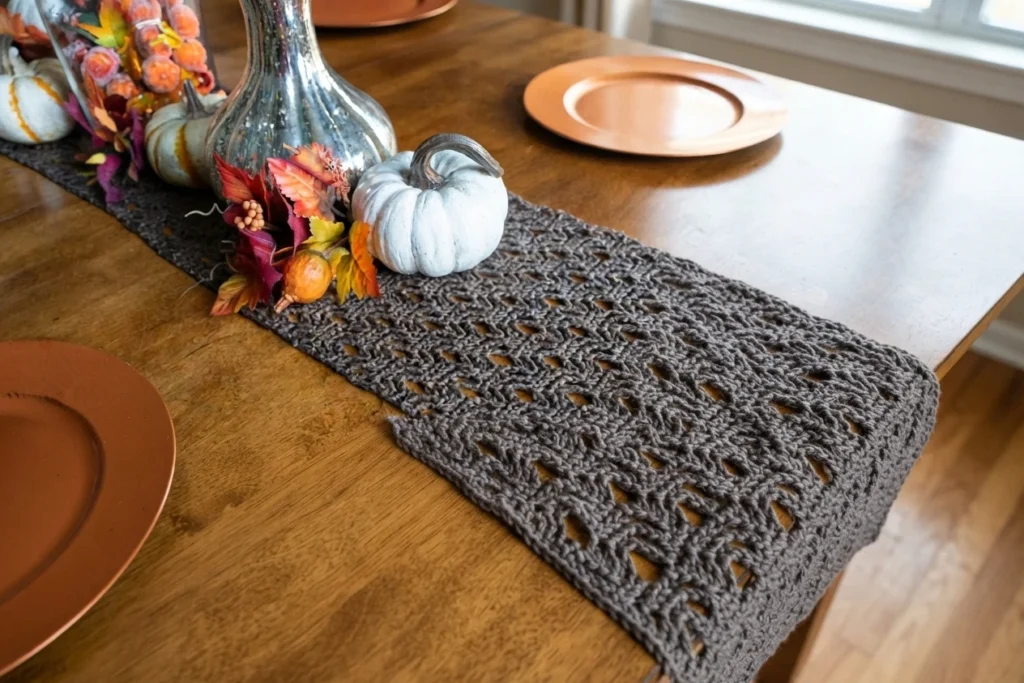

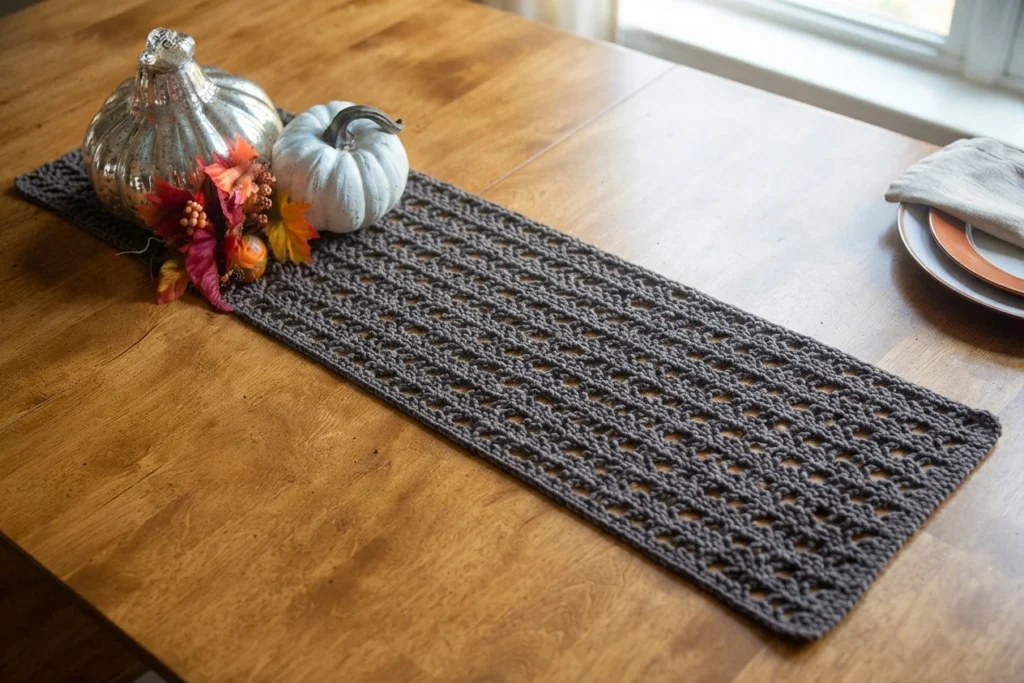
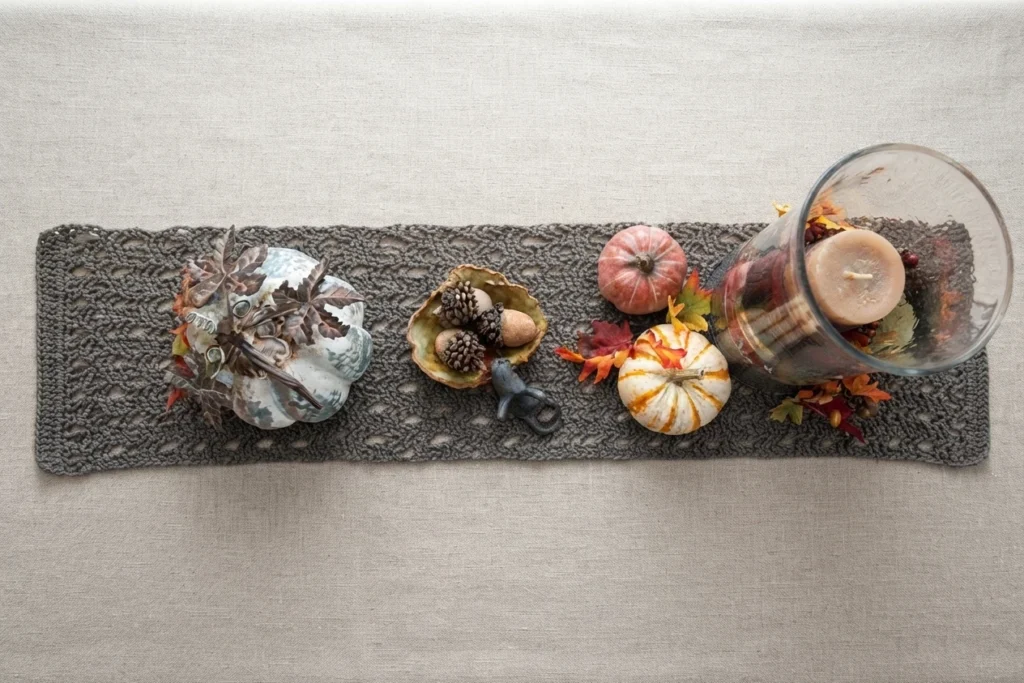
This is a pattern overview, not a full crochet tutorial. The Fall Table Runner from Heart Hook Home is a long, rectangular home decor project built around an open Woven Lattice stitch pattern. It combines single crochet, double crochet, and chains in a repeating texture. For the designer’s complete directions and any row-by-row details, use the Original designer’s pattern and instructions.
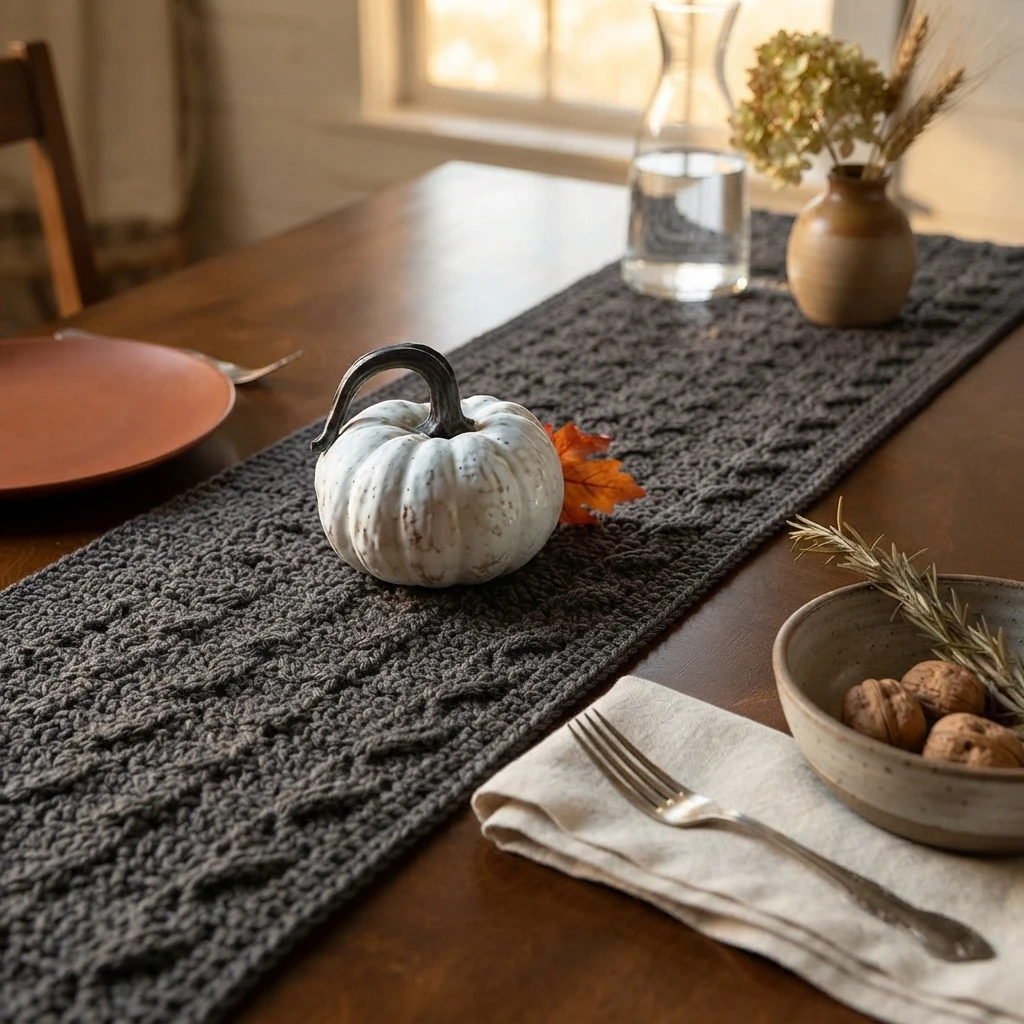
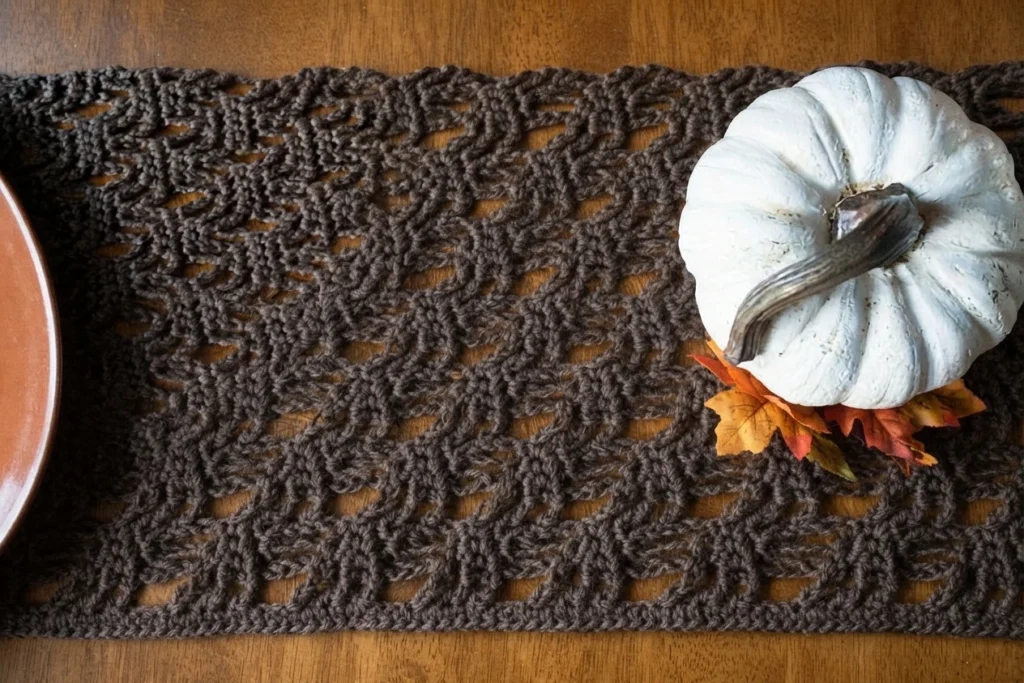
The lattice creates a woven look suited to a seasonal table setting, while the simple stitch vocabulary may appeal to crocheters comfortable with basic stitches. The original designer also describes the stitch as useful beyond table decor, such as for a window treatment. The fabric’s repeating open spaces give the piece visual interest without relying on a complex mix of stitch types.
Source-listed supplies: the designer names these materials for the project:
- Approximately 600 yards of Comfy Worsted, size 4 yarn, in the Thicket colorway. The listed fiber blend is 75% Pima cotton and 25% acrylic.
- Size H crochet hook, equivalent to 5 mm.
The source does not list stitch markers or a yarn needle as required materials, so they are not included in this supply checklist. It gives gauge as 8 stitches per repeat, with 2 repeats measuring 4 inches across. The approximate finished dimensions are 14 inches wide by 78 inches long. These are the designer’s stated figures, rather than independent measurements.
The pattern uses US crochet terminology and identifies Fsc as foundation single crochet. The designer provides that as the starting method, with a chain-based alternative described in the original pattern. If you are new to foundation single crochet or need the exact setup and repeat details, refer to the linked instructions rather than treating this overview as a substitute for them.
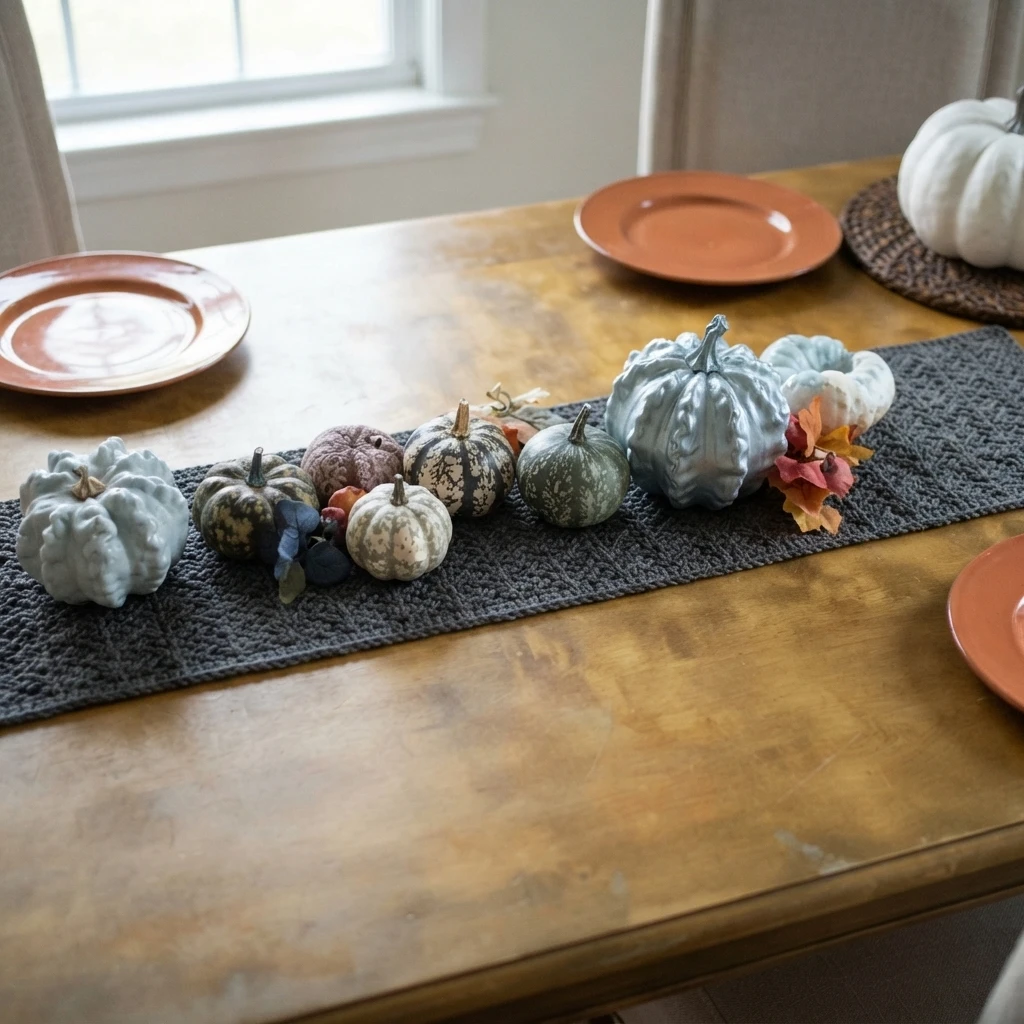
The named Thicket shade is a rich brown suited to fall decor. The source also mentions neutral shades and a bright red as possible color directions, but the pattern overview does not prescribe substitutions. Consider the colors already in your home when choosing a yarn shade, and check that any yarn you select is the same weight category before relying on the original gauge information.
Wanna save this for later?
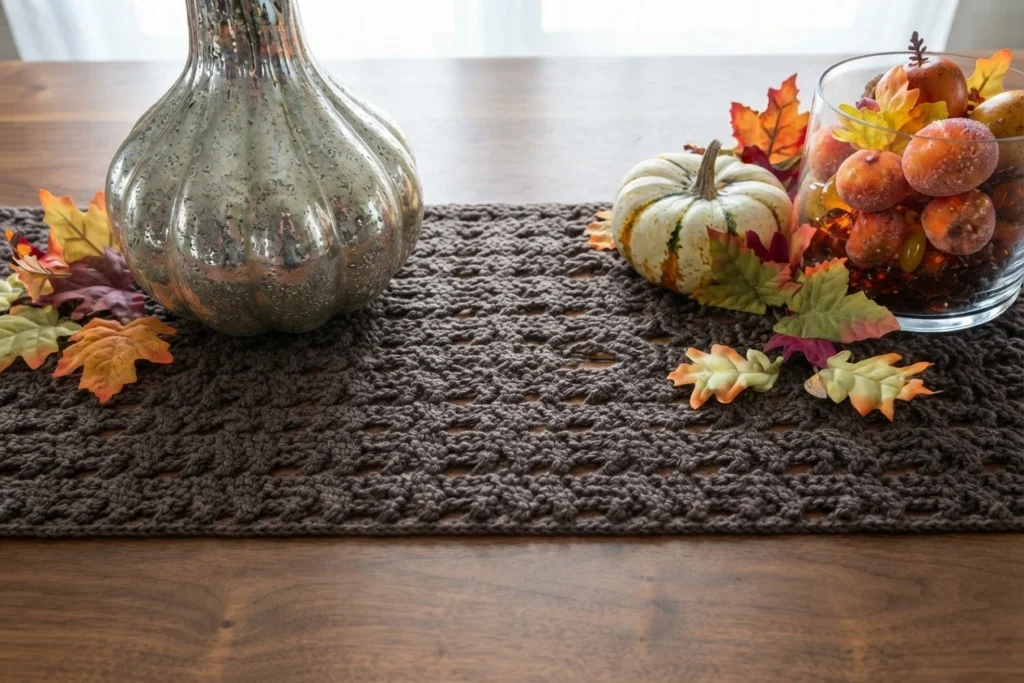
For construction, the design begins with a narrow foundation and builds a repeated chain-space motif across the fabric. Single crochet stitches anchor the open spaces, and the changing placement of those anchors creates the Woven Lattice effect. The middle portion cycles through a small group of pattern rows, so the visual structure comes from repetition rather than from many different stitch types.
The source identifies foundation single crochet for the starting edge and includes a conventional chain-and-single-crochet alternative. It then describes repeated rows of chains and single crochet, including stitches worked around chain spaces. A double crochet appears in the repeat as well. This overview intentionally does not restate individual row directions, repeat counts, or turning details; follow the designer’s page for those specifics.
There is no direct contradiction in the stated beginning and ending stitch totals in the supplied pattern text: both are marked as 57. However, this overview does not independently verify the stitch count across every repeat. If your count does not match the designer’s stated totals while following the complete pattern, pause and check the original row wording rather than guessing at a correction.
The source finishes by calling for the ends to be secured and the runner to be blocked, with tassels offered as an optional finishing detail. It also says the repeated section can be continued for a longer table before completing the finish. Those choices affect the final presentation, so use the original designer’s directions to confirm where the repeat ends and how to finish the piece cleanly.
As a planning reference, this project is most useful for crocheters who want a textured seasonal centerpiece and are prepared to follow an external pattern for the actual stitch sequence. Review the designer’s gauge and finished-size notes before starting, then use the linked pattern as your authority for construction. The summary here is meant to help you understand the materials and overall design, not replace the complete instructions.


3 thoughts on “Fall Table Runner: Pattern Overview”