Project introduction
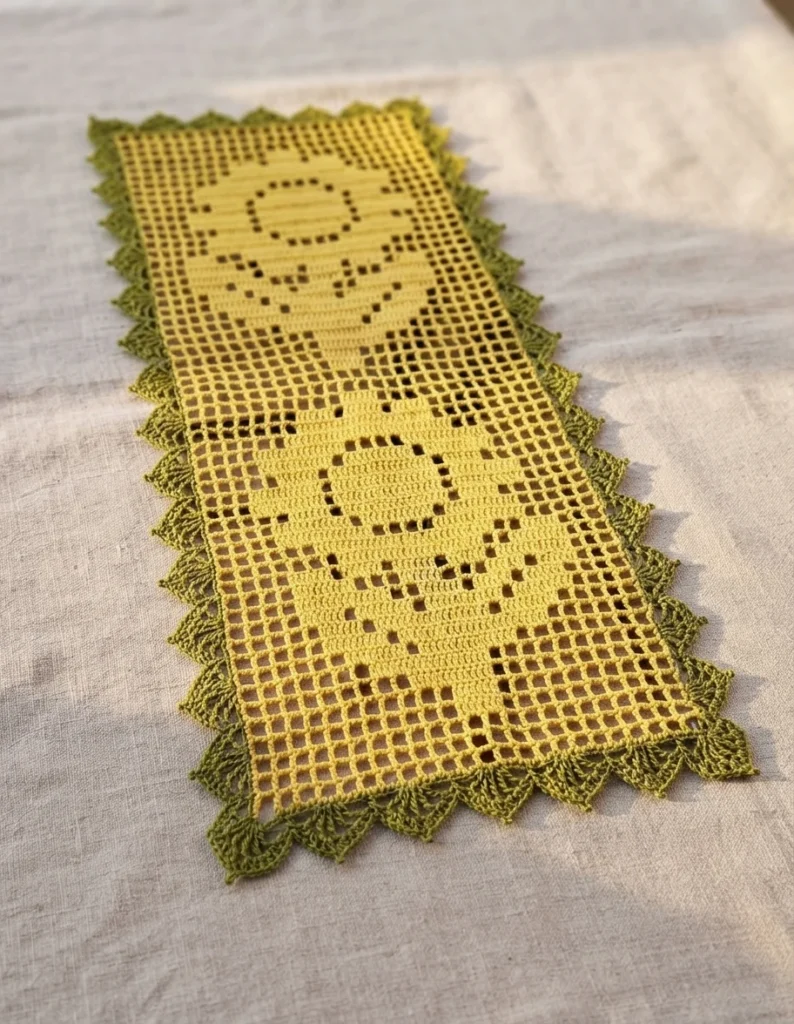
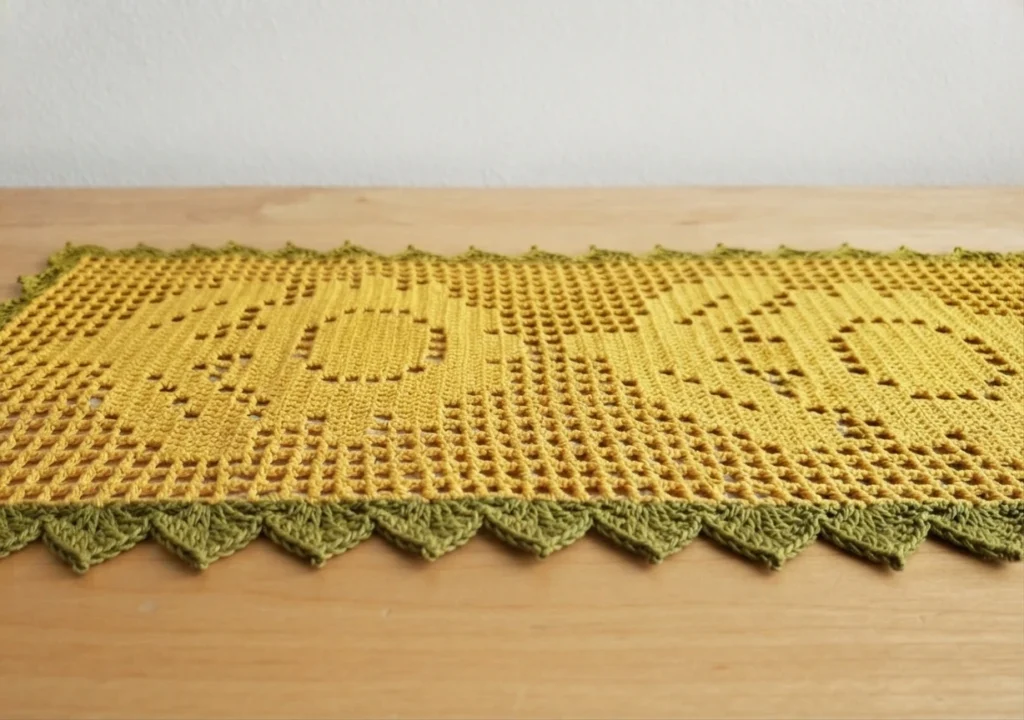
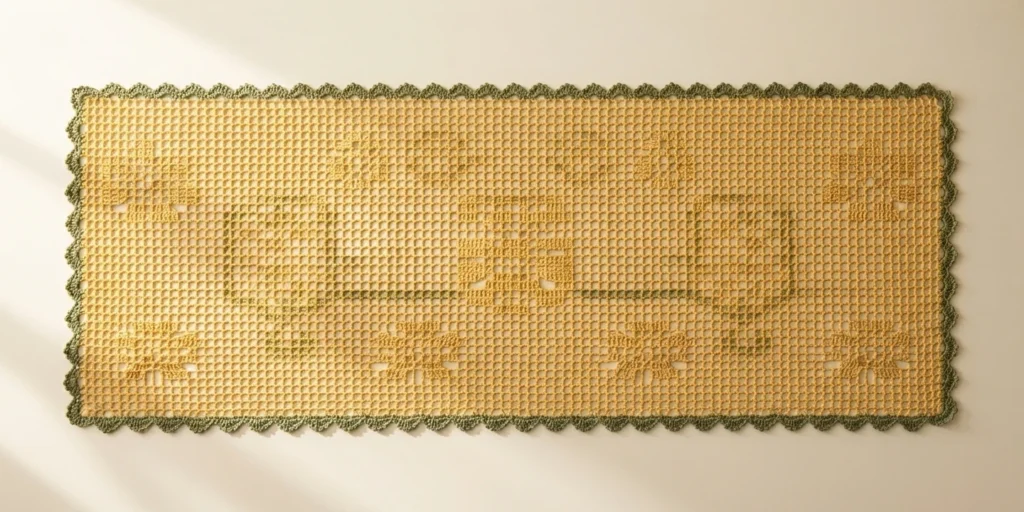
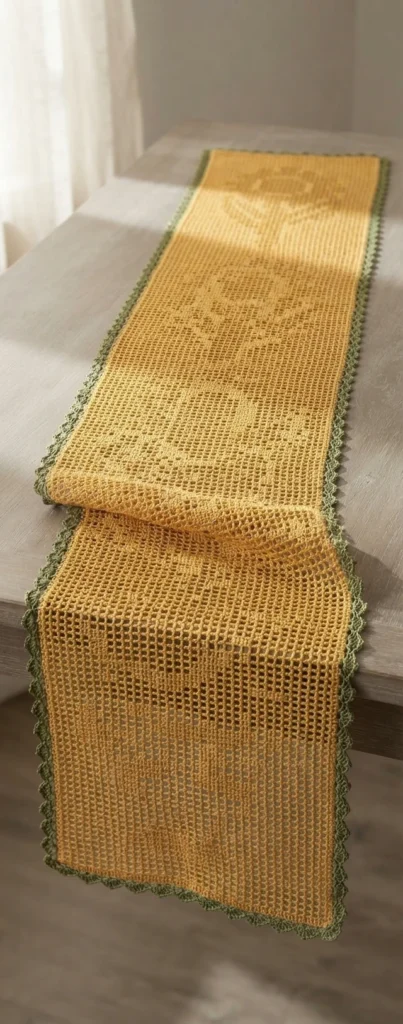
The Sunflower Table Runner is a cheerful, sunny decor piece meant to brighten up any room. This is a pattern overview, not a full tutorial. The design comes from Raine Eimre of Handmade by Raine, who describes it as easy to crochet using filet crochet, a technique that relies on just chains and double crochet stitches to build the pretty sunflower images. The runner is part of the designer’s Nature design series.
If you want the complete chart, the row-by-row written instructions and the finishing details, head straight to the Original designer’s pattern and instructions. Everything below is a practical overview to help you decide whether this project suits your thread stash, your hook collection and your patience for chart work.
What is filet crochet?
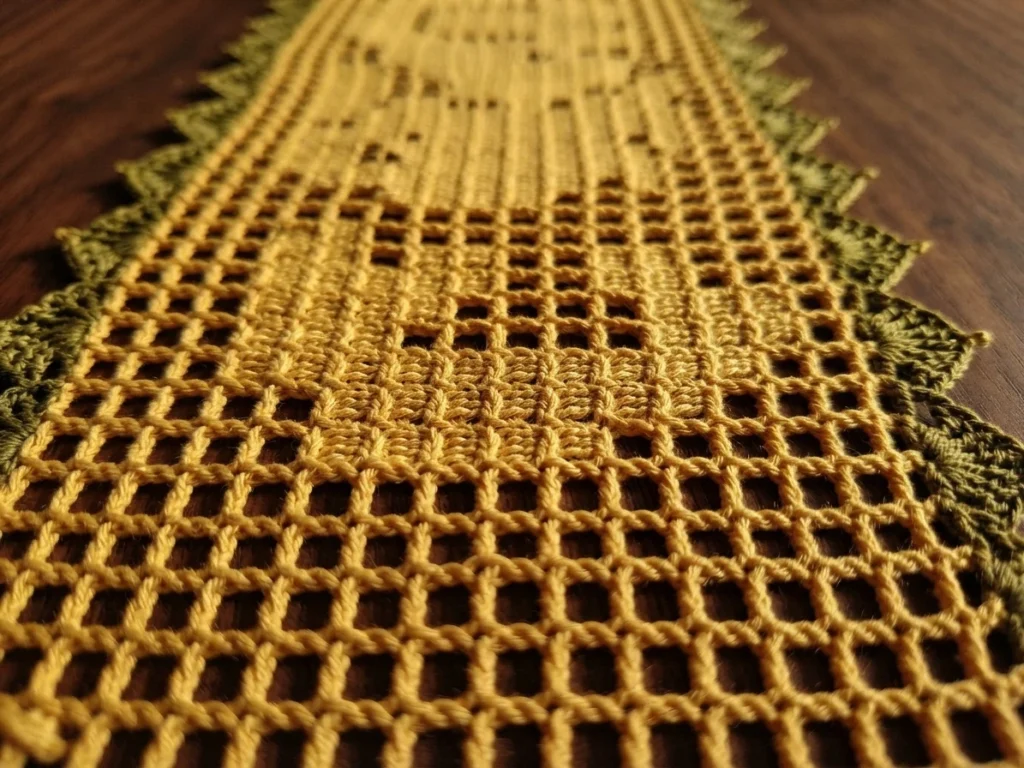
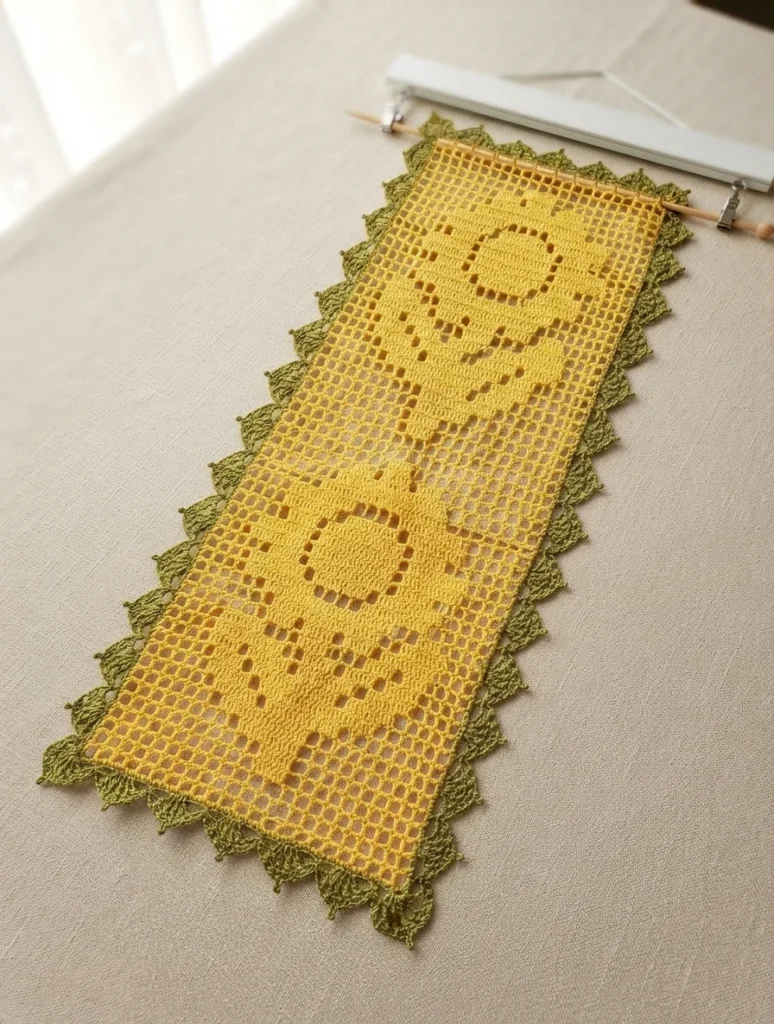
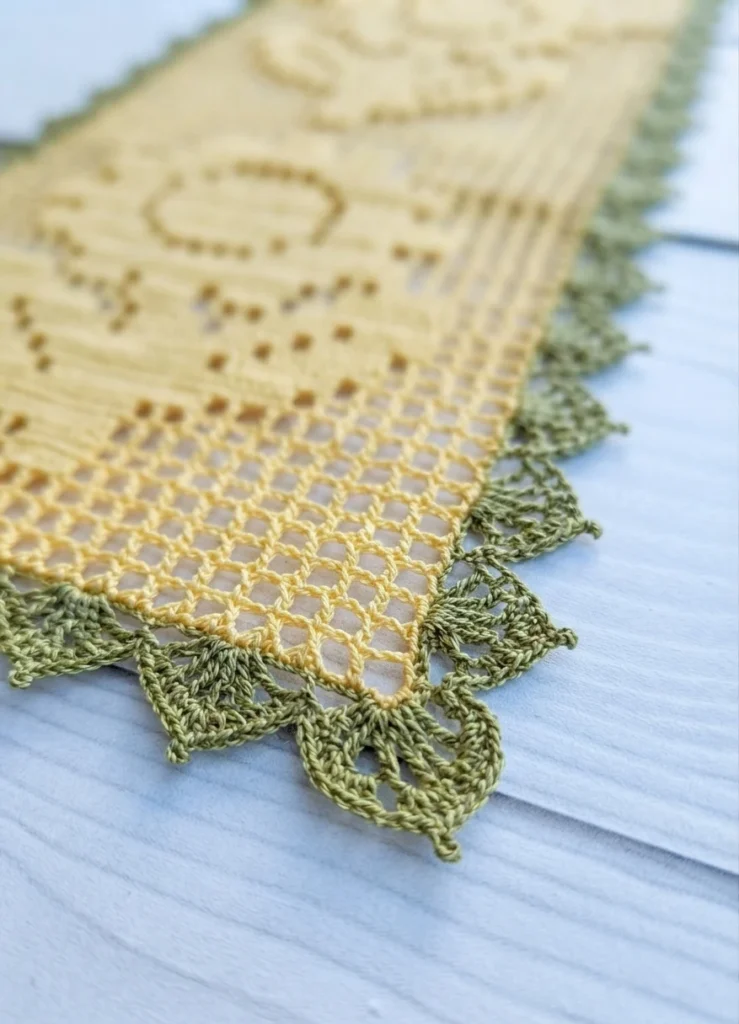
Filet means net or mesh in French. The technique uses chains and double crochet stitches, and you follow an image chart to place the blocks that form the picture. The full Sunflower chart appears in the written pattern section on the designer’s blog.
The grid is built from two kinds of blocks or squares. Open blocks are made with two chains and one double crochet, while solid blocks are made with three double crochet stitches. The first block on each row starts with additional double crochet, and from there each block is either ch2+dc (open) or dc3 (solid).
Blocking table runner
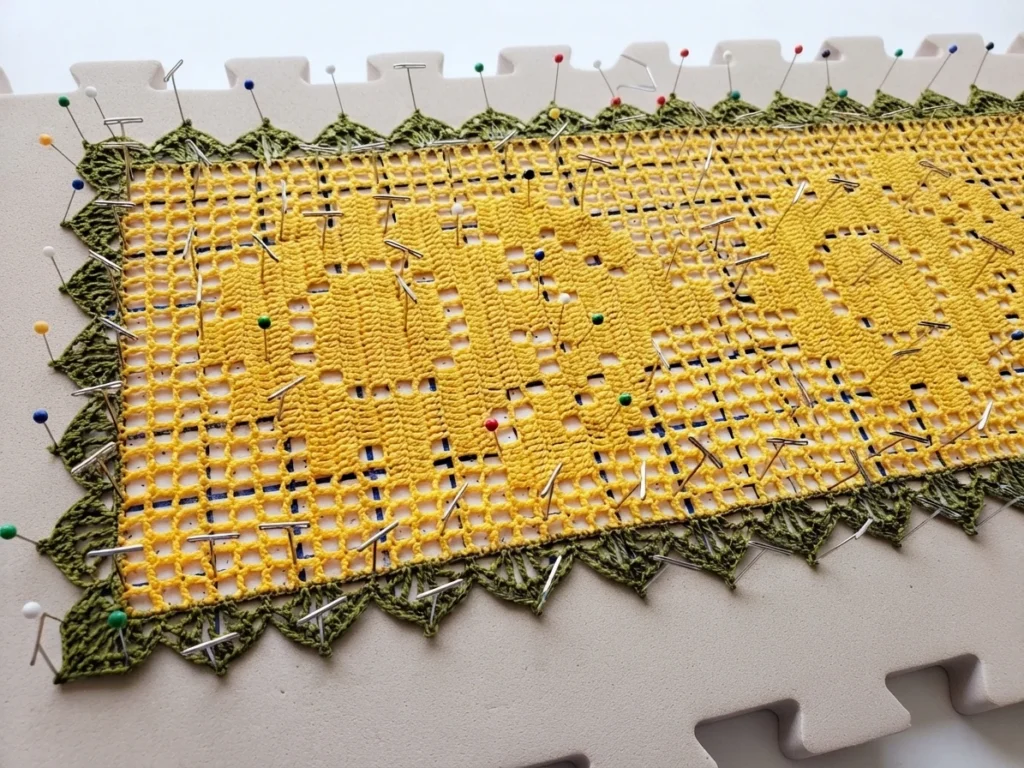
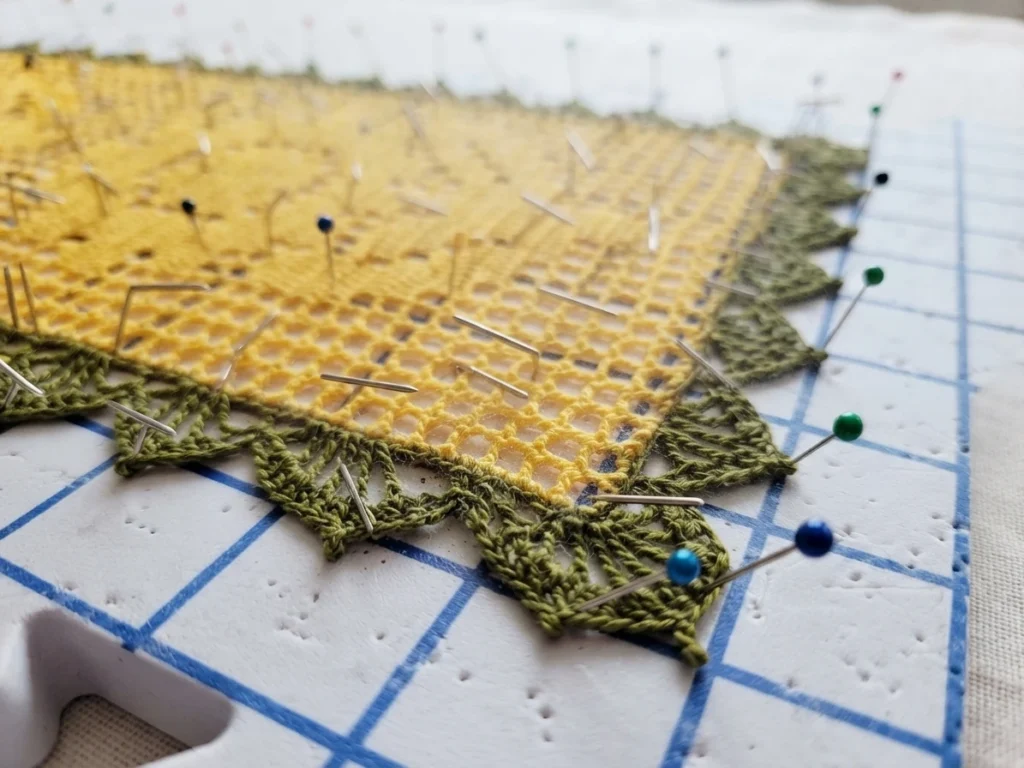
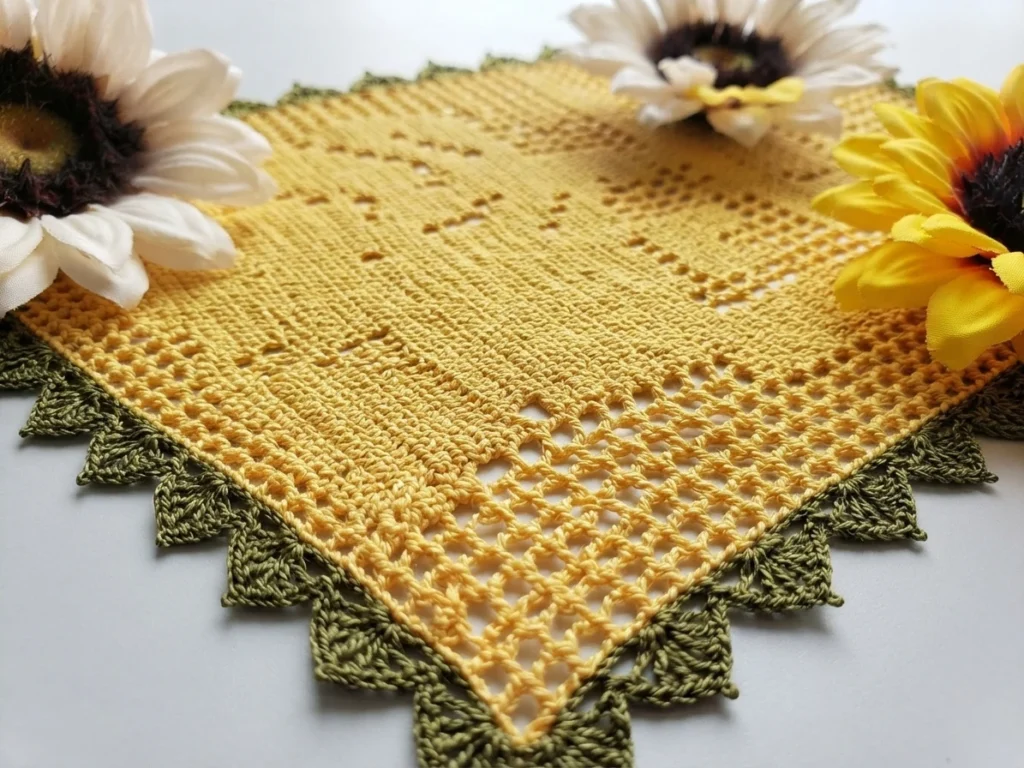
The designer notes that this table runner definitely needs blocking after you finish it. The method described is simple: make the piece wet, stretch it out on blocking mats and attach it with pins. A spray of starch adds extra firm shape. Let the runner dry completely before you remove the pins, so the open mesh keeps its even, crisp lines.
Written pattern of sunflower table runner
The designer offers an ad-free printable PDF version, and the source lists Ravelry, Etsy and LoveCrafts as the places to find it. The free web version and the paid printable are separate options, so choose whichever suits how you like to work. The written pattern on the blog carries the full chart and every row.
Here is the supply checklist exactly as the source lists it:
- Aunt Lydia’s thread size 10 in Golden Yellow (color A)
- Golo’s crochet thread size 10 in Army Green (color B) for the edge
- Crochet hook size 1.75 mm
- Blocking mats, pins and spray starch for finishing
One ball of Aunt Lydia’s thread has 350 yards, and the designer says one ball is more than enough for the runner. The finished piece measures about 18 inches long and 8.5 inches wide. Those figures come from the sample, so your own gauge and tension will shape your result.
Construction begins with color A and a starting chain of 74. The early rows establish open blocks, and solid blocks are gradually introduced to build the sunflower motif. Row 11 is summarized as 4 open, 2 solid, 1 open, 3 solid, 1 open, 4 solid, 1 open, 3 solid, 4 open, and you keep following the chart until 58 rows are complete. Color A is then fastened off.
Color B forms the border in three rounds: a single crochet round around the perimeter, a textured round using treble stitches and chain spaces with corner shaping, and a final round with double crochet groups, chain spaces and picots. The pattern ends by fastening off color B, weaving in all ends and blocking the runner.
That is the shape of the project, not the pattern itself. For the exact block placements, the chart and the edge rounds, use the Original designer’s pattern and instructions. If you enjoy table runners, you might also like this Fall Pumpkins Table Runner pattern by Sara Sach: Pattern Overview or the Thanksgiving C2C Grateful Crochet Table Runner: Pattern Overview.
Happy crocheting!
The designer’s copyright terms are worth reading before you start. You may not sell the pattern or claim it as your own, but you may make items to sell, such as on Etsy or at craft fairs, as long as you link back to handmadebyraine.com and credit the pattern. Sharing on social media is welcome when it links directly to the blog post, and copying and pasting the pattern is not allowed.
If you prefer the printable format, look for the ad-free PDF on Ravelry, Etsy or LoveCrafts. Either way, the sunflower chart is the heart of this project, and taking your time with the block placement is what makes the finished runner shine.