Project introduction
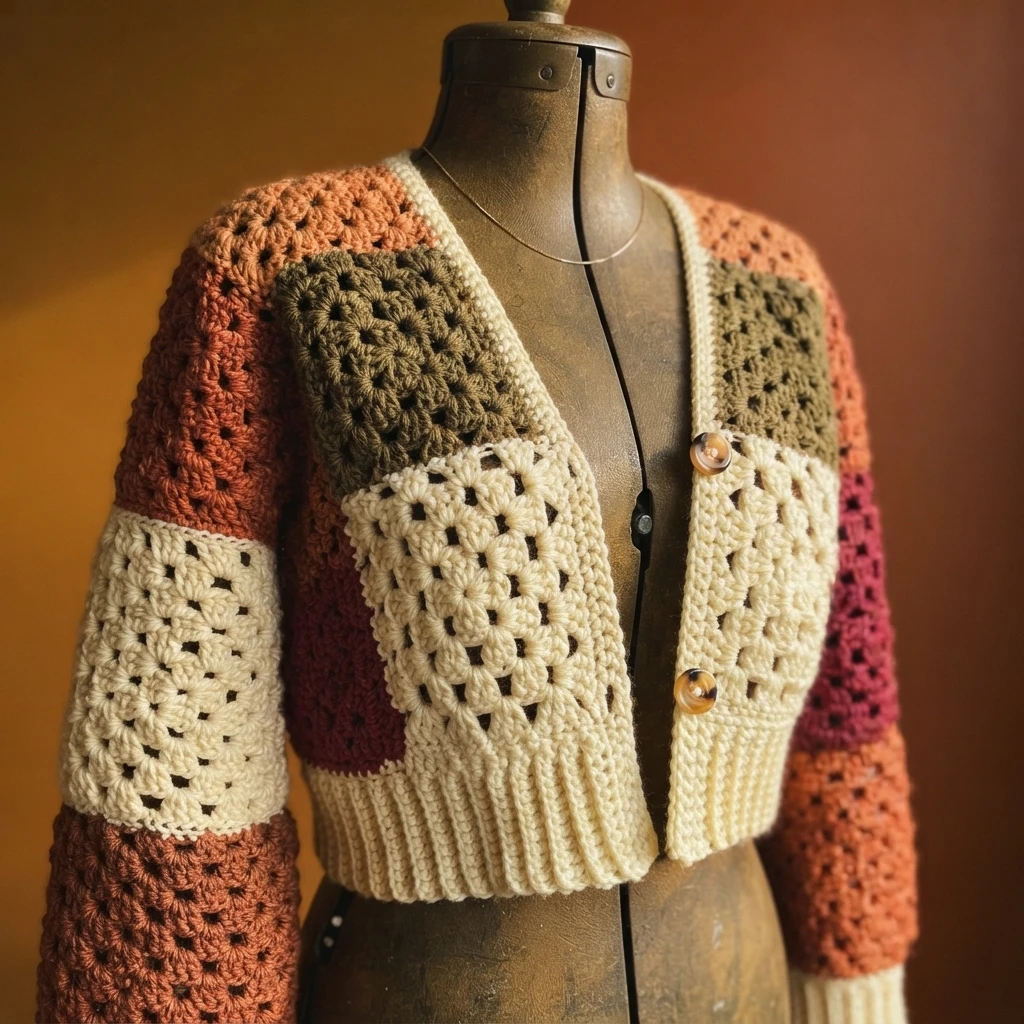
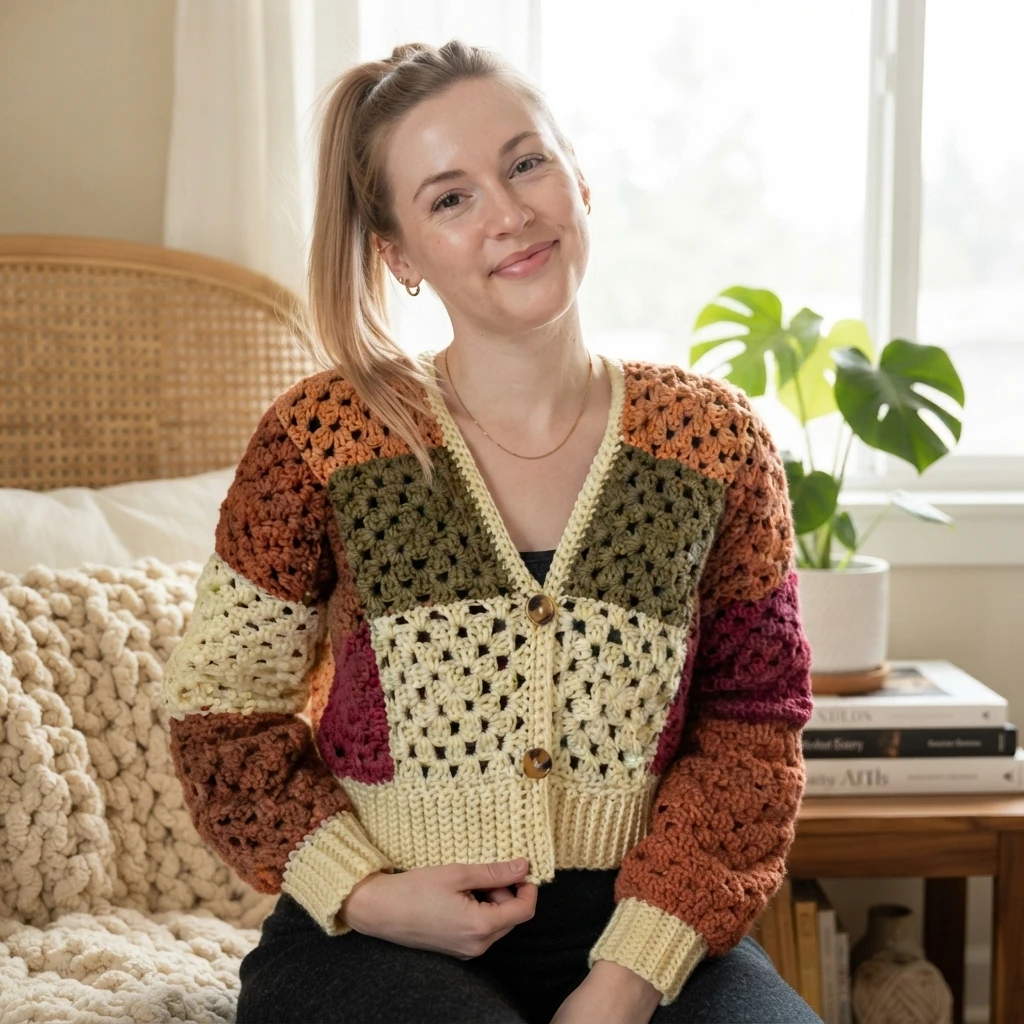
This page offers a pattern overview for the Grateful + Thankful Cardi by HayHay Crochet. It is a summary of planning details and construction features rather than a complete tutorial with step-by-step directions. The design is a granny-square cardigan with a boxy, slightly oversized, cropped shape. The designer’s original colors and name drew on autumn and Thanksgiving, and the palette can be changed for any season or color scheme you prefer. Sizes XS through 4XL are included, and the pattern uses US crochet terms.
For every size, the square count is 27 panel squares and 8 sleeve squares.
Turning chain 3 counts as a double crochet in this pattern, while turning chain 1 does not count as a single crochet.
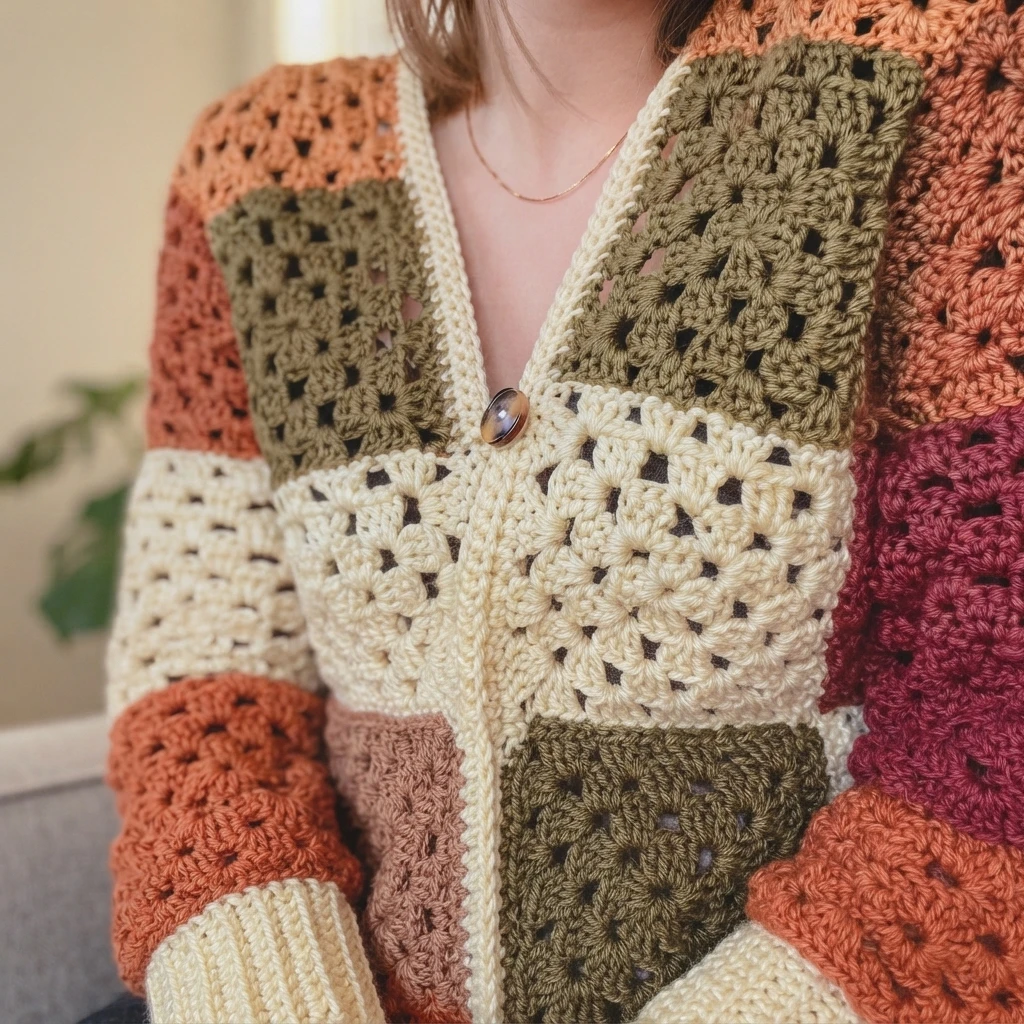
When making the granny squares, you work into chain spaces rather than into stitches.
The designer notes that if the boxy, slightly oversized crop fit is not to your taste, sizing down may suit you better.
The designer publishes this as a free pattern with a video tutorial, so the full directions stay available on the source page.
Before selecting yarn or starting the squares, visit the Original designer’s pattern and instructions. That page contains the full directions and visual guidance needed to complete the project. This overview gathers essential information to help you decide if this project suits your interests, without repeating the specific round-by-round instructions found in the source.
Pattern format and preparation
The source lists medium weight (4) yarn in six colors, with estimates based on 100 g skeins. The sample palette includes Ecru, Honey, Adobe, Olive, Pomegranate, and Mahogany. The color chosen for the ribbing needs one extra skein beyond the other colors. These figures are the designer’s estimates; check the original instructions for project-specific clarifications.
- Medium weight (4) yarn in six colors, with size-based skein estimates listed below.
- A 5.00 mm crochet hook (the source lists the metric size).
- Scissors and a darning needle for finishing.
- Buttons, if you want the button closure. The sample uses mismatched 19 mm buttons from the designer’s craft stash, and any button style or size can be used.
Gauge targets: XS/S panel squares measure 5 inches by 5 inches and sleeve squares 7 inches by 7 inches. M/L panel squares measure 6 inches by 6 inches and sleeve squares 8 inches by 8 inches. XL/2XL panel squares measure 7 inches by 7 inches and sleeve squares 9 inches by 9 inches. 3XL/4XL panel squares measure 8 inches by 8 inches and sleeve squares 10 inches by 10 inches. - A magic ring begins each square, and a darning needle is used for seaming and finishing.
| Size | Panel Squares | Sleeve Squares | Yarn Estimate |
|---|---|---|---|
| XS/S | 5 x 5 inches | 7 x 7 inches | 1 skein of each color, plus 2 skeins in the ribbing color |
| M/L | 6 x 6 inches | 8 x 8 inches | 2 skeins of each color, plus 3 skeins in the ribbing color |
| XL/2XL | 7 x 7 inches | 9 x 9 inches | 2 skeins of each color, plus 3 skeins in the ribbing color |
| 3XL/4XL | 8 x 8 inches | 10 x 10 inches | 3 skeins of each color, plus 4 skeins in the ribbing color |
The square measurements above are the designer’s gauge targets for each size. The finished fit is intentionally roomy and cropped. If you prefer a less oversized silhouette, sizing down is an option. Check the original pattern for comprehensive sizing information and guidance on achieving the intended dimensions.
Construction Details
The cardigan is built from separate granny squares. Every size uses 27 squares for the front and back panels, while 8 squares form the sleeves. The body and sleeve squares share the same basic granny-square construction, but their finished sizes differ. Once completed, the squares are joined to create the cardigan shape. The designer names mattress stitch as the seaming method used for the sample and links a TL Yarn Crafts video that demonstrates four ways to sew granny squares together.
When working the squares, stitches are made into chain spaces rather than directly into stitches. The pattern treats turning chains differently: a chain 3 counts as a double crochet, whereas a chain 1 does not count as a single crochet. Keep these notes in mind when reading the original pattern, and follow its exact instructions for interpreting specific rounds.
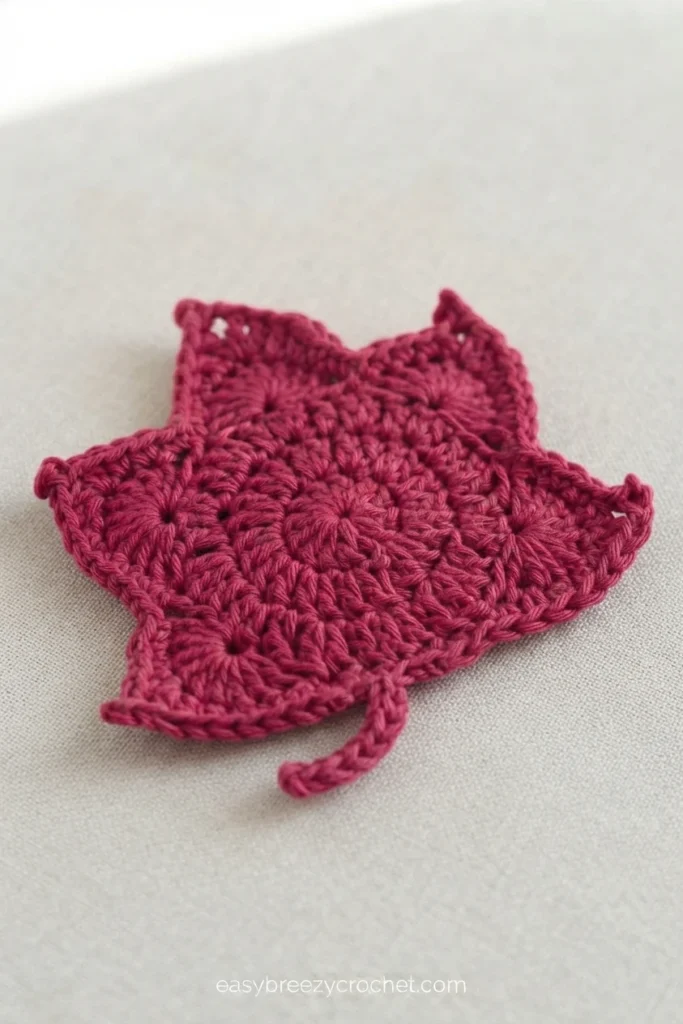
For readers interested in another seasonal crochet project, our Crochet Maple Leaf Pattern & Video: Pattern Overview offers a related guide. Like this cardigan article, it aids in project browsing, while the linked designer page remains the source for the full cardigan directions.
Finishing and Features
After joining the squares, the pattern adds ribbing at both sleeve openings and along the bottom edge. The cuff setup includes decreases to ensure a snugger wrist fit. The source also describes a looser option without decreases, or leaving the ribbing off entirely. The bottom edge uses the same general ribbing technique as the cuffs, with the full method detailed on the original pattern page.
The front opening is edged in single crochet. Buttonholes and buttons are optional, and the designer’s sample features two buttonholes. The sample’s 19 mm buttons use two chains for each opening, but the source notes that the chain count may need adjustment to suit different button sizes. The following row works single crochet into the chain spaces, and buttons are sewn in alignment with the openings.
US abbreviations used in the pattern include ch for chain, st(s) for stitch(es), sc for single crochet, dc for double crochet, and sl st for slip stitch. It also uses sc2tog for a single crochet decrease, sc blo for single crochet in the back loop only, sk st for skip stitch, and dc cluster for a group of three double crochets. The source concludes the project by having crocheters weave in the remaining ends.
This overview helps you prepare for the main construction stages. For complete square directions, joining guidance, ribbing details, and buttonhole placement, work from HayHay Crochet’s original pattern rather than relying on this summary.