Project introduction
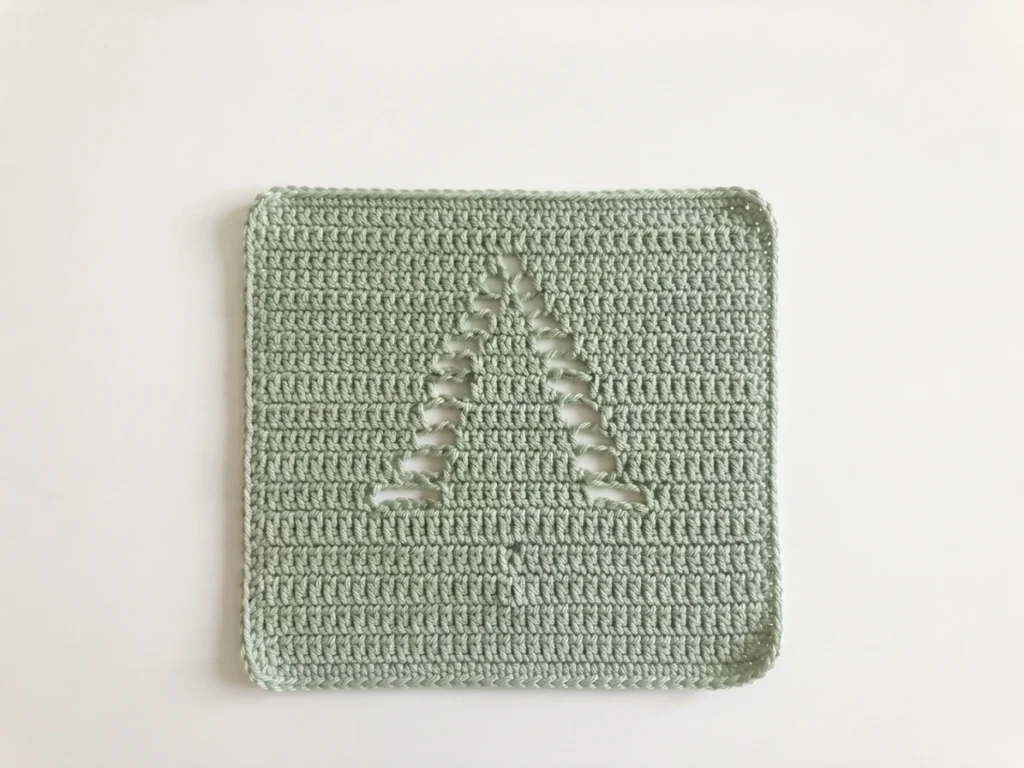
This pattern overview introduces a fir tree washcloth from Hooks, Books, and Wanderlust, a small cotton project that works well for thoughtful handmade gifts. The design uses open spaces in the fabric to suggest an evergreen tree, so the finished cloth feels seasonal without being limited to one holiday. Because fir trees stay green through winter, the washcloth remains useful long after December.
This article is a pattern overview, not a complete tutorial, and it summarizes supplies, size, gauge, and construction so you can decide if the project fits your plans. For the full row-by-row instructions, please visit the Original designer’s pattern and instructions. The designer offers a free web version, while the printable PDF version is paid, so check the format that suits your needs before you begin.
Why the PDF?
The printable PDF version is designed as a teaching resource, with photo tutorials for special stitches, links to videos, practical tips for the pattern and for reading patterns in general, many photos, and charts for visual learners. Its layout supports easy navigation between sections. Where applicable, it also includes a consolidated printer-friendly version for makers who prefer a shorter printout.
Materials List
Gather your supplies before you start so the project stays smooth and portable. The source list is short, with one cotton yarn, one hook, and two basic finishing tools. Cotton is a practical choice for a washcloth because it is absorbent, washable, and sturdy enough for daily use. Check that your hook matches the size below and that your needle suits cotton yarn.
- 1 Size 4 100% cotton yarn (I Love This Cotton used in pattern)
- Crochet hook in size H / 5 mm
- Tapestry needle
- Scissors
Stitches & Abbreviations (US Terms)
The pattern uses US crochet terms, so makers who usually follow UK terms should read the abbreviations with US meanings in mind. Only five abbreviations appear in the source list, and each one covers a basic building block of the washcloth. Keeping this short glossary nearby while you work can help you follow the designer instructions without pausing to check terms.
- Chain (ch)
- Space (sp)
- Skip (sk)
- Single crochet (sc)
- Double crochet (dc)
Finished Measurements
The finished washcloth measures approximately 9.5 inches square. That size is generous enough for face cloth or dishcloth use, yet small enough to finish quickly and to tuck into a gift set. Because the measurement is approximate, your finished size may vary slightly with yarn choice and tension.
Gauge
The stated gauge is 4 inches square equal to 8 rows by 16 double crochet stitches. Checking gauge before you begin is the most reliable way to judge whether your finished cloth will match the listed size. If your swatch is larger or smaller, try a different hook size and check again before starting the full washcloth.
Notes
The pattern is written in US terms and is classified as beginner level. Its tree design is formed with chain spaces where indicated, so those open spaces are part of the motif. Chain-2s at the beginning of a row are not counted as a stitch. Stitch counts for each row appear in parentheses at the end of the line. A graph-style stitch chart is included with the printable PDF version available on both Etsy and Ravelry.
Single Crochet
Single crochet appears in this project as a finishing stitch, giving the washcloth a neat and sturdy edge around its sides, top, and bottom. It creates a dense, compact fabric that helps the border hold its shape through washing and daily use. If you are new to this stitch, practice a small swatch first so your edge tension stays even.
Double Crochet
Double crochet forms the main fabric of the washcloth and provides the height and drape that let the chain-space tree motif show clearly. It works up faster than shorter stitches, which helps keep this a quick project. Keep your tension steady so the open spaces stay defined and the edges remain straight as the tree shape develops.
Pattern Overview
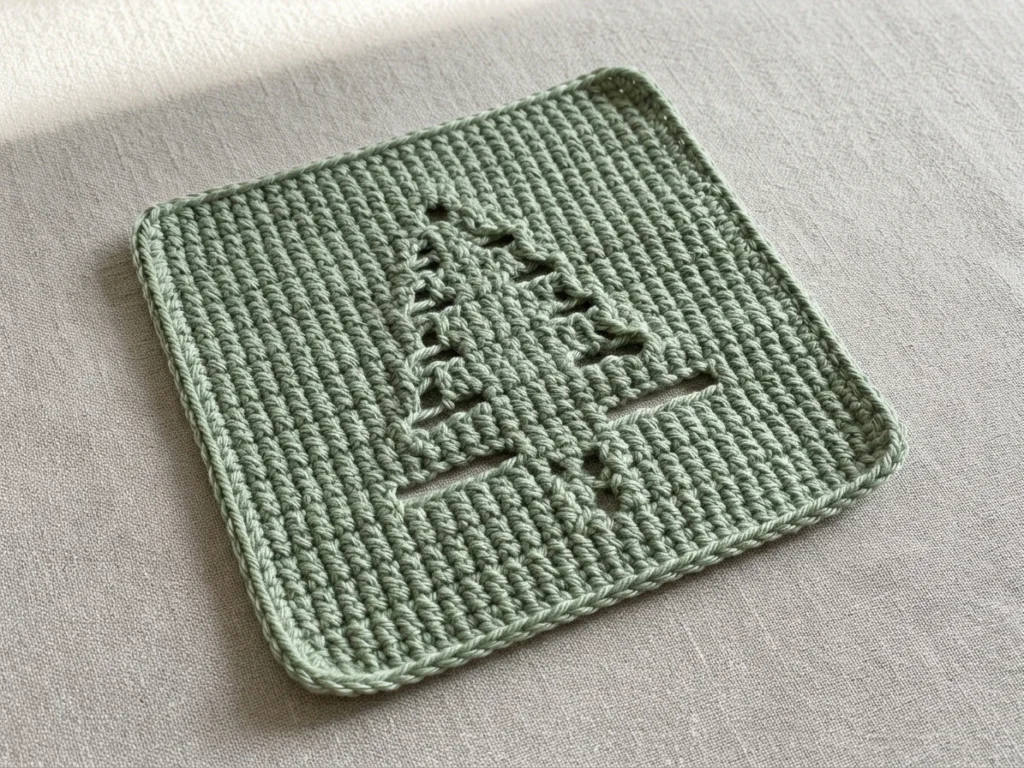
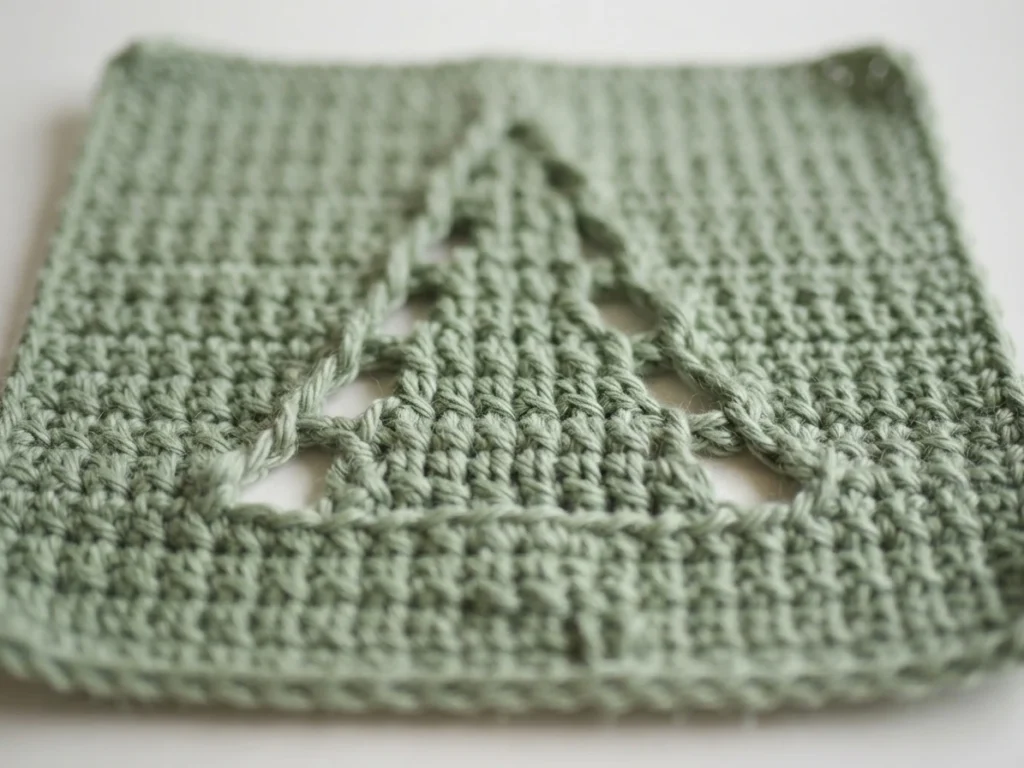
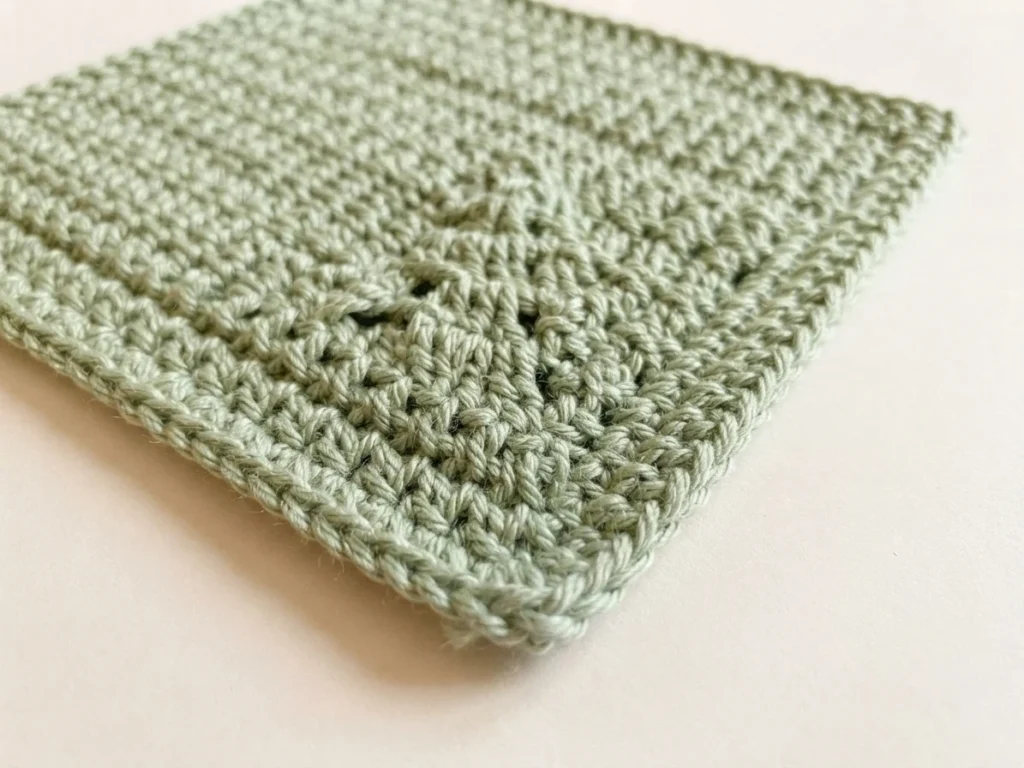
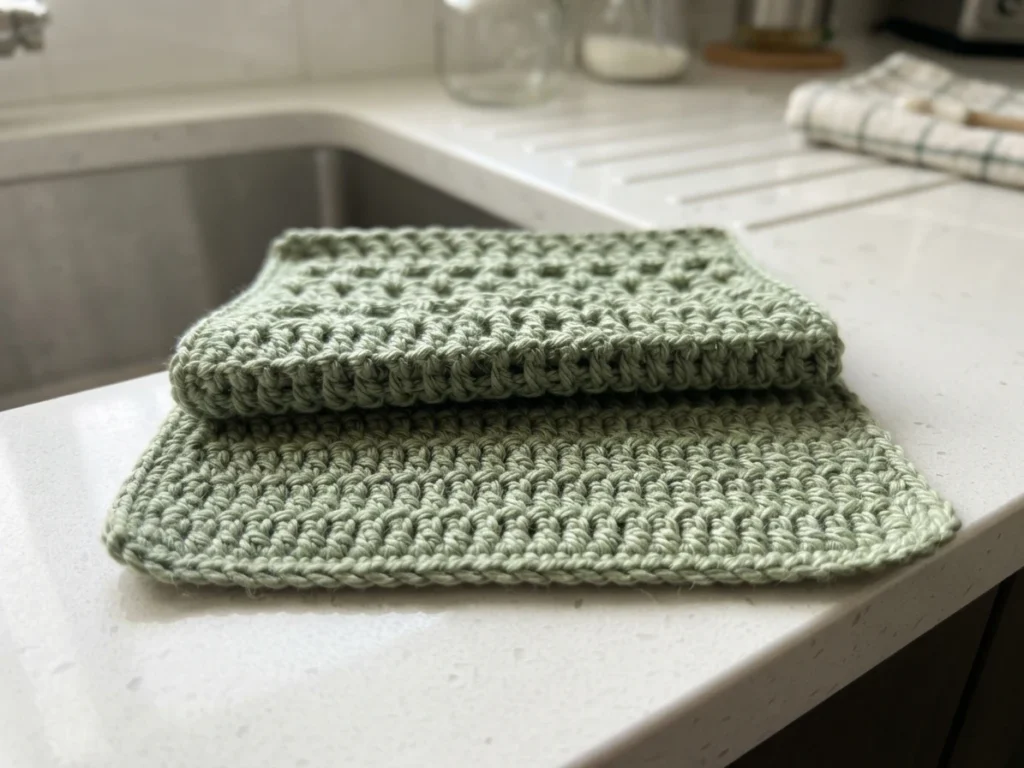
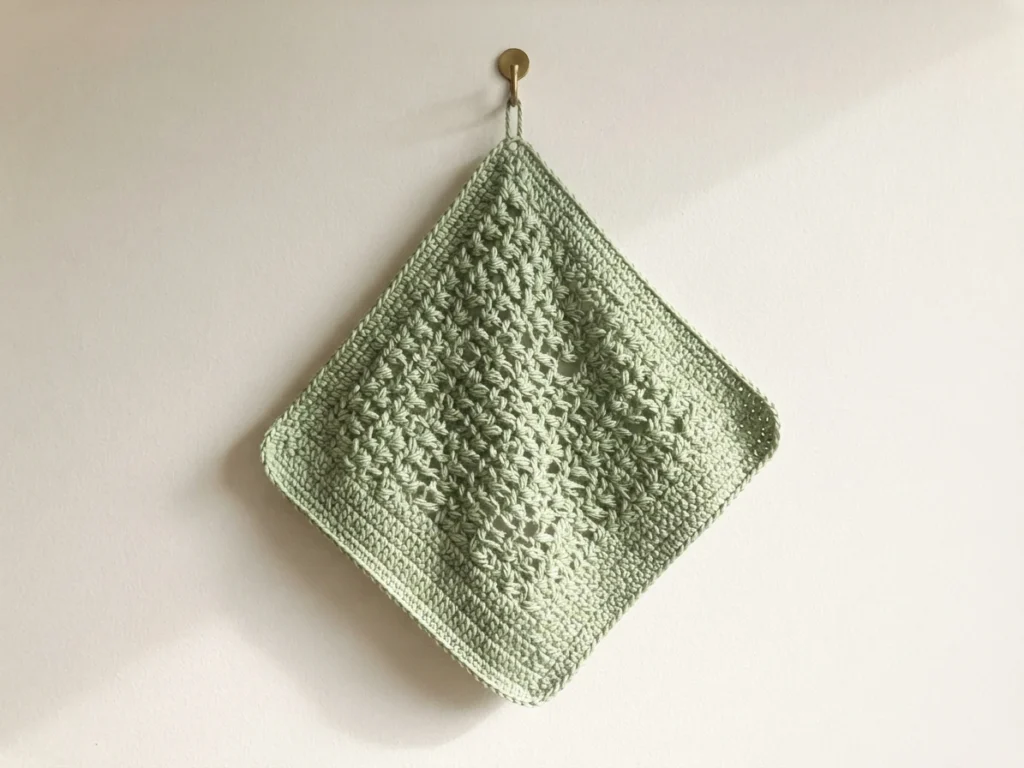
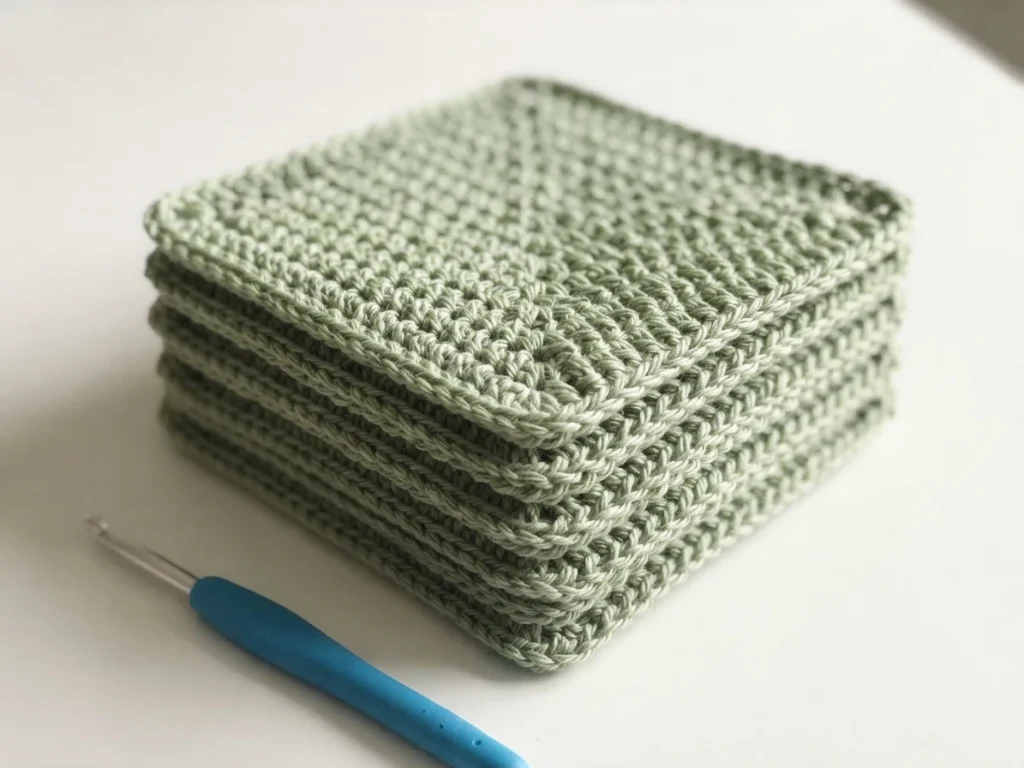
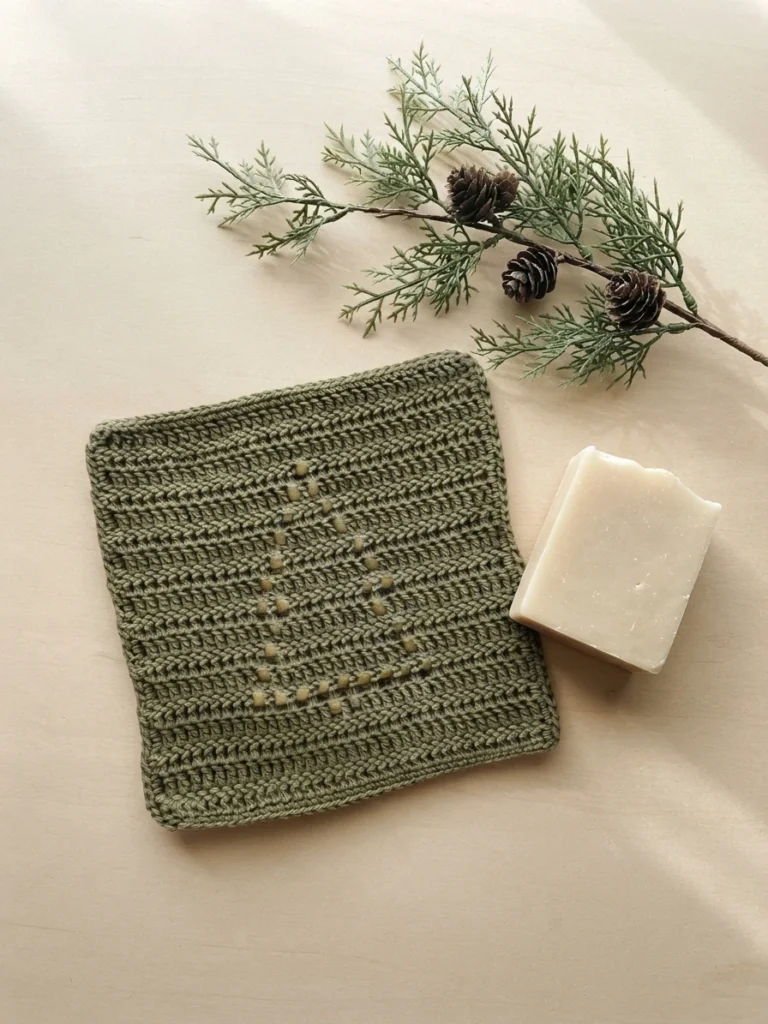
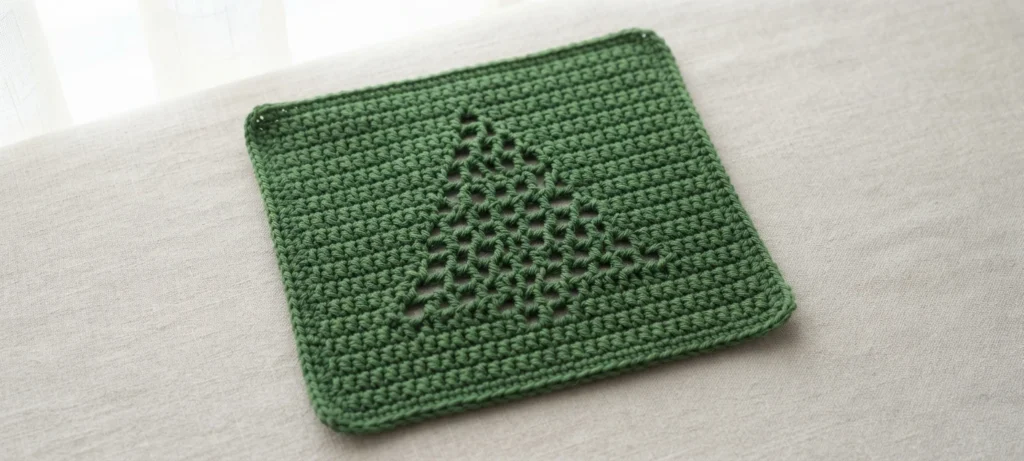
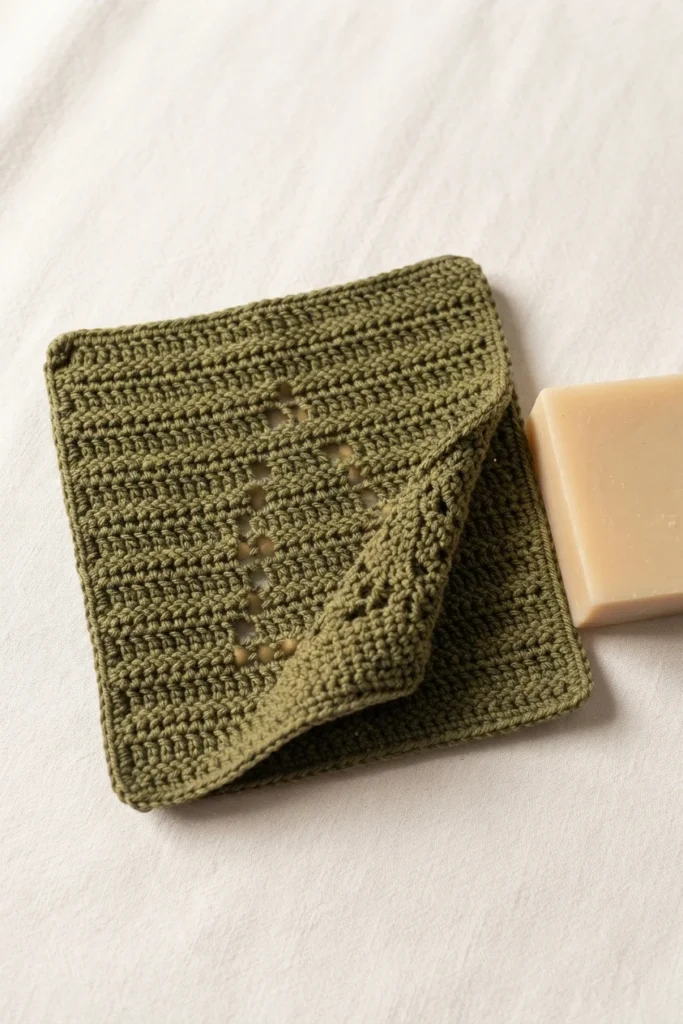
The washcloth begins with a foundation chain of 37 and is worked in rows of double crochet, with chain spaces and skipped stitches shaping the fir tree in the center. Early rows establish a solid base, middle rows open and close spaces to form the tree outline, and later rows return to a solid fabric above the motif. The designer row counts in parentheses help you confirm each row as you work from the original instructions.
After the main rows are complete, the designer does not tie off before the border. The border is worked in single crochet around the piece, with two single crochets per row along the sides, a chain at each corner to turn cleanly, and single crochet across the top and bottom edges. Once the border is finished, you tie off and weave in ends. The finished edge frames the tree motif and gives the cloth a tidy shape for use or gifting.
The designer suggests making a set for holiday gifts, pairing a cloth with a bar of luxury soap for a spa-style present or with dish soaps from a holiday collection. The squares can also become a blanket when joined, using different shades of green mixed with cream or white, in solids and the tree design. For more seasonal tree projects, see Crochet Christmas Tree Garland: Pattern Overview and Easy Festive Christmas Tree: Pattern Overview.