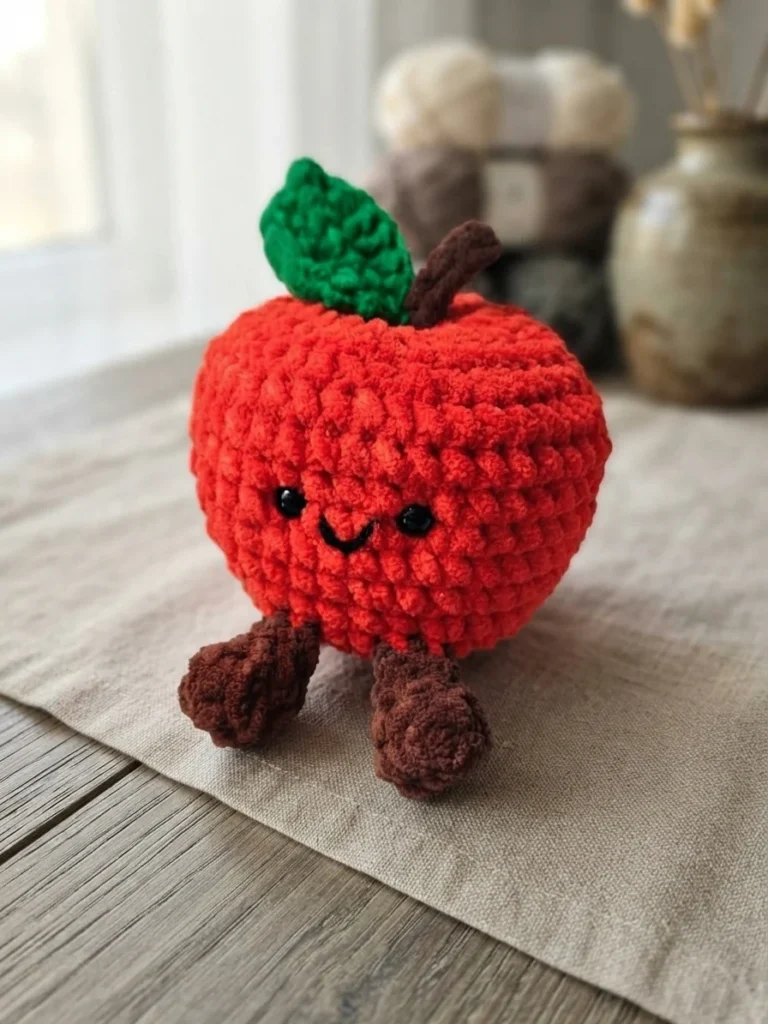
Project introduction
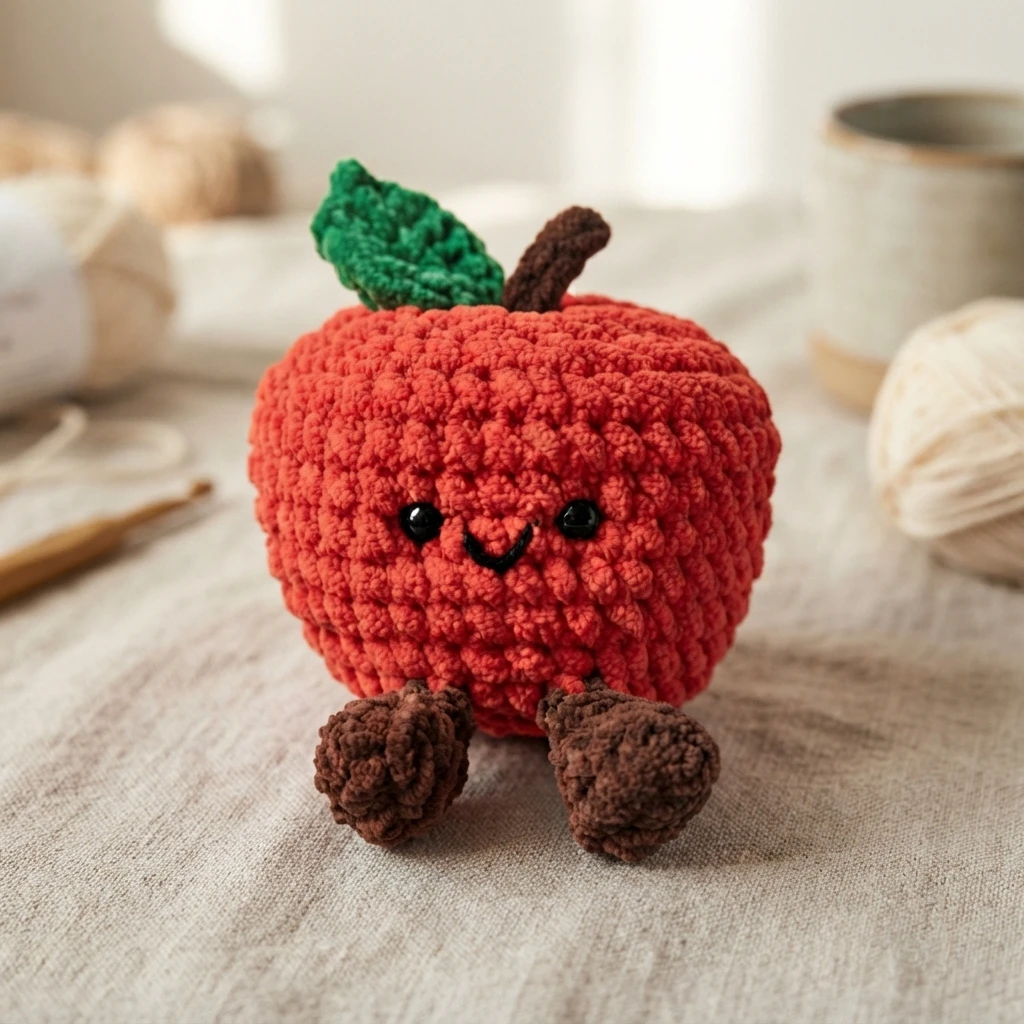
This small crochet apple takes its cue from the Amuseable Jellycat Apple, and it packs a lot of character into a compact amigurumi. Two little brown feet, beady eyes, and a tiny smile give it the playful look people recognize from the Jellycat line, while the construction stays simple enough for a beginner and works up surprisingly fast.
The clever part is the assembly. The legs are crocheted directly onto the apple, so there is no need to sew them on later. The stem and leaf are made separately and sewn on, which keeps the finishing work very minimal. If you are a little more advanced, you can even try crocheting the stem and leaf directly onto the apple to eliminate sewing completely.
This overview walks through the materials, the finished size, the difficulty level, the stitches and abbreviations, the general pattern notes, and the sections of the original design. It is a description of what the pattern contains, not a replacement for it. The full free web version with every round and row lives on the designer’s site, so follow the link near the end of this page when you are ready to make one.
What You Need / Materials
The yarn is DK or light worsted weight, listed as weight #3, in chenille. The sample shown uses Scheepjes Little Darling, a 100% polyester yarn sold in 98 yard (90 m) skeins that weigh 1.76 oz (50 g) each. Colors used in the sample are Dark Brown (Big Foot #413), Red (Strawberry #417), and Green (Sprout #419).
Along with the yarn, gather these supplies before you start:
- A 3.25 mm crochet hook (for feet)
- 5.0 mm safety eyes
- Polyester stuffing of your choice
- A tapestry needle
- Stitch markers
- Scissors
- A 2.25 mm crochet hook (for apple body, leaf, and stem)
Finished Size
The finished amigurumi measures approximately 7 cm (2.75 inches) in height and 7 cm (2.75 inches) in width. If you want a larger or smaller apple, the designer suggests using a different yarn weight or category with the appropriate hook size.
Level of Difficulty
The project is rated two out of five stars, Beginner or Easy. It assumes you are already familiar with the stitches used in the pattern, can attach plastic safety eyes, can change yarn colors, and have basic sewing and embroidery skills for the finishing work.
Stitches & Abbreviations
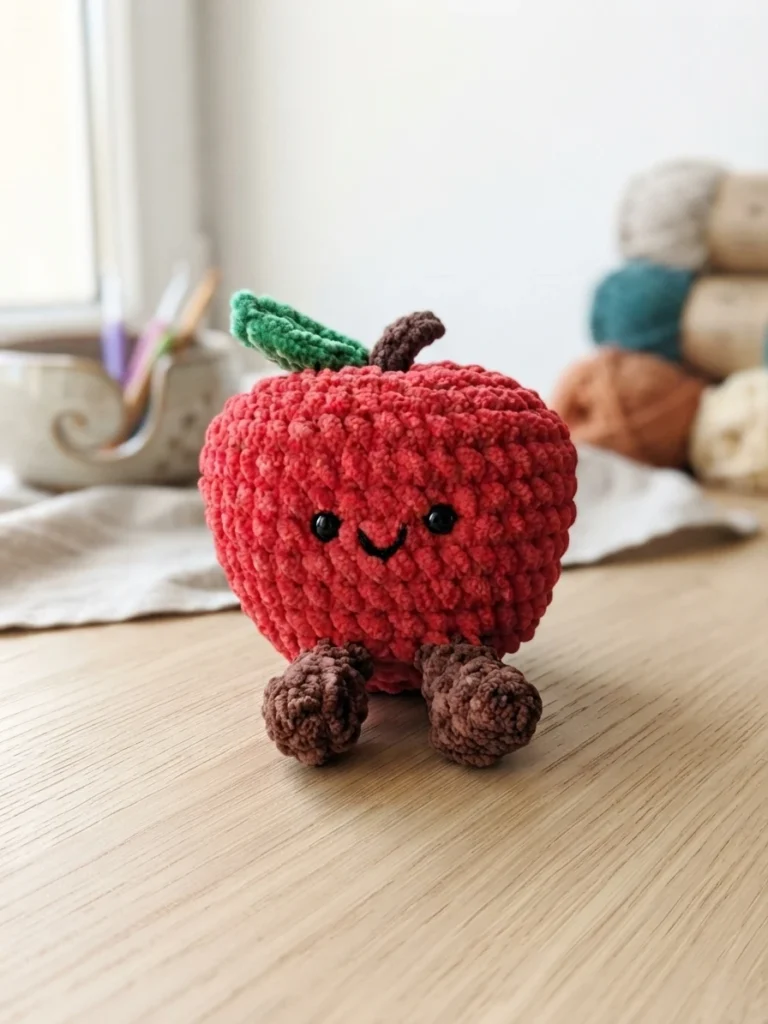
The pattern uses standard US crochet terms. The abbreviation list covers st/sts for stitch or stitches, ch for chain, slst for slip stitch, sc for single crochet, hdc for half double crochet, and dc for double crochet. Shaping terms are spelled out as sc-inc (single crochet increase, two single crochets in one stitch), sc-dec (single crochet decrease, single crochet two stitches together), and dc-inc (double crochet increase, two double crochets in one stitch).
Pattern Notes
Several general notes apply throughout. The pattern is written in US terms, and the pieces are completed in a specified order so they assemble correctly later. The designer recommends the yarn under single crochet technique for tighter, more aligned stitches, and working in continuous spiral rounds without joining at the end of each round unless the pattern says otherwise. A running stitch marker keeps your place while you work in rounds, and the ultimate finish is used to close the pieces neatly. An invisible decrease is optional and can improve the look of the shaping.
Crochet Pattern Overview
Feet (make 2)
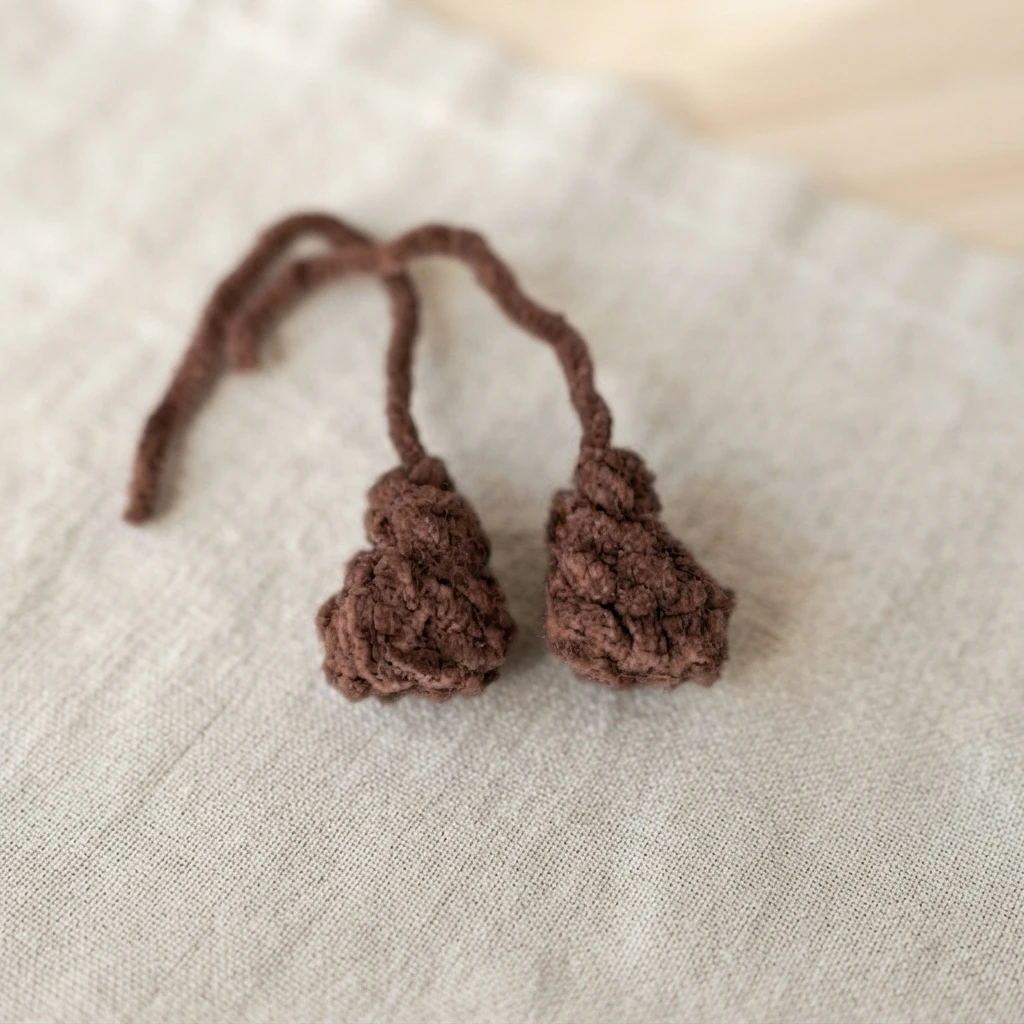
The feet are made twice with dark brown yarn and a 3.25 mm hook. The piece begins with a chain of four and is worked along both sides of that chain, then shaped across four rounds with increases and decreases until it ends at four stitches. After the last round, the yarn is cut and fastened off, and the finished feet are attached to the apple body later, during the apple rounds.
Apple
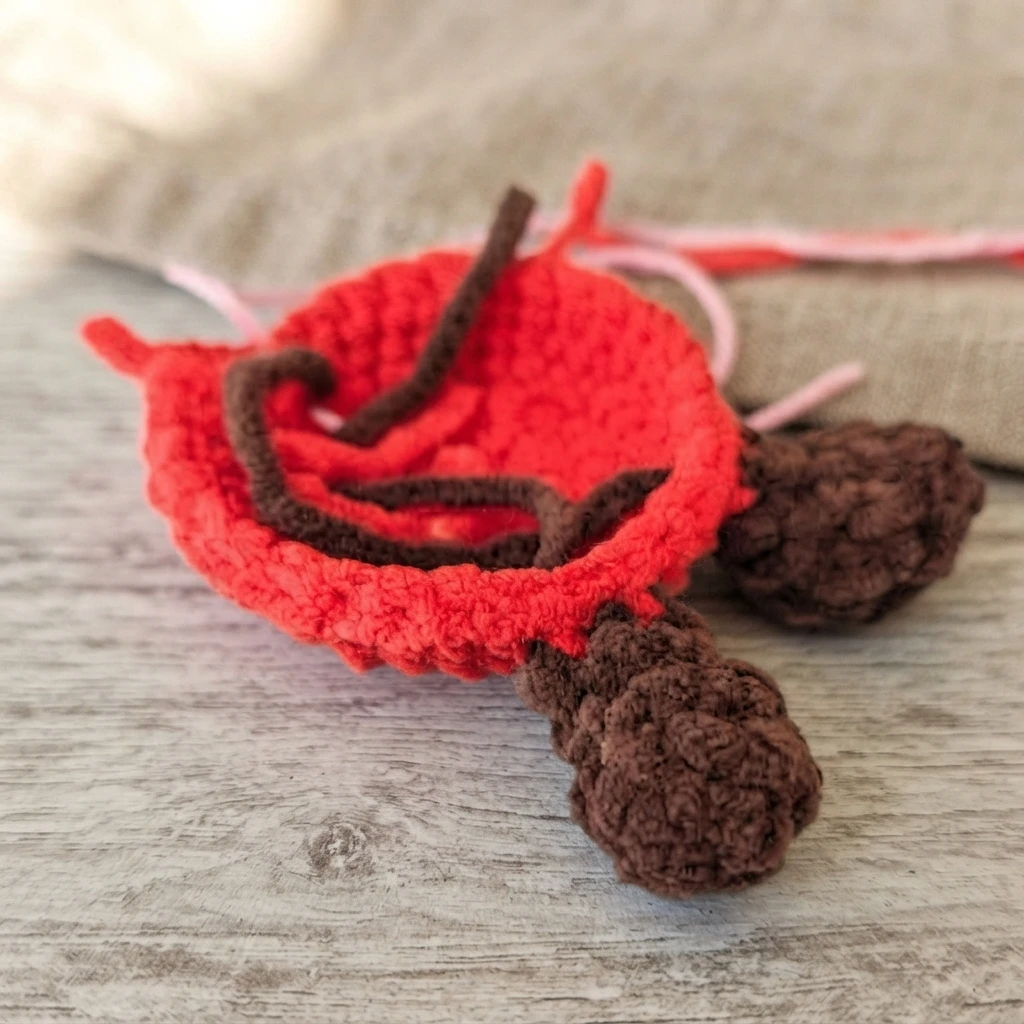
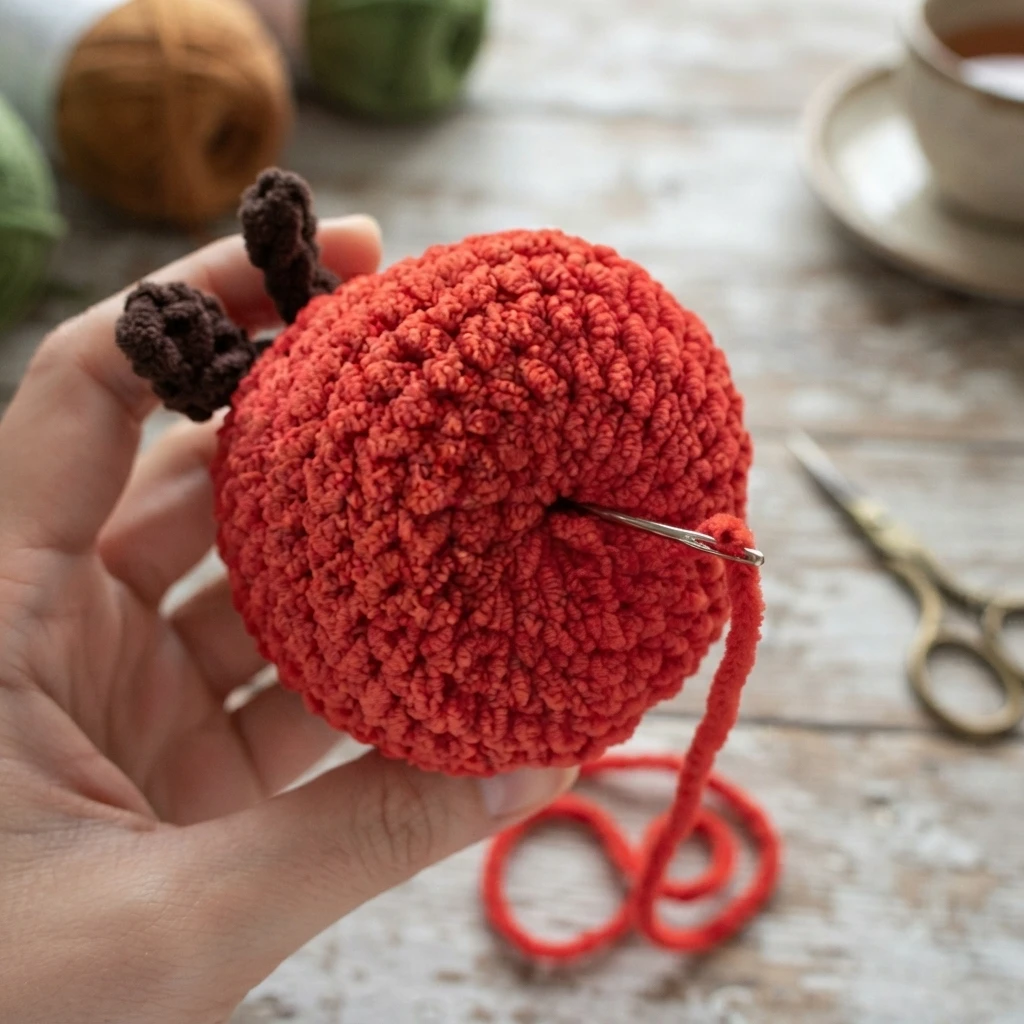
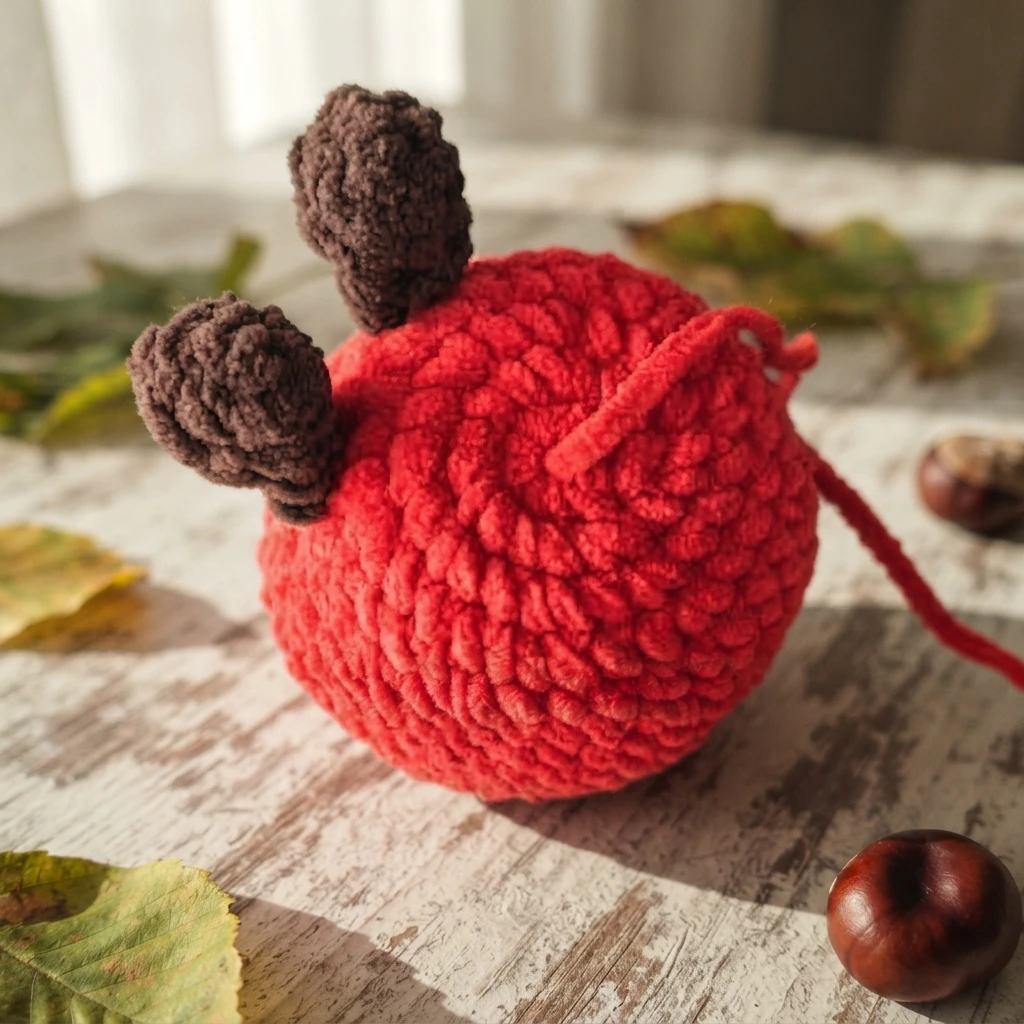
The main body uses red yarn and a 2.25 mm crochet hook. It starts with a magic ring and expands outward through the early rounds. In Round 5 the two finished feet are attached directly to the work, which is what removes the need for sewing them on afterward. Safety eyes go in between Rounds 9 and 10, approximately three stitches apart, and the apple is stuffed with polyester stuffing as the decreases begin.
The final rounds close the sphere, and after fastening off with the ultimate finish, a needle is threaded through the center to create an indentation at the top and bottom for a more realistic apple shape.
Leaf
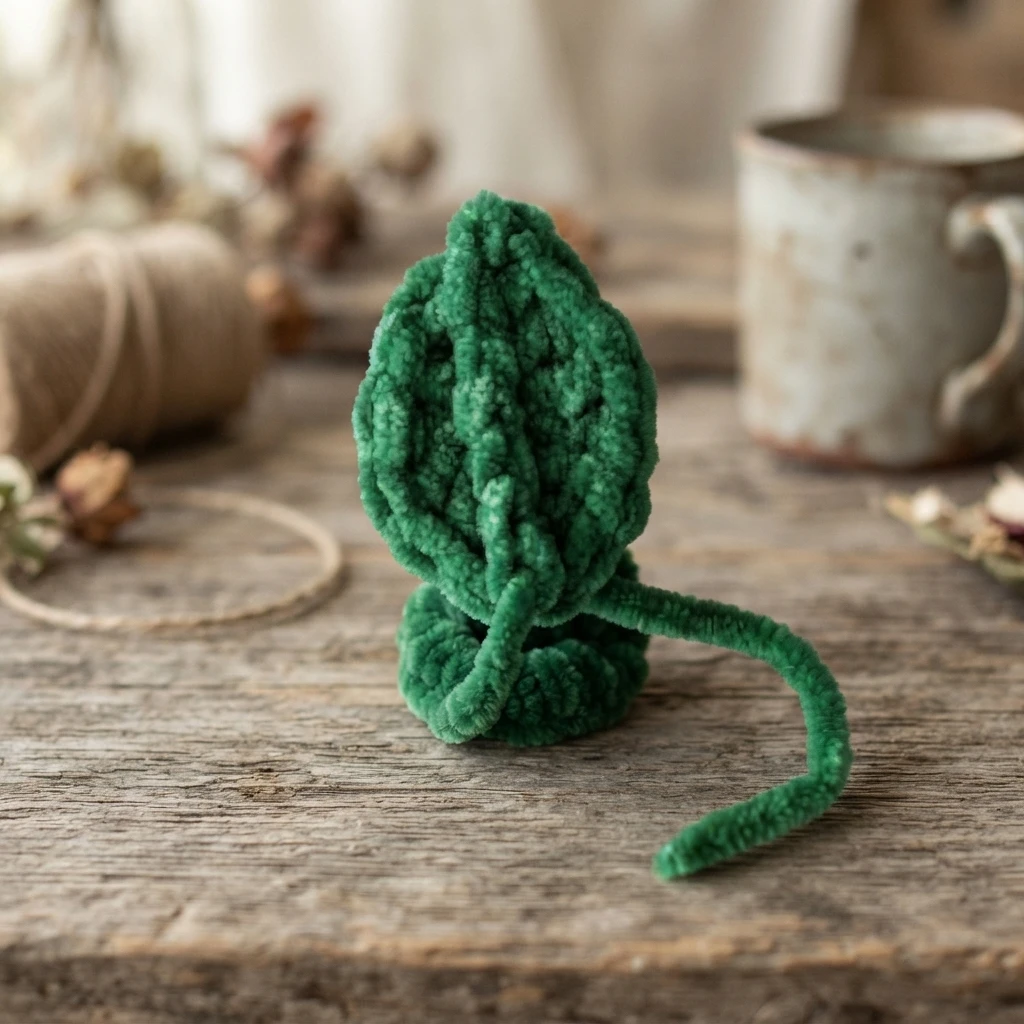
The leaf is made with green yarn and a 2.25 mm hook. It starts with a chain of six, and the rows work back and forth across that chain with increases and decreases to build the pointed shape. After the second row, a chain and a slip stitch run down the middle of the leaf to define the vein. The yarn is cut and fastened off, and the yarn ends are used to sew the leaf to the top of the apple.
Stem
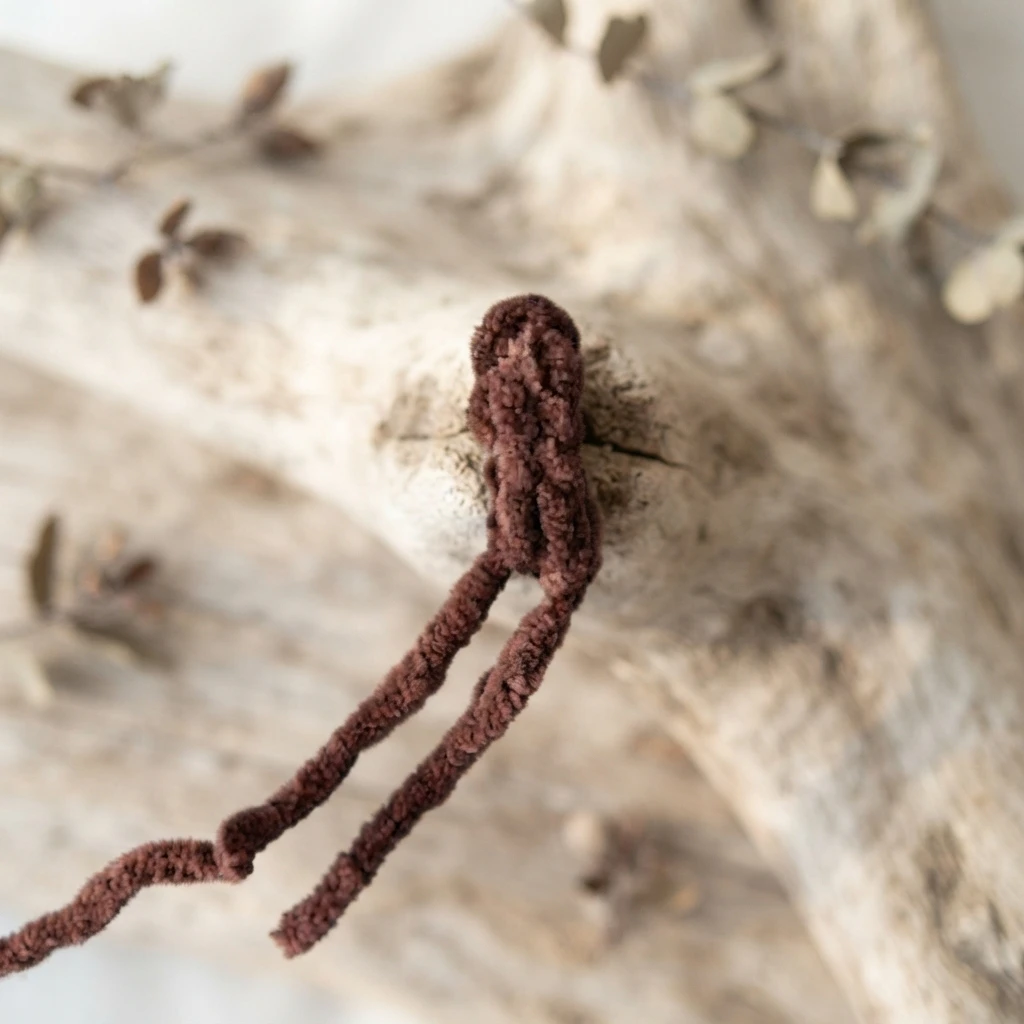
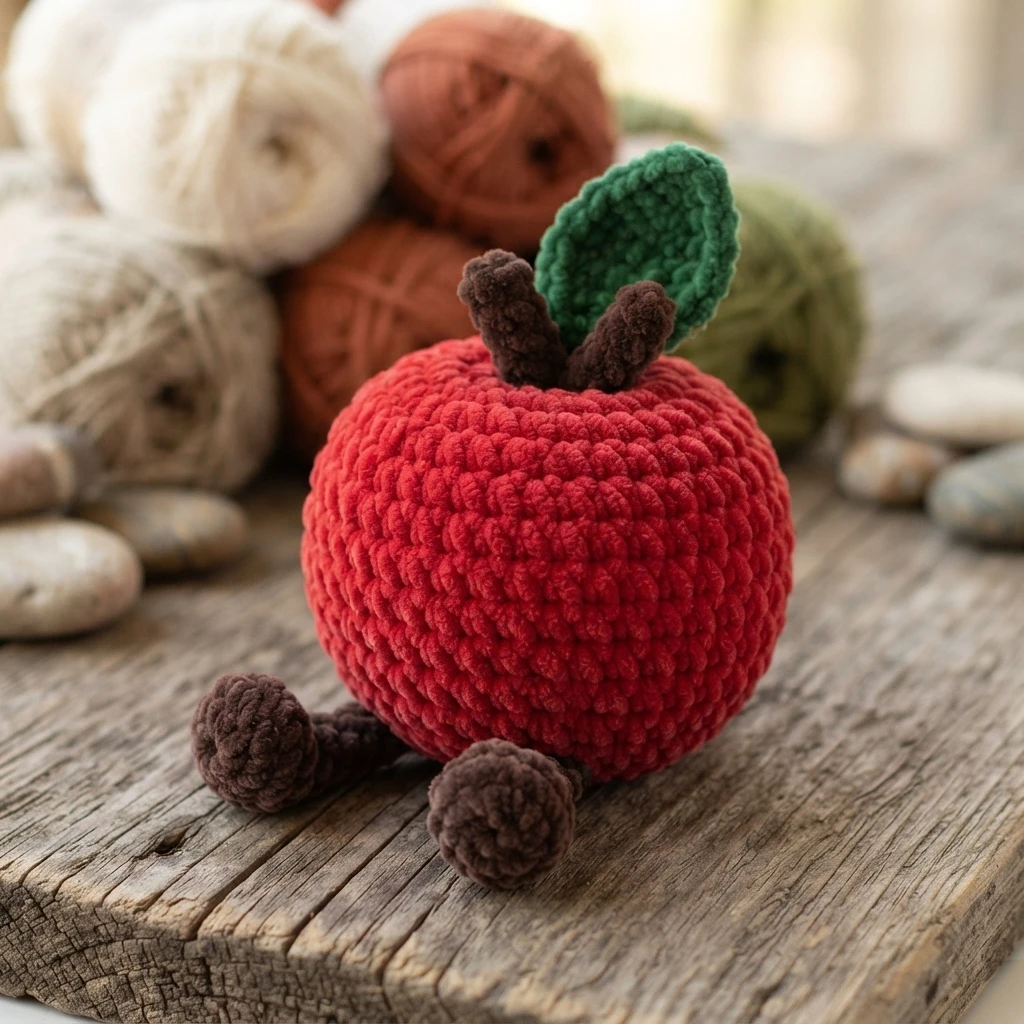
The stem is a small piece worked in brown yarn with a 2.25 mm hook. It is a single row: a chain of five, with slip stitches worked into the back bumps of the chain, leaving four stitches. The yarn is cut and fastened off, and the remaining tails are used to sew the stem to the top of the apple alongside the leaf.
Inspiration Behind the Crochet Design
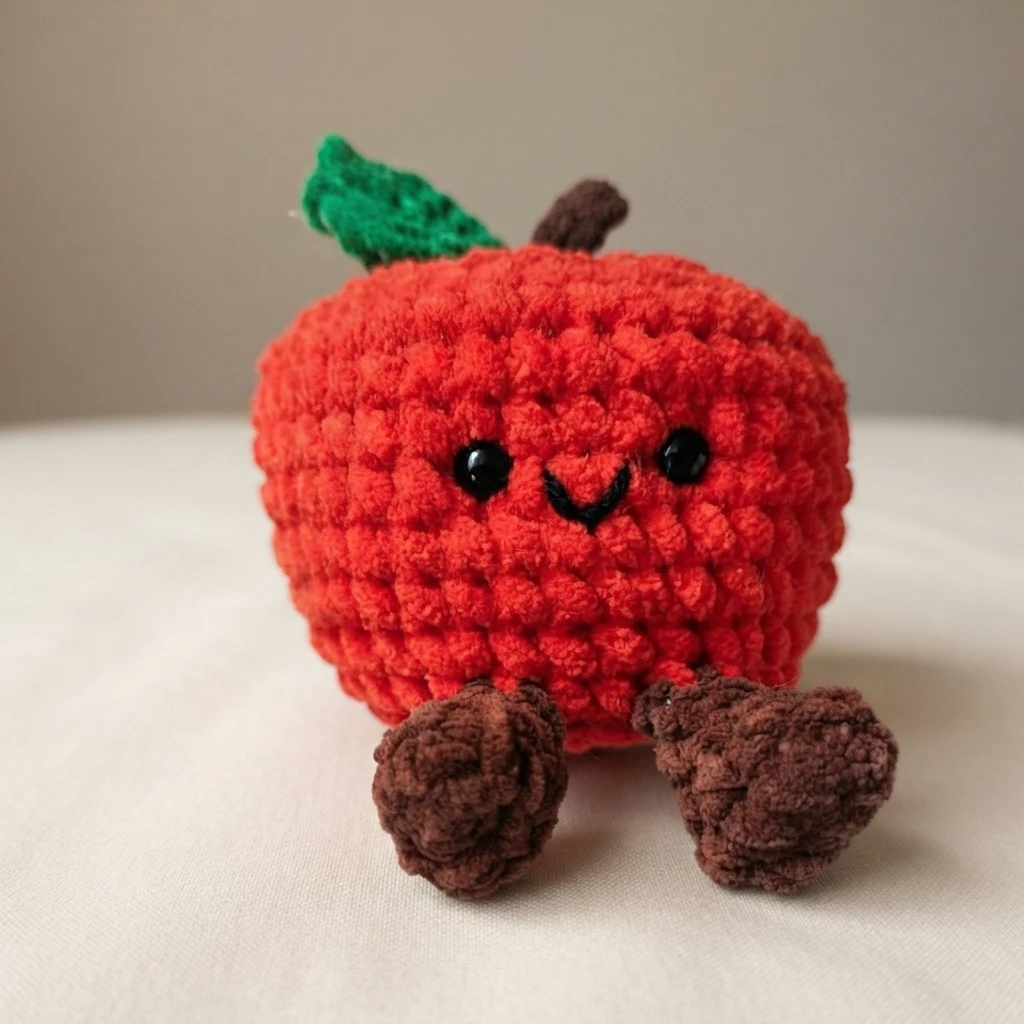
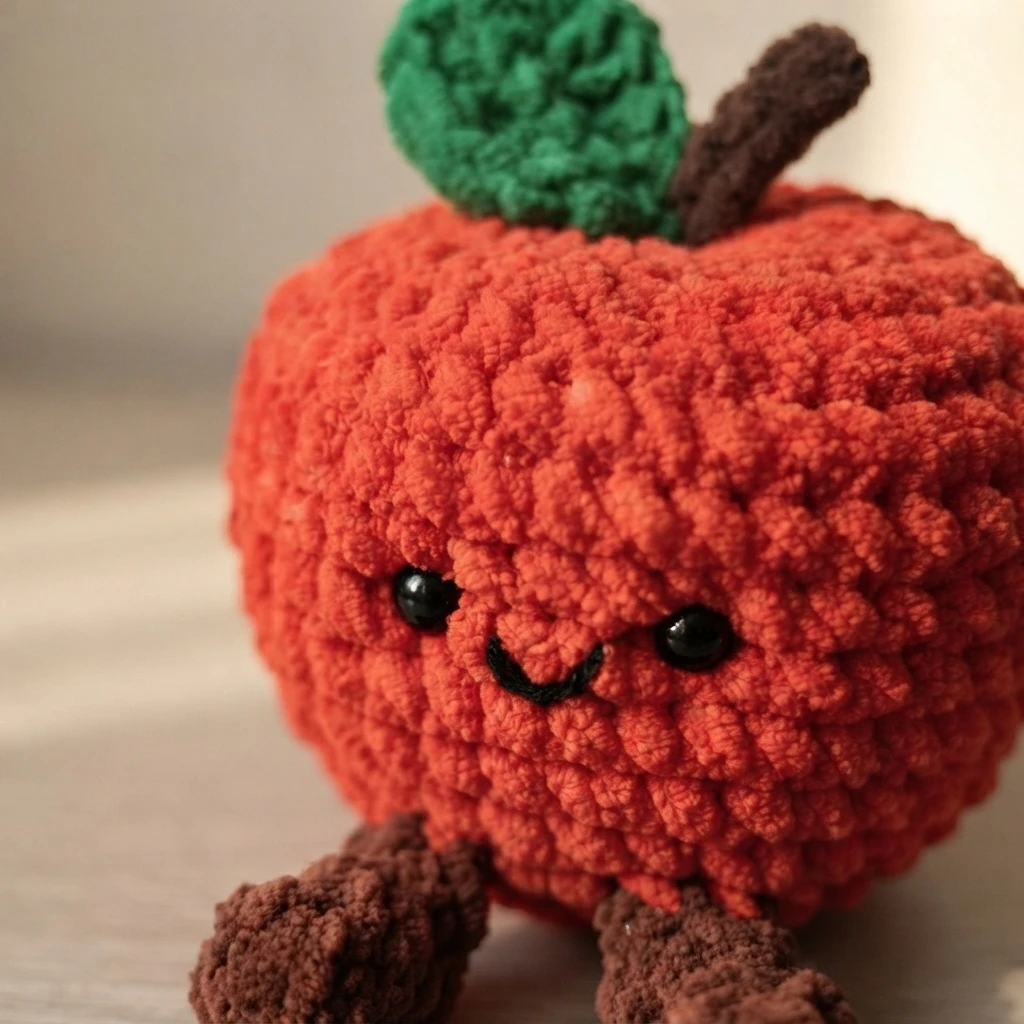
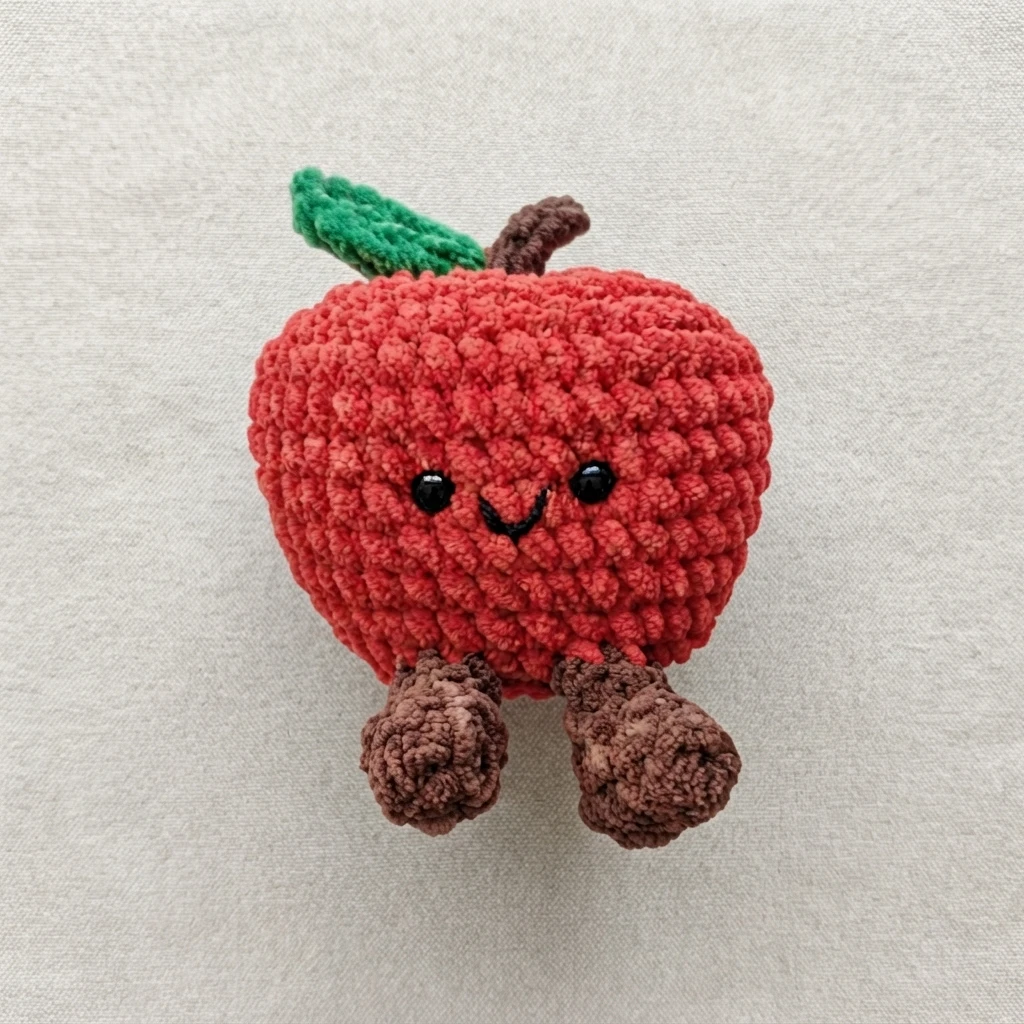
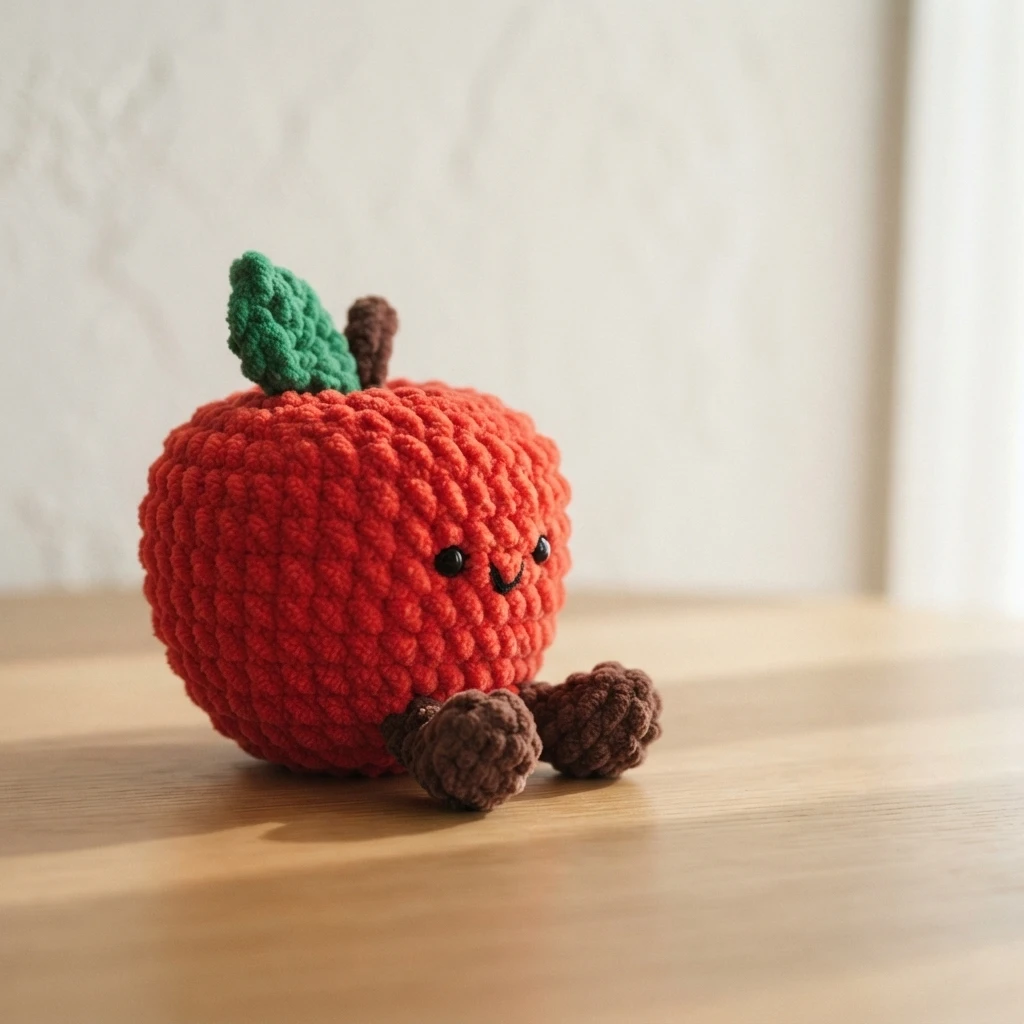
The designer has loved plush toys for a long time, especially the soft and whimsical Amuseables from Jellycat. Over time, though, the prices have made them feel more like collectibles than everyday toys, and reselling to collectors can push prices even higher. That raised a simple question: buy it, or make it? Knowing how to crochet offers that freedom, and making plushies by hand supports more mindful consumption while adding value to the finished object.
The apple idea came together unexpectedly. While scrolling, the designer came across a creator who had made a Jellycat-inspired apple as a ceramic jar. That reminded her of a mini amigurumi apple pattern written a few years earlier but never published. She pulled out the old notes, reworked the design, and added new details such as the tiny feet to capture the playful Jellycat look. Because the base idea already existed, the pattern came together faster than many of her other designs.
This is not her first Jellycat-inspired project in yarn; she previously made a Jellycat-inspired birthday cake, and whimsical food amigurumi is a favorite category to bring to life in crochet form.
Creative Uses and Ideas
A finished apple does not have to sit on a shelf doing nothing. Here are some practical ways to use or gift it:
- Desk buddy or shelf decor: a small plush to brighten a workspace or craft room.
- Play food for kids: handy for pretend cooking or a play kitchen store setup.
- Keychain or bag charm: attach a loop and turn it into a crochet keychain or bag charm.
- Pin cushion: tiny and soft, and perfectly sized for holding a few pins.
- Teacher’s gift: a small, thoughtful, handmade crochet teacher gift that is whimsical.
- Crochet ornament: display it on a holiday tree, include it in seasonal arrangements, or use it as a fun decorative accent.
- Collectible series: pair it with other Jellycat-inspired amigurumi to start a handmade plush collection.
More to Love…
If this project appeals to you, the source site also offers a curated collection of Jellycat-inspired crochet patterns that make plushies and gifts for all ages. Fans of soft, playful designs might also enjoy the amigurumi Jellycat birthday cake pattern, which is aimed at the same Amuseables-loving audience. There are also crochet teacher gift ideas described as thoughtful and practical, useful if you want to make something small and handmade for someone else.
You can find the Original designer’s pattern and instructions to view the full free web version and detailed steps. For related projects, consider exploring our Crochet Turkey Amigurumi: Pattern Overview or the Crochet Ghost Walking Dog Amigurumi: Pattern Overview.