Project introduction
This article is a pattern overview, not a full tutorial. It previews a crochet straw bag from Craft Passion, explains supplies and construction in broad terms, and points you to the complete instructions. Use it to decide if the project suits you, then follow the designer link for full details.
The bag takes cues from a Loewe style silhouette and uses raffia yarn for a natural, textured finish. Craft Passion first shared a doll sized mini tote made for a crochet hippo, and interest in that small version led to this full human sized bag. Find complete directions through Original designer’s pattern and instructions.
Difficulty Level
The source describes this project as suitable for beginners. You will build skill while making a useful accessory, and repeated stitches give you room to settle into a steady rhythm. Work slowly, check your fabric as you go, and use the original pattern for exact steps.
Craft Supplies
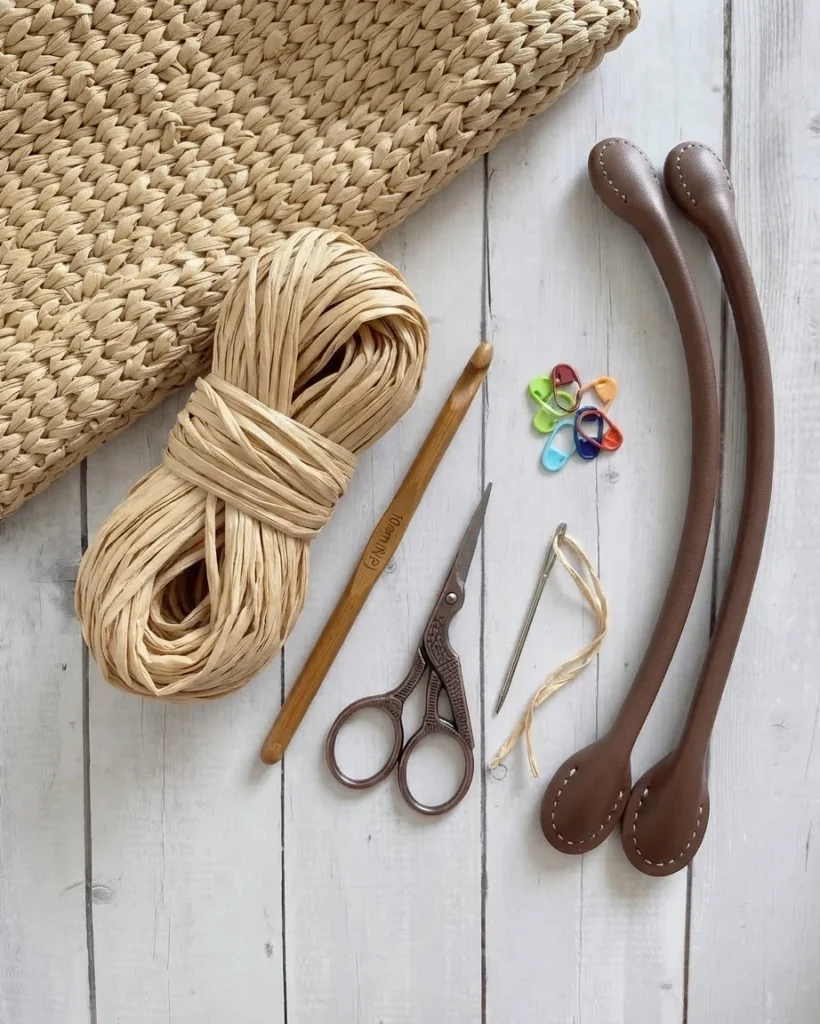
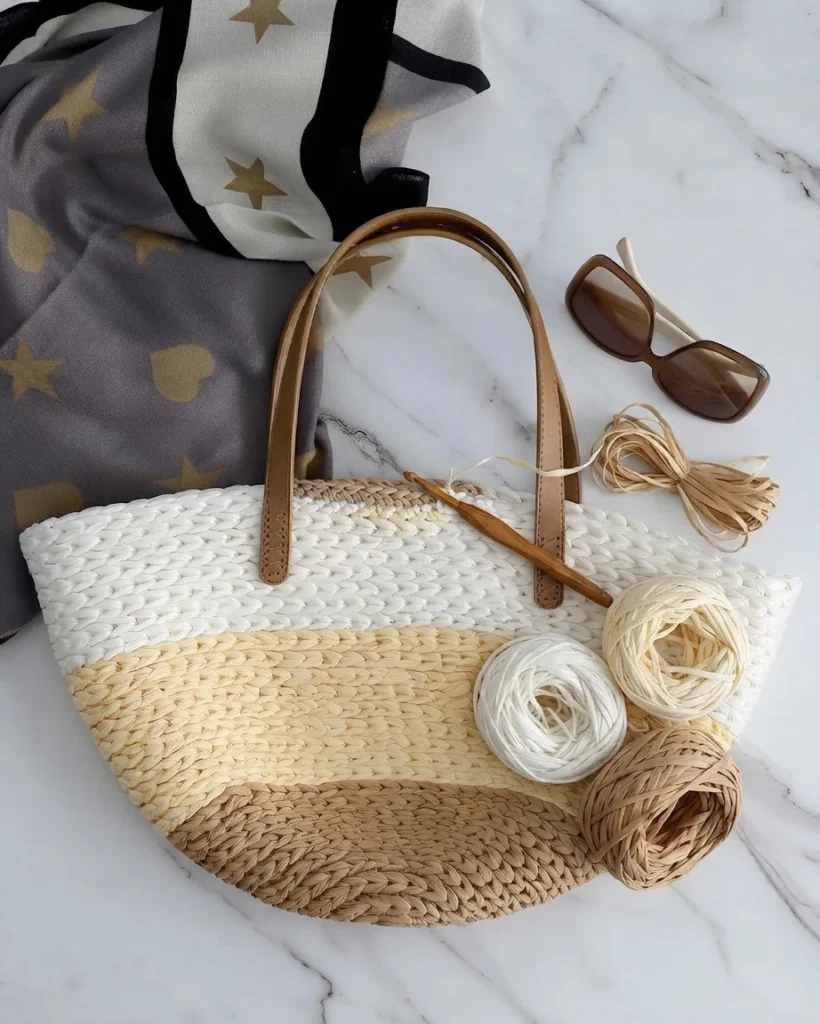
Raffia yarn gives the bag a rustic, natural look and a firm texture. The design holds several strands together to create a thick fabric with a distinct appearance. If raffia is not available, the source suggests 5 strands of Sport-weight yarn or a single strand of super bulky yarn.
Handles set the finished look. The source uses a pair of leather rolled handles, while other styles and materials can also work, and you may crochet handles if you prefer. A large hook suits the combined strands. Keep markers handy for round starts, and keep a tape measure nearby.
Are straw handbags a timeless style?
Straw handbags have stayed popular for many years, even as fashion trends shift. Their relaxed and natural style moves easily across seasons, which makes a handmade version feel current without chasing a short trend. A simple shape also pairs well with many outfits.
What is the use of a straw bag?
A straw bag is versatile and can serve many everyday purposes. Its light and roomy shape suits casual outings, while its sturdy structure helps it carry practical loads. Consider how you will use yours before you choose yarn color and handles.
- Beach vacation: fashionable and functional for a beach day.
- Everyday use: lightweight and roomy for daily essentials.
- Shopping trip: sturdy for groceries and fresh produce.
- Fashion statement: a way to show personal style.
How do you take care of a straw bag?
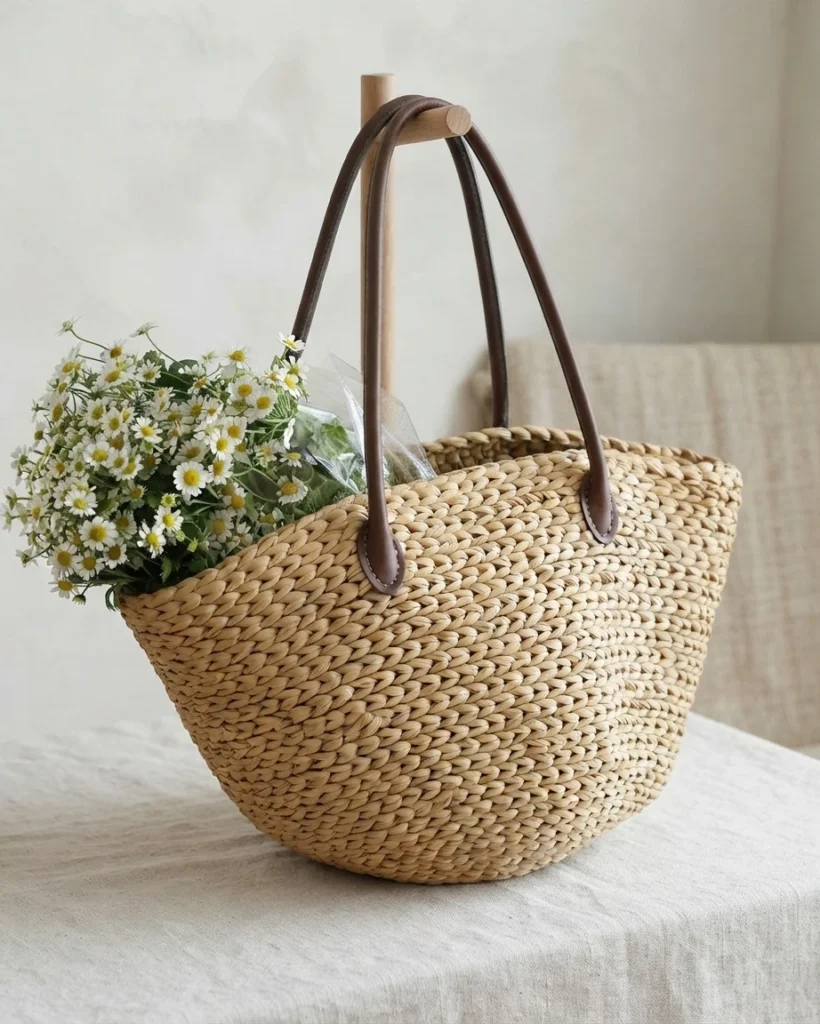
After you finish crocheting, gentle care will help the bag keep its shape and beauty. Raffia is delicate, so avoid rough handling, heavy loads, and long exposure to harsh conditions. Regular light cleaning is enough for most day to day use.
- Keep the bag away from rain, splashes, and excess moisture. If it gets wet, pat it dry with a clean cloth and let it dry naturally.
- Avoid heavy pressure or heavy items that could damage the raffia.
- Brush off loose dirt, and wipe with a damp cloth and mild soap only if needed.
- Avoid long periods in direct sunlight, which can cause fading or brittleness.
How To Crochet This Raffia Straw Bag
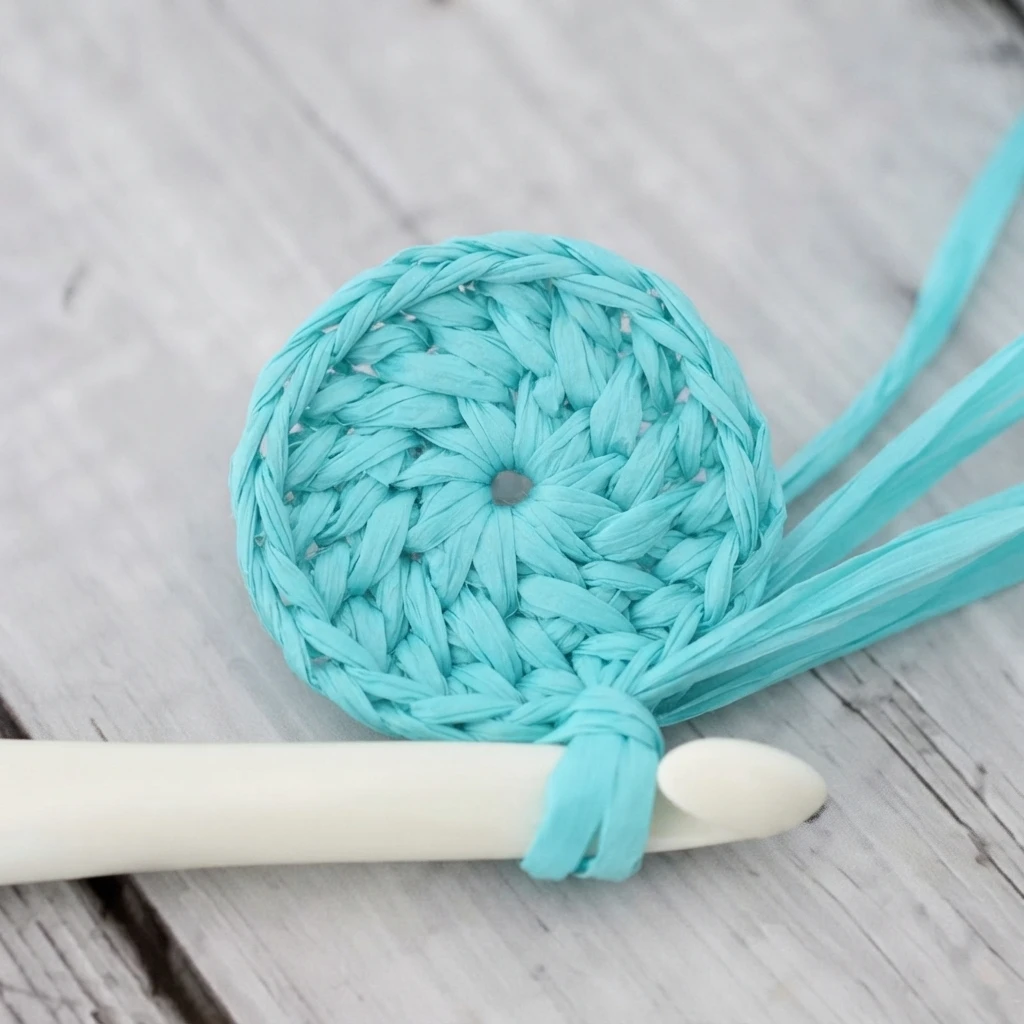
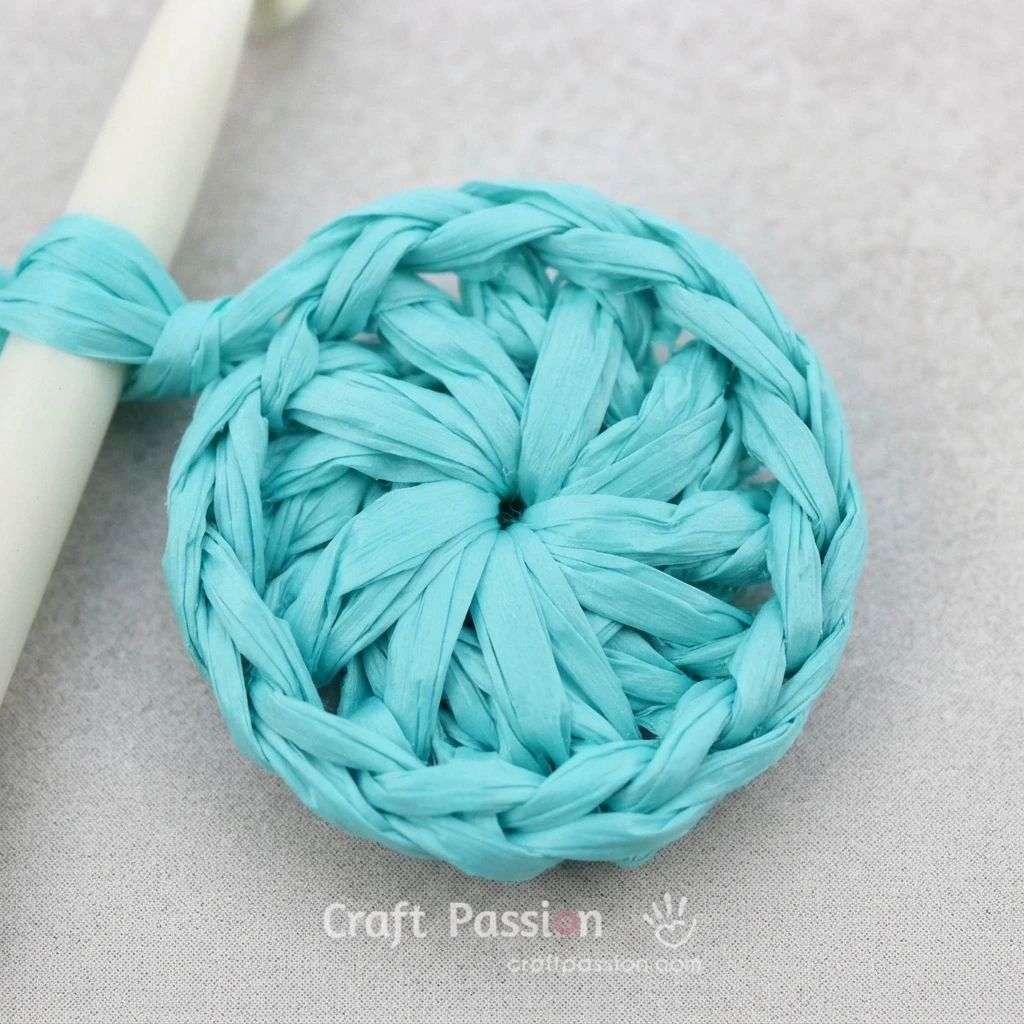
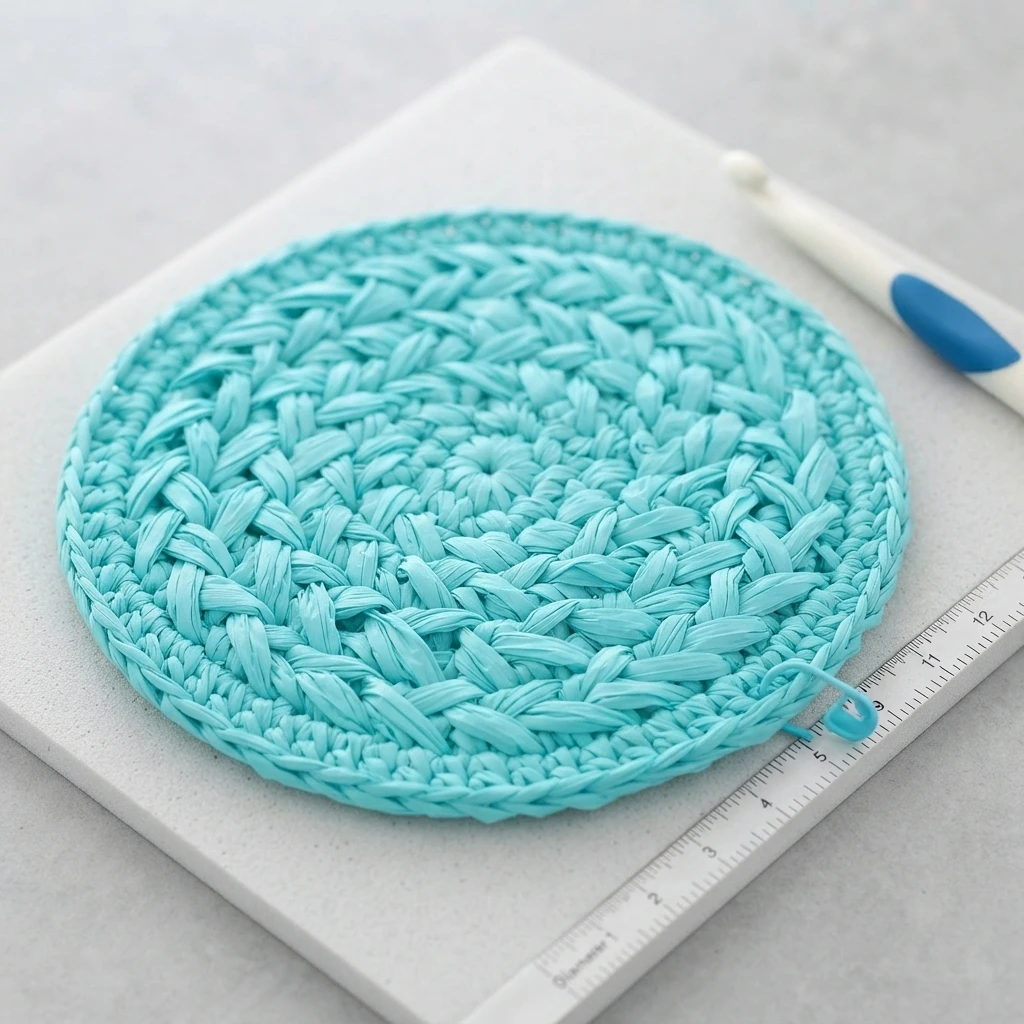
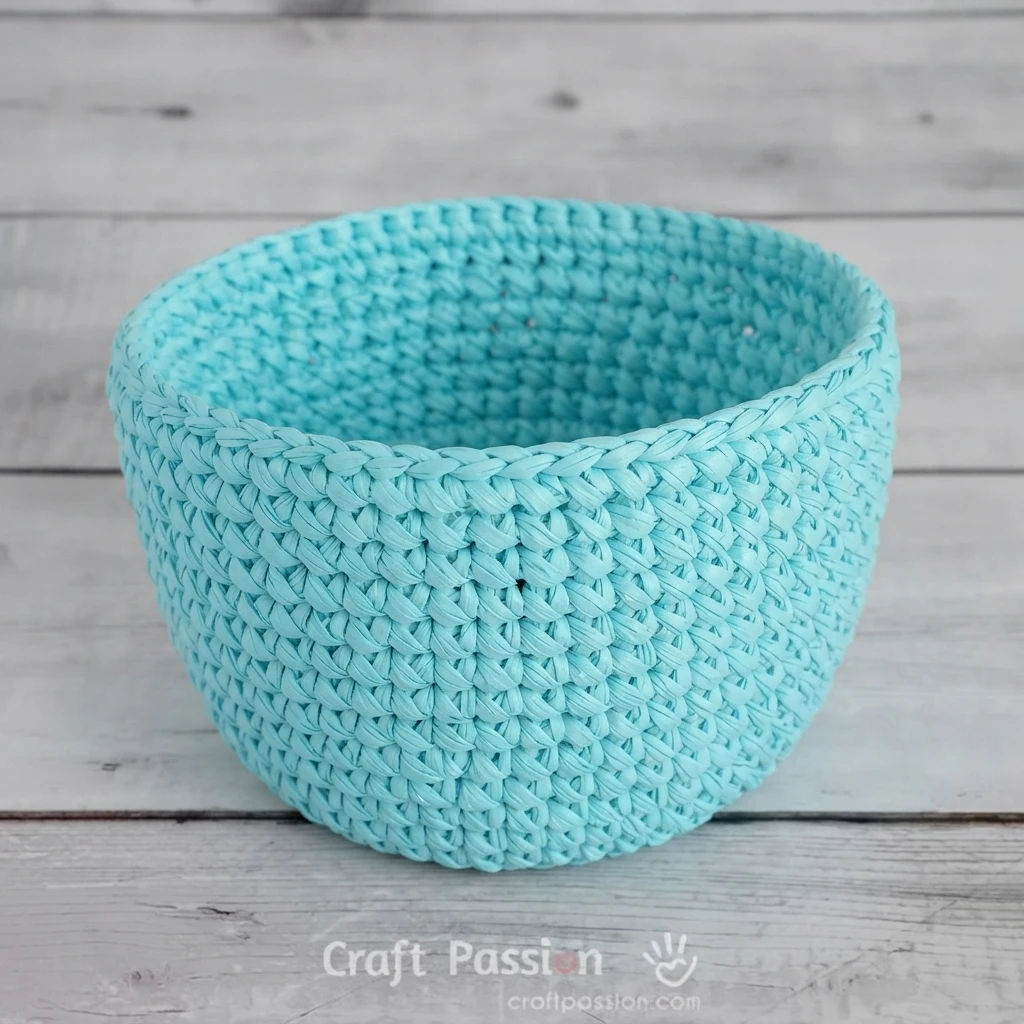
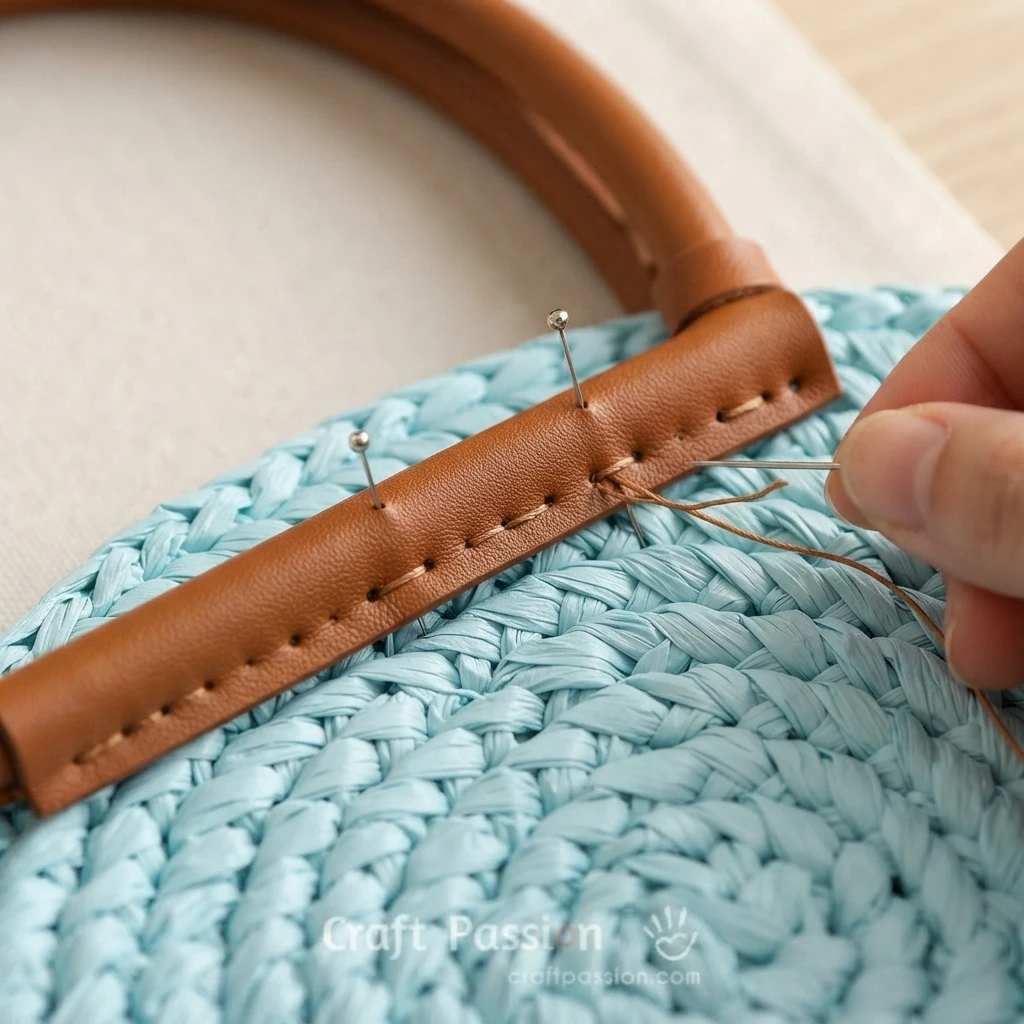
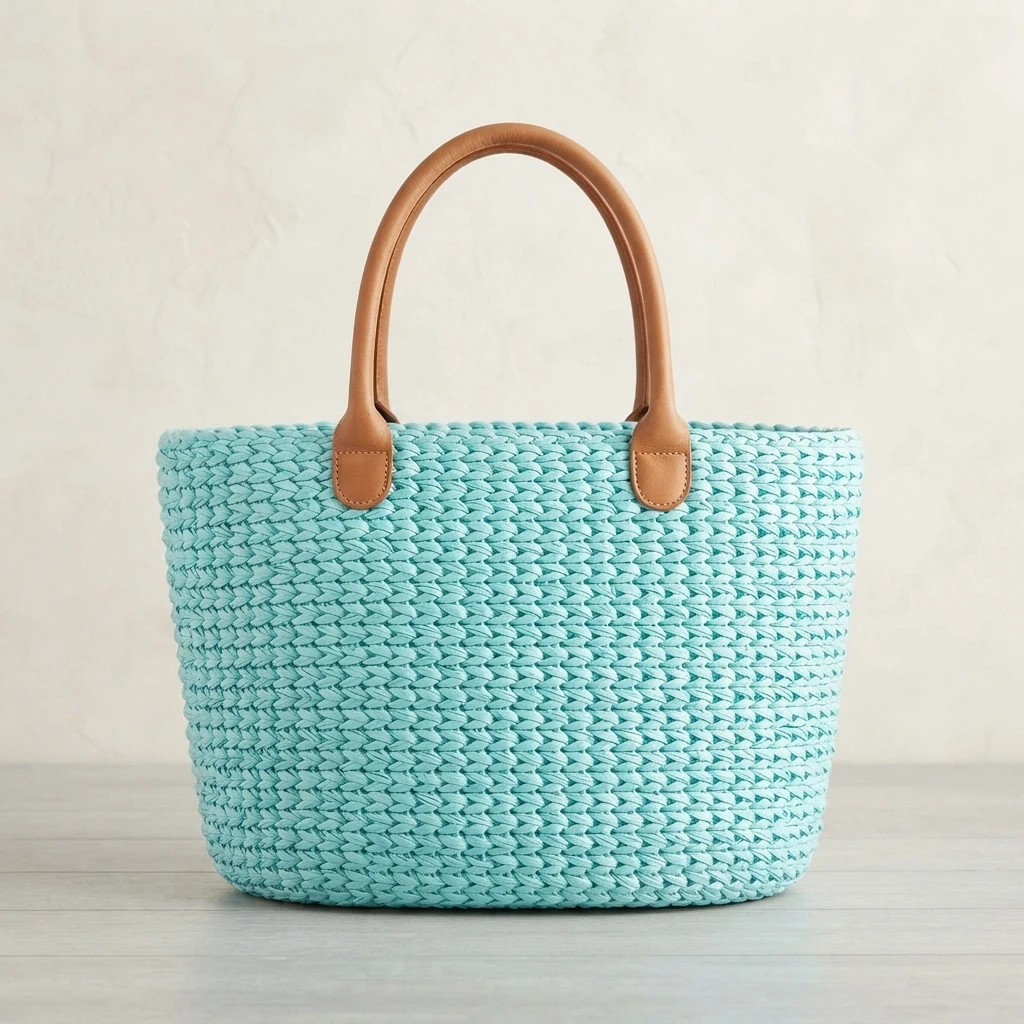
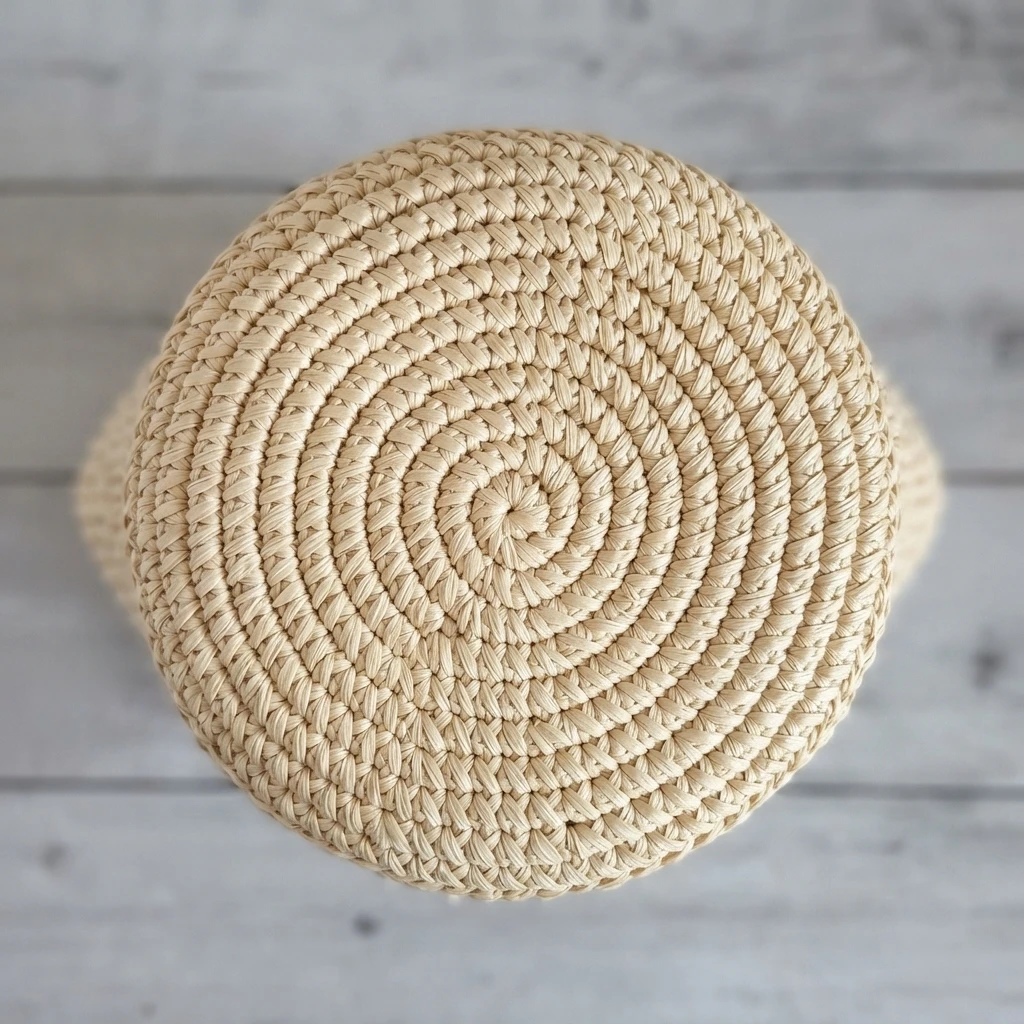
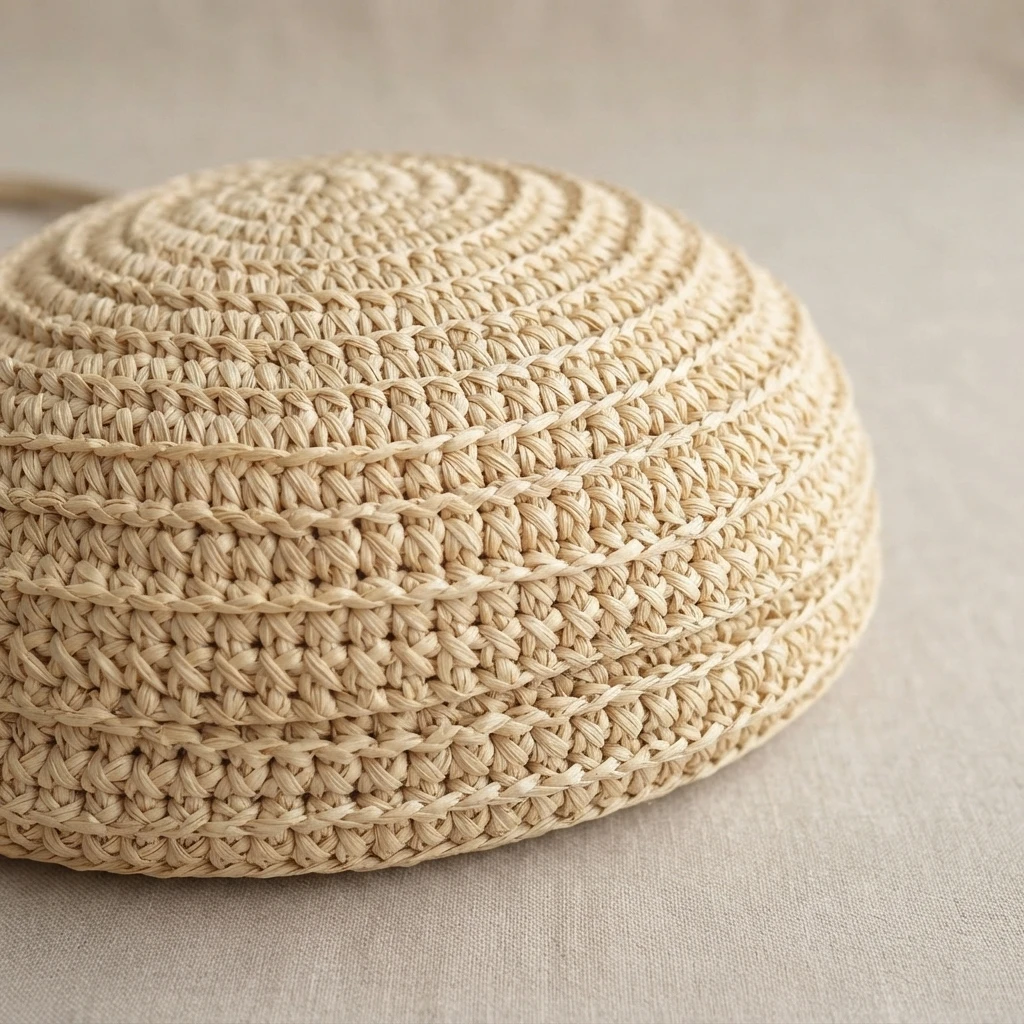
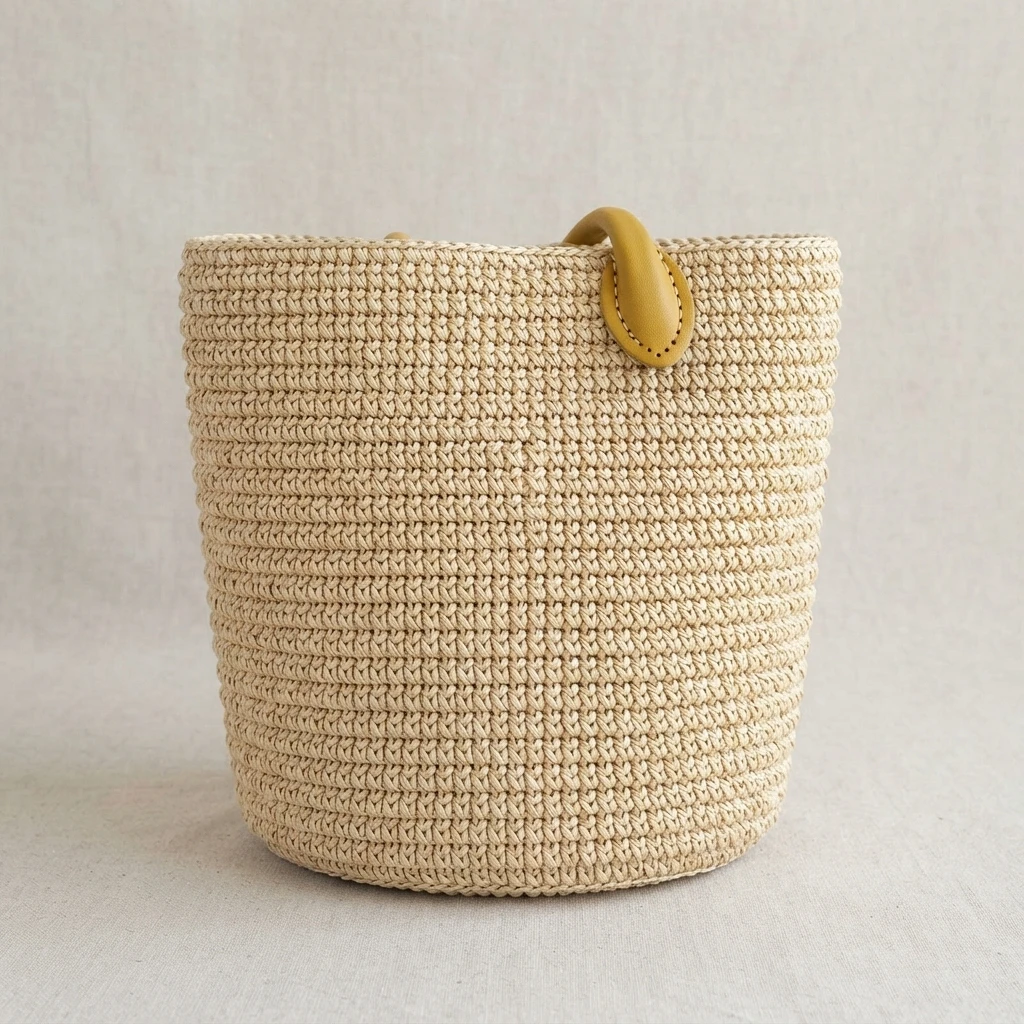
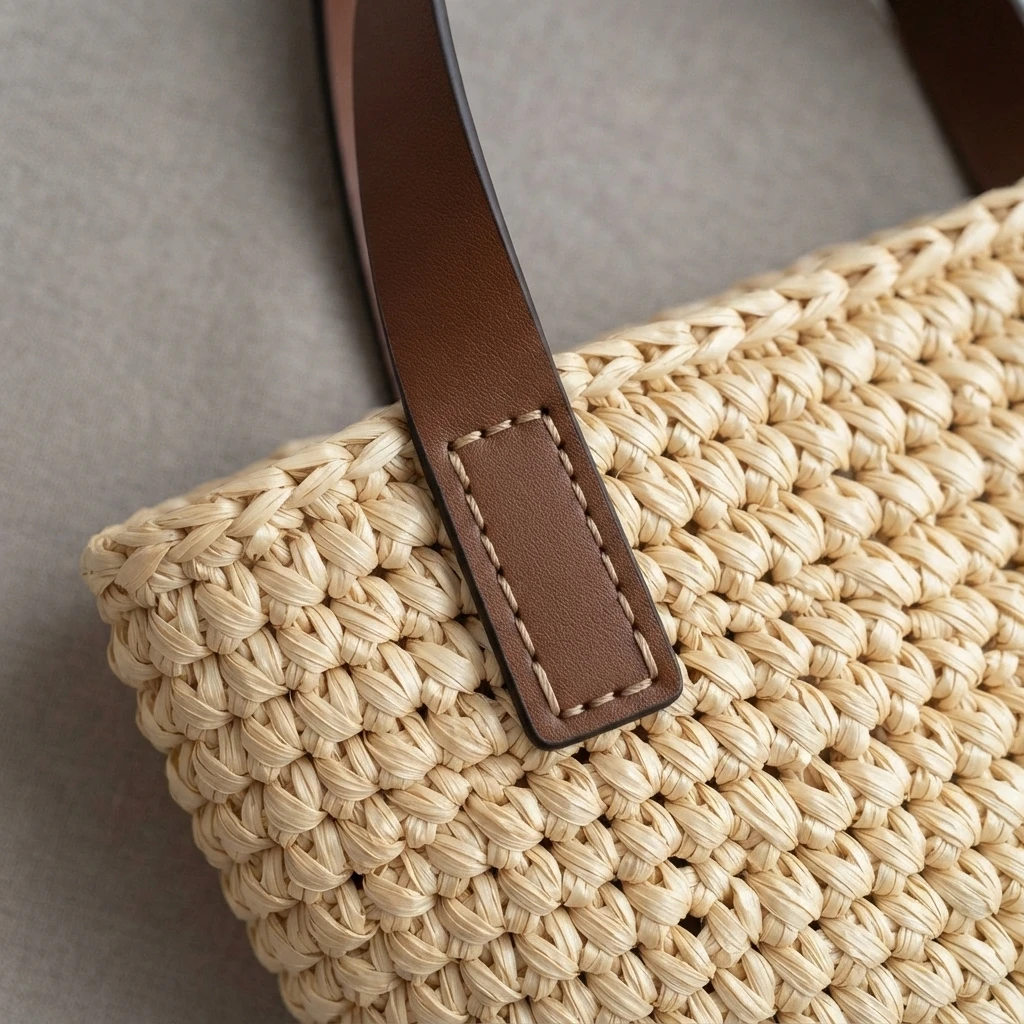
Work begins with a circle base, then continues upward into the body. Rounds form a spiral with no joining after each round, so mark each round start with a marker or spare yarn. After the bag is complete, sew on the handles.
The stitch set includes the magic ring, single crochet, single crochet in the 3rd loop, and slip stitch. From the second round onward, single crochet goes into the third loop of the previous round stitch, with no turning and all work from the right side.
Press the dome shaped base flat with a steam iron under scrap fabric, shape it into an 11 inch circle, and let it cool. Finished size is 40 inches in circumference and 13 inches from the base center to the top edge when tension is correct. Weave in ends, block again, and let it cool. Mark handles 13 stitches apart and 7 rows below the top edge, pin them, and sew pre-punched holes with back stitches. The bag has no lining, so keep thread from crossing the outermost yarn.
Materials
Gather the materials below before you start. The list follows the source exactly, including the yarn amount per roll and the thread for attaching the handles. Having everything ready helps you keep strands even and handles secure from the start.
- Raffia Yarn, sport-weight, 5 rolls (273 yards each roll) or Acrylic Yarn equivalent
- Rolled Leather Purse Handles
- Strong Thread (to sew purse handles)
Tools
Gather the tools below before you start. A large hook matches the combined strands, while the remaining tools help you finish ends, mark rounds, and check size. Keep them within reach so you can pause to block, measure, and adjust without losing your place.
- 10.0 mm hook
- Tapestry needle
- Scissors
- Stitch Markers
- Measuring Tape
Construction Overview
In broad terms, crochet the bag from the pattern, block the piece as instructed, and weave in all yarn ends. Then sew the handles to the tote at the marked positions, and repeat the same step for the other handle. Use the original pattern for the round details.
Abbreviations
The pattern uses standard US abbreviations. Keep this short glossary nearby while you work, since the 3rd loop is central to the texture of the bag. The definitions below follow the source exactly and help you read each round with confidence.
- MR: magic ring
- sc: single crochet
- 3rd loop: the horizontal bar at the back of the sc stitch
- sl st: slip stitch
- inc: 2sc increase
Crochet Tension
Check tension before you commit to the full bag. The source gives a 4 inch by 4 inch gauge swatch of 7 sts by 9 rows in single crochet in the 3rd loop. If your swatch differs, adjust your hook or tension and check again.
STRAW BAG CROCHET Pattern Overview
The pattern starts with a circle base, then continues into the body without cutting the yarn. After the base, enlarge the working loop, remove the hook, block the base, and let it cool completely. Resume by placing the hook back into the loop, tighten it, work upward, end with slip stitch, fasten and hide ends, block the body, and let it cool before sewing handles. The original page provides the pattern free to follow.
Notes
Plan your time with care. The source notes that total time is only an approximation, since it depends on your speed and the hours you spend on the project. Work in relaxed sessions, and let blocking and cooling set the pace.
Did you make this project?
If you make this bag, the source invites you to leave a comment or share a photo on Instagram. Tag @craftpassion so the team can see your finished work. Your photo may also encourage another maker to try raffia yarn.