Project introduction
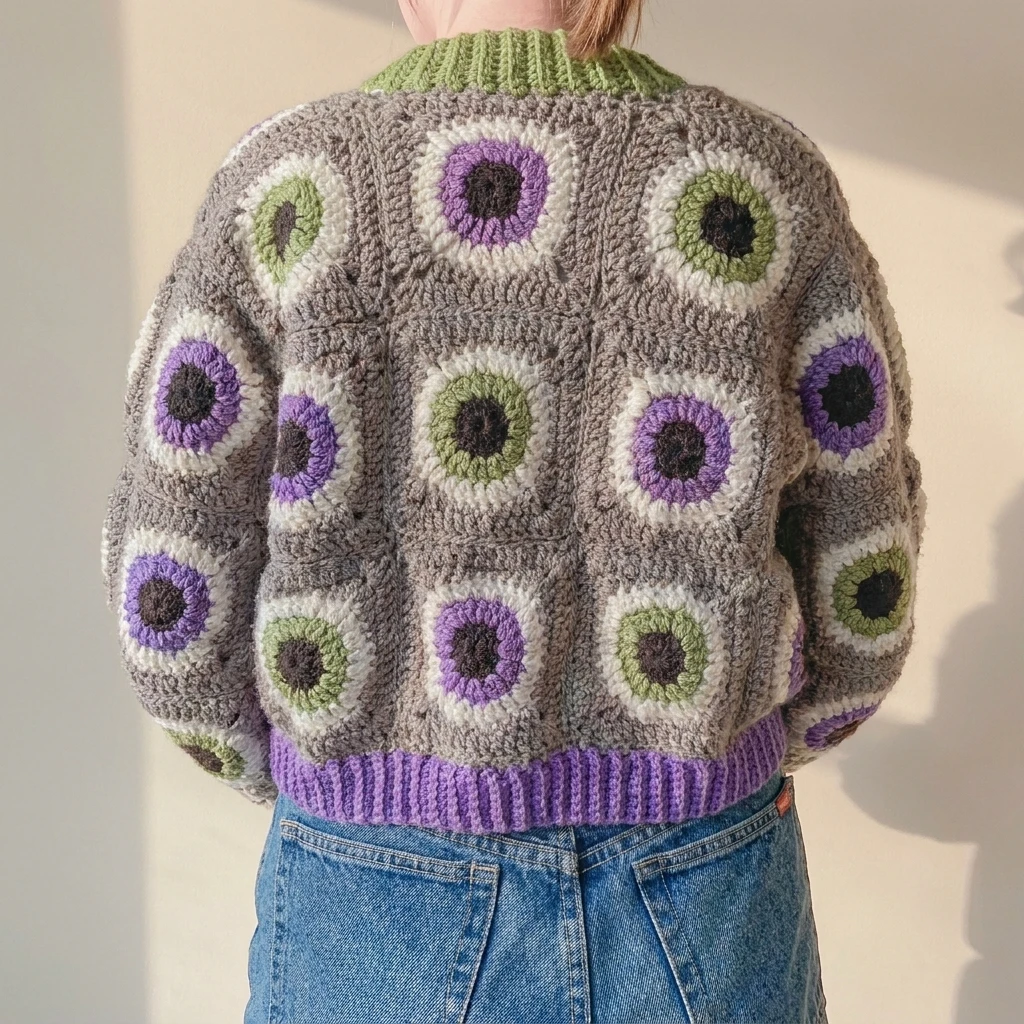
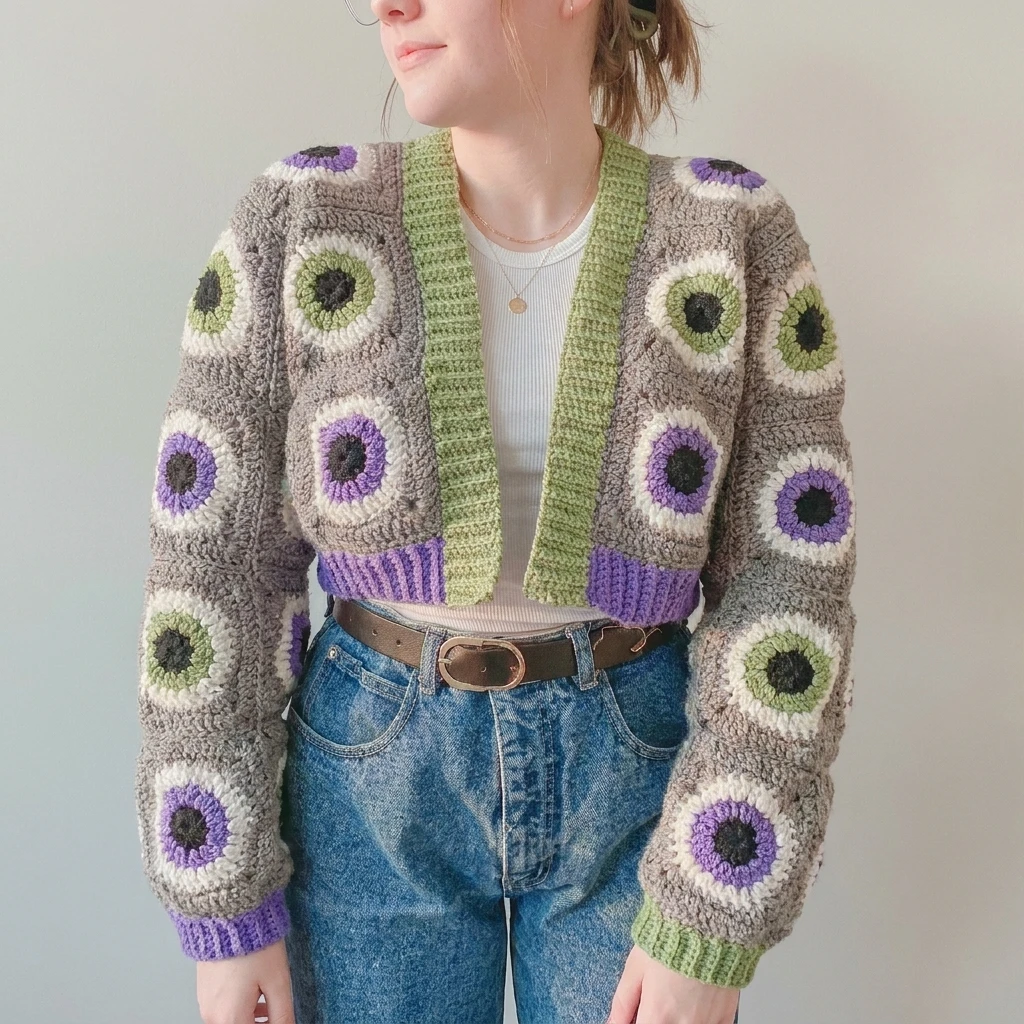
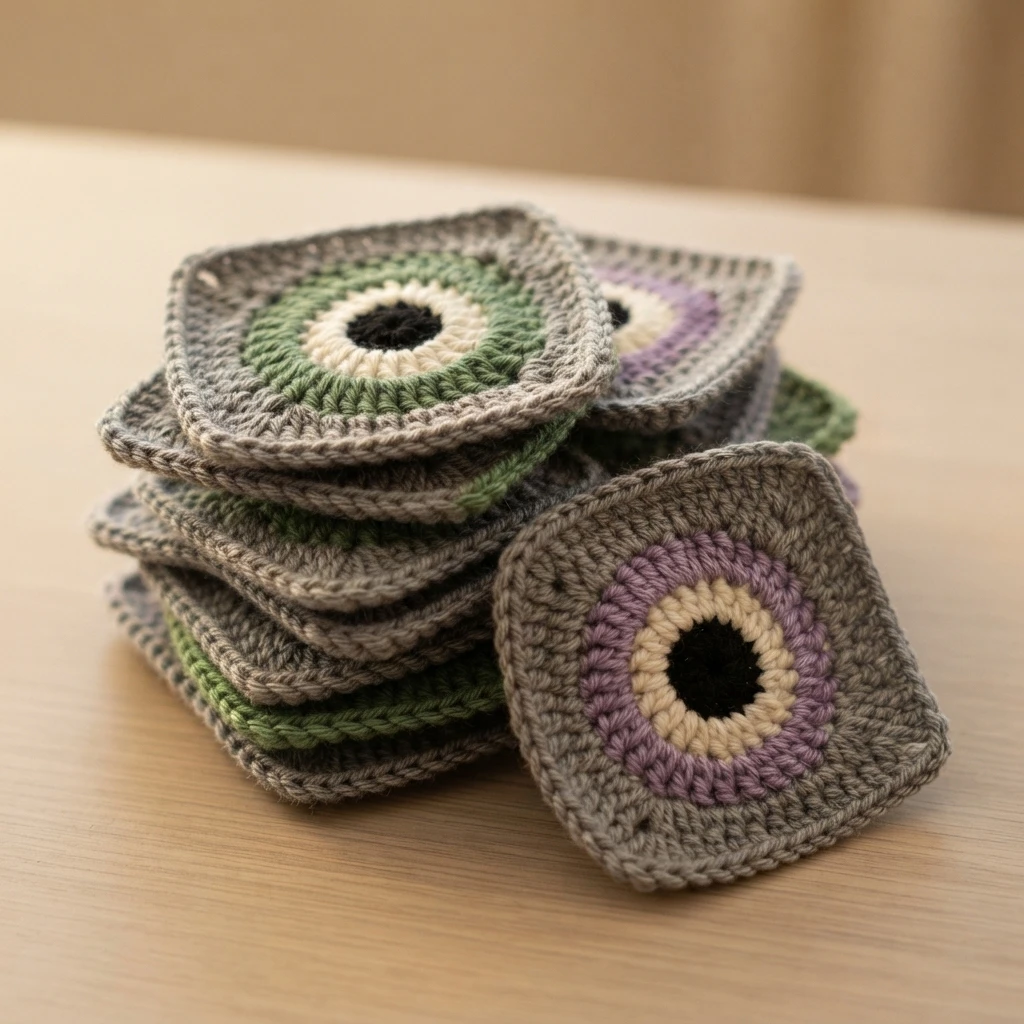
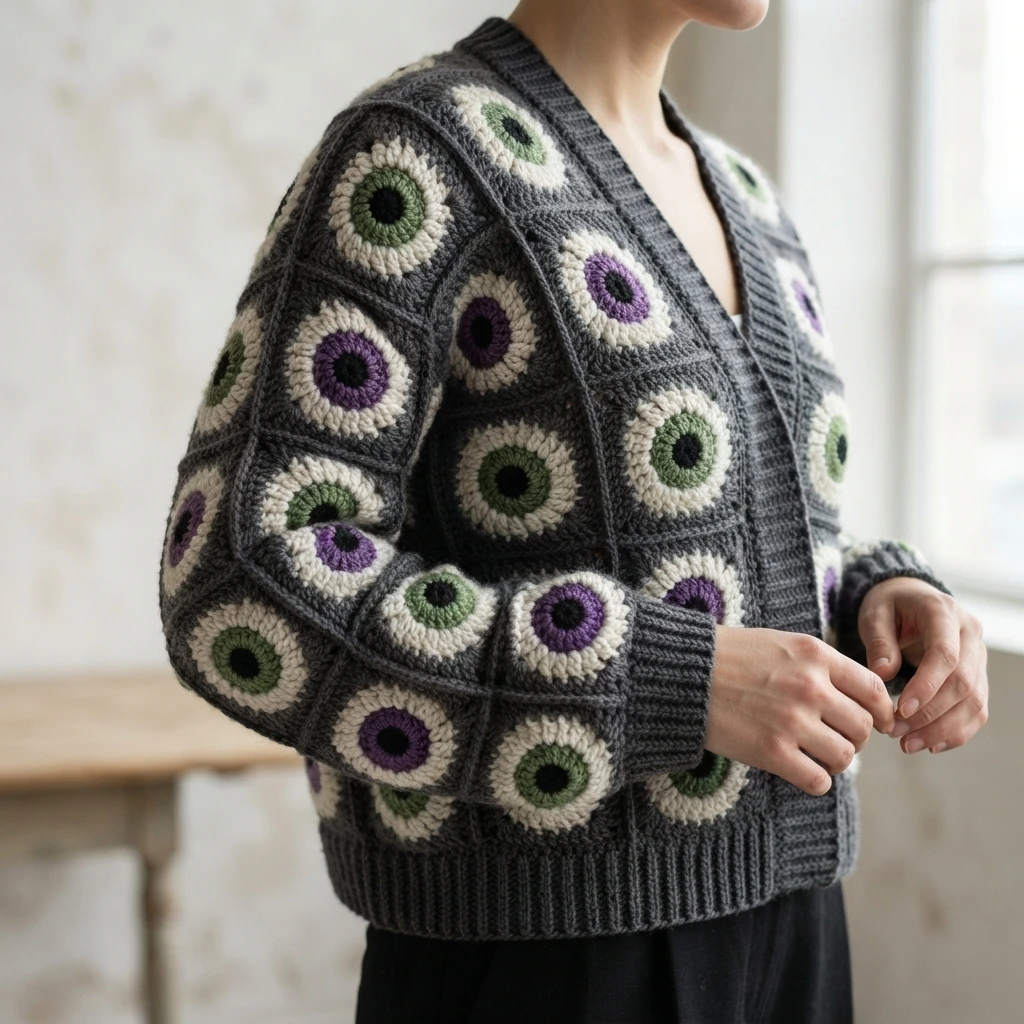
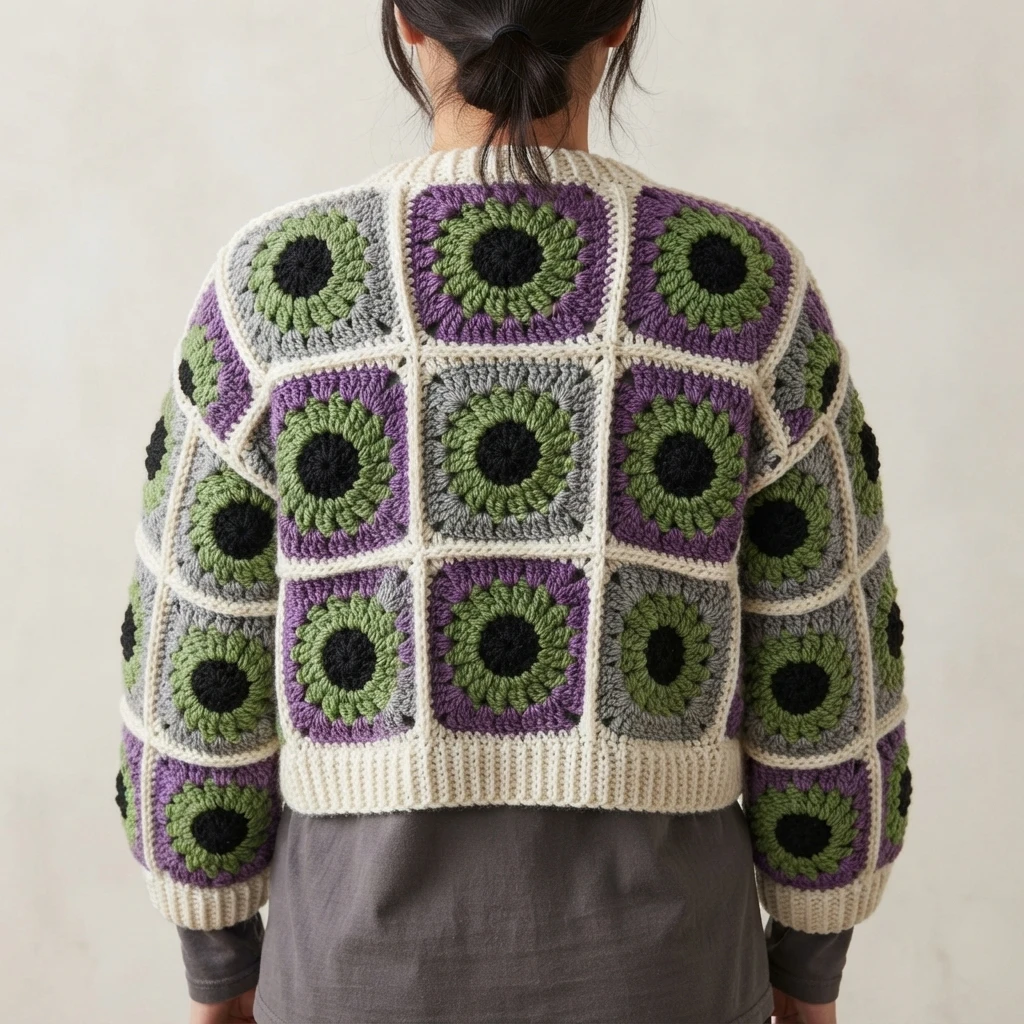
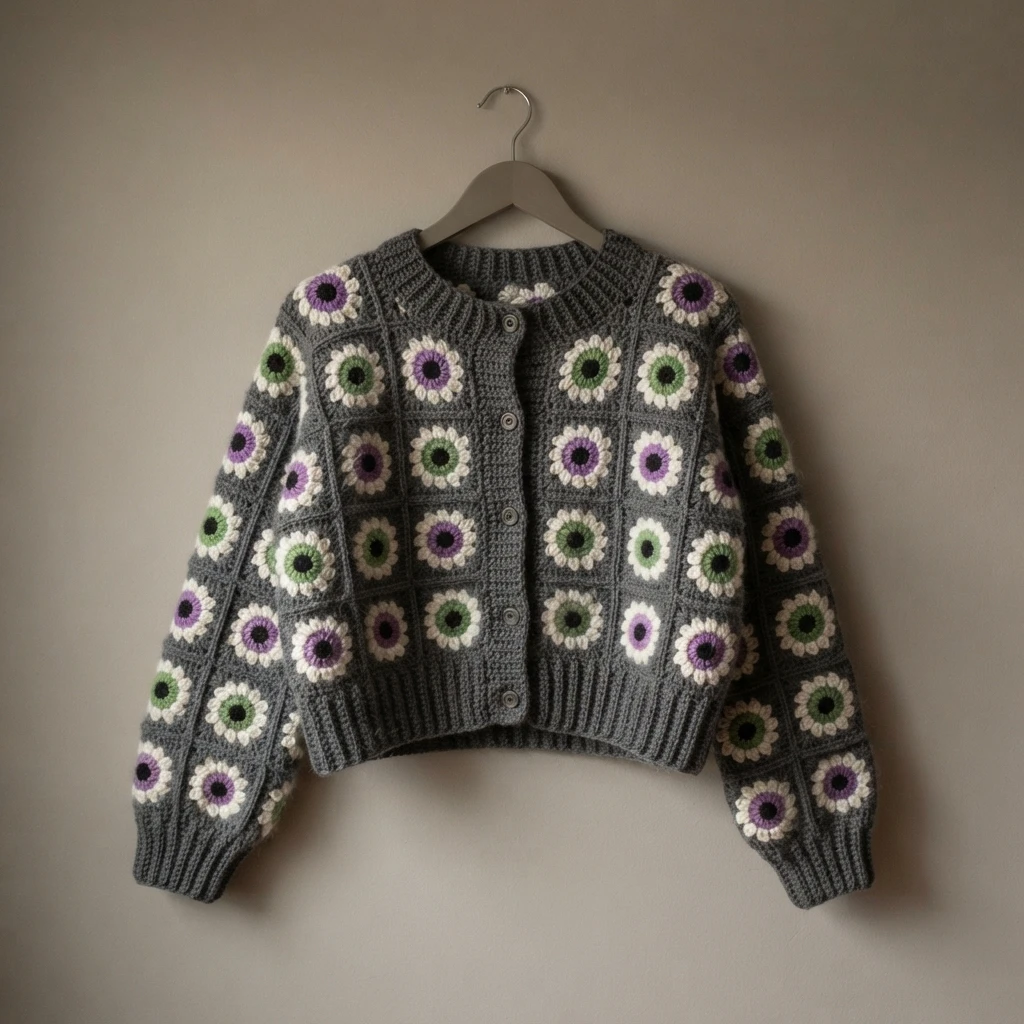
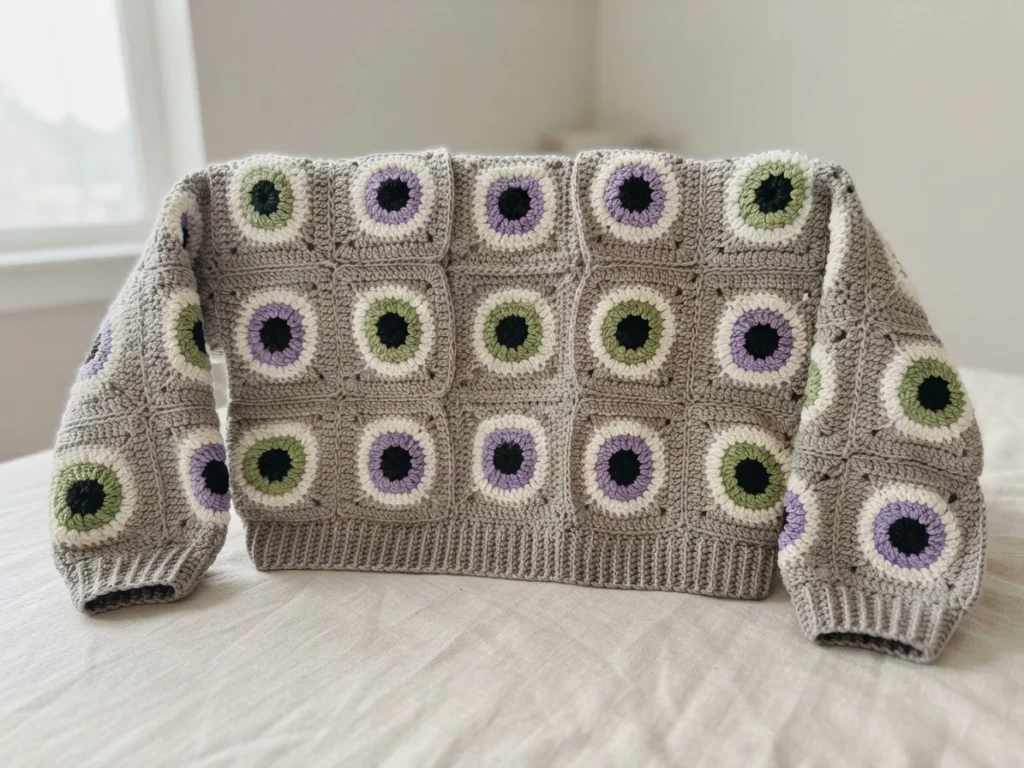
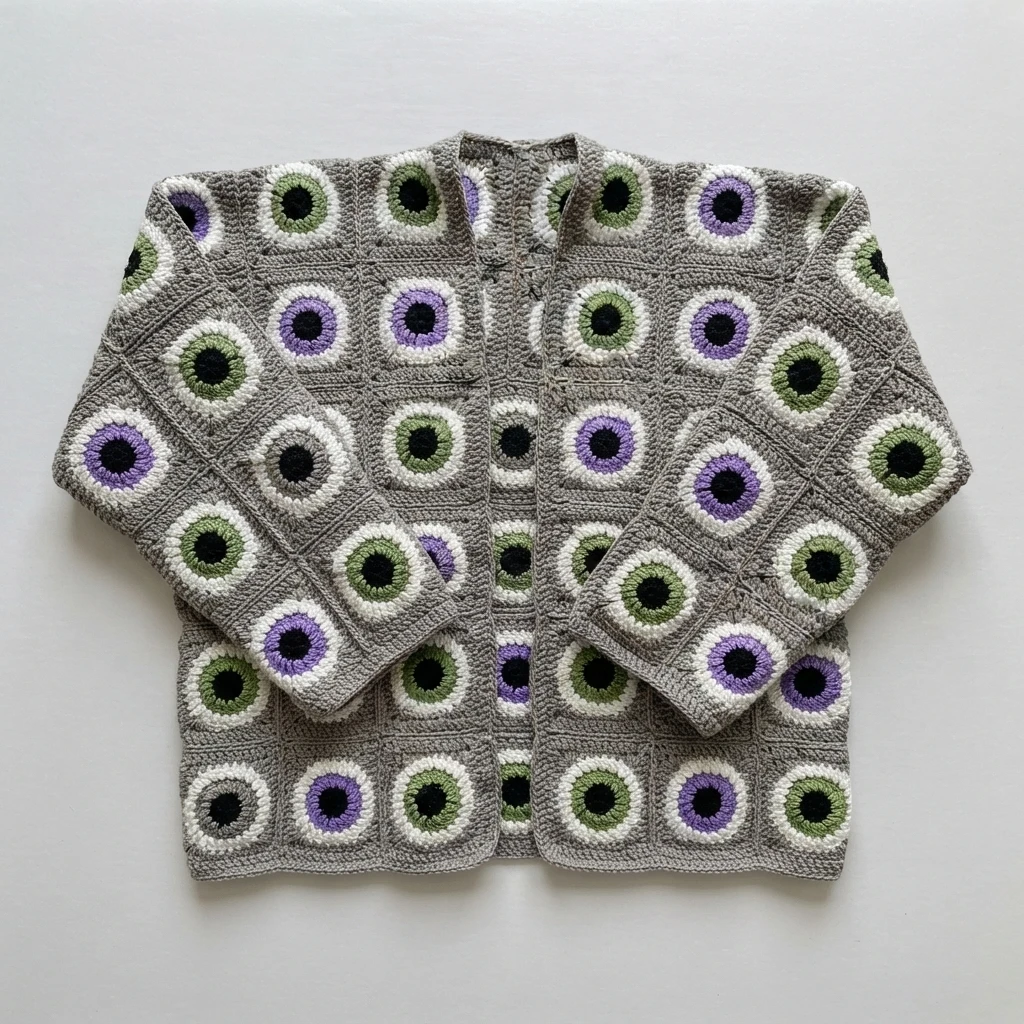
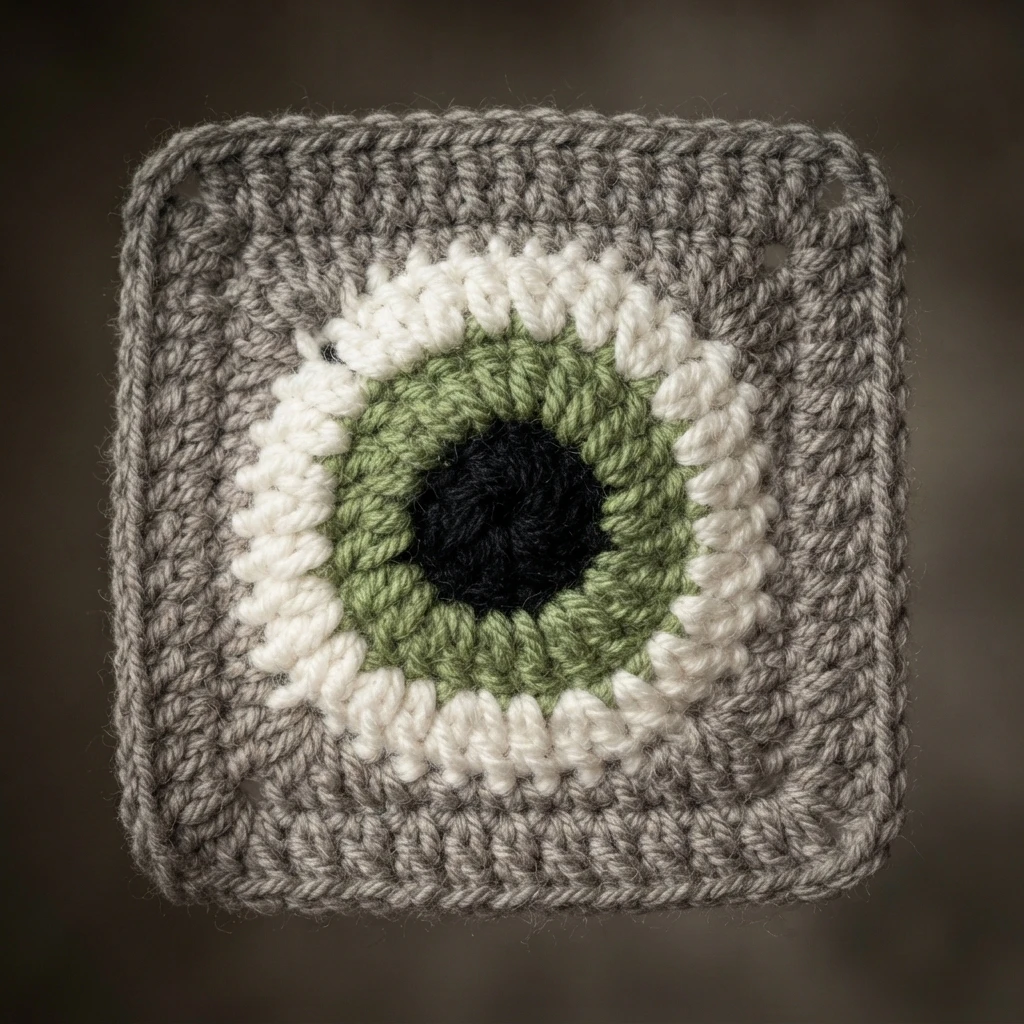
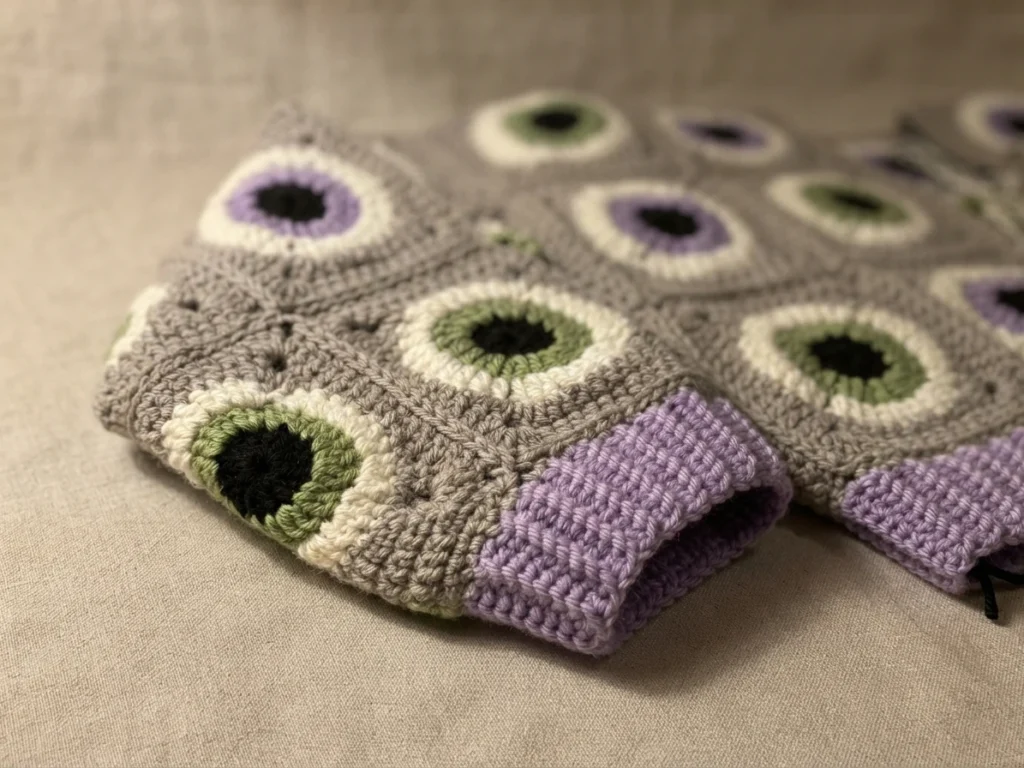
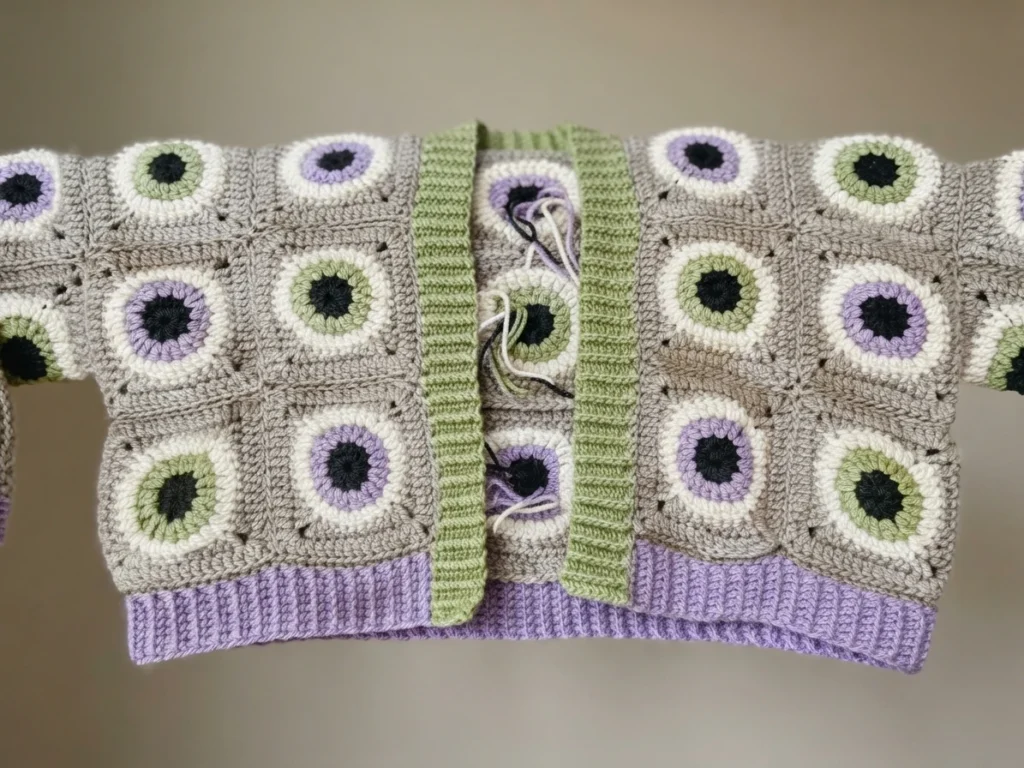
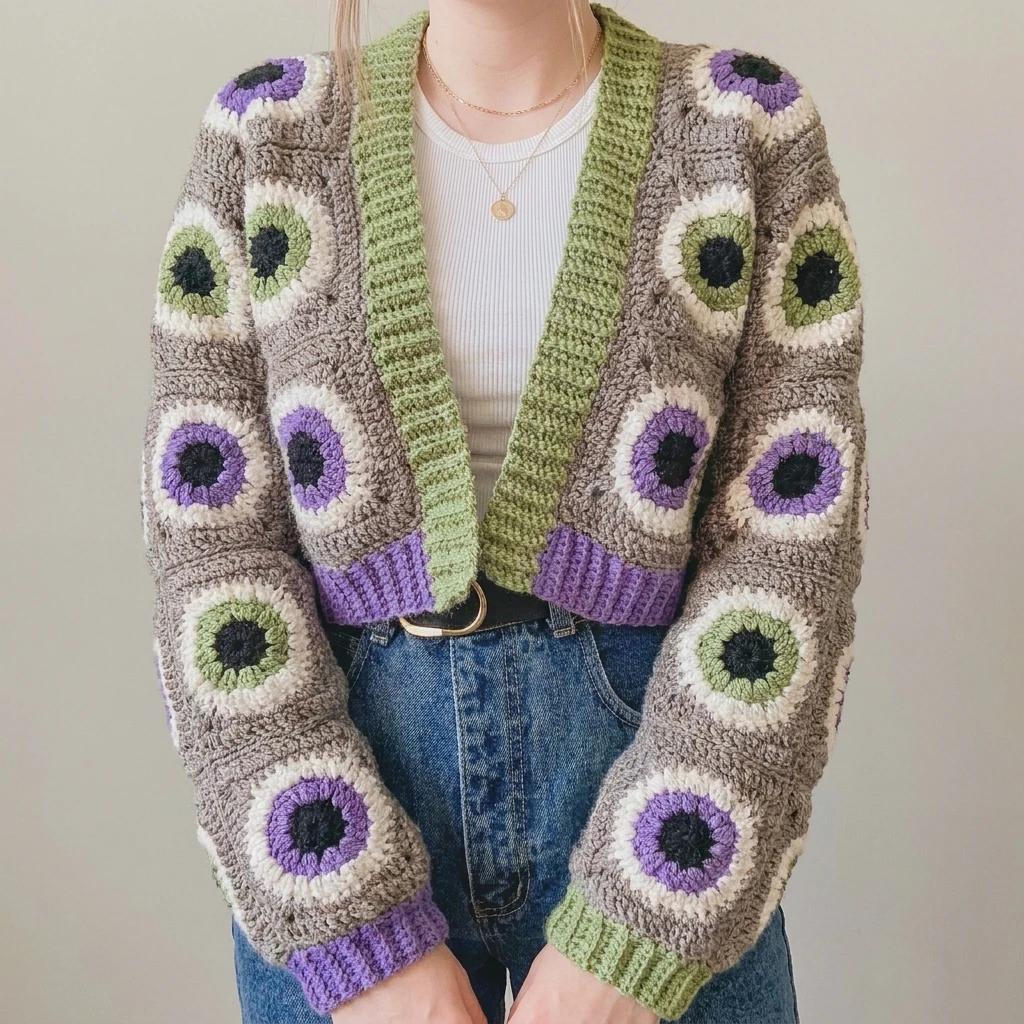
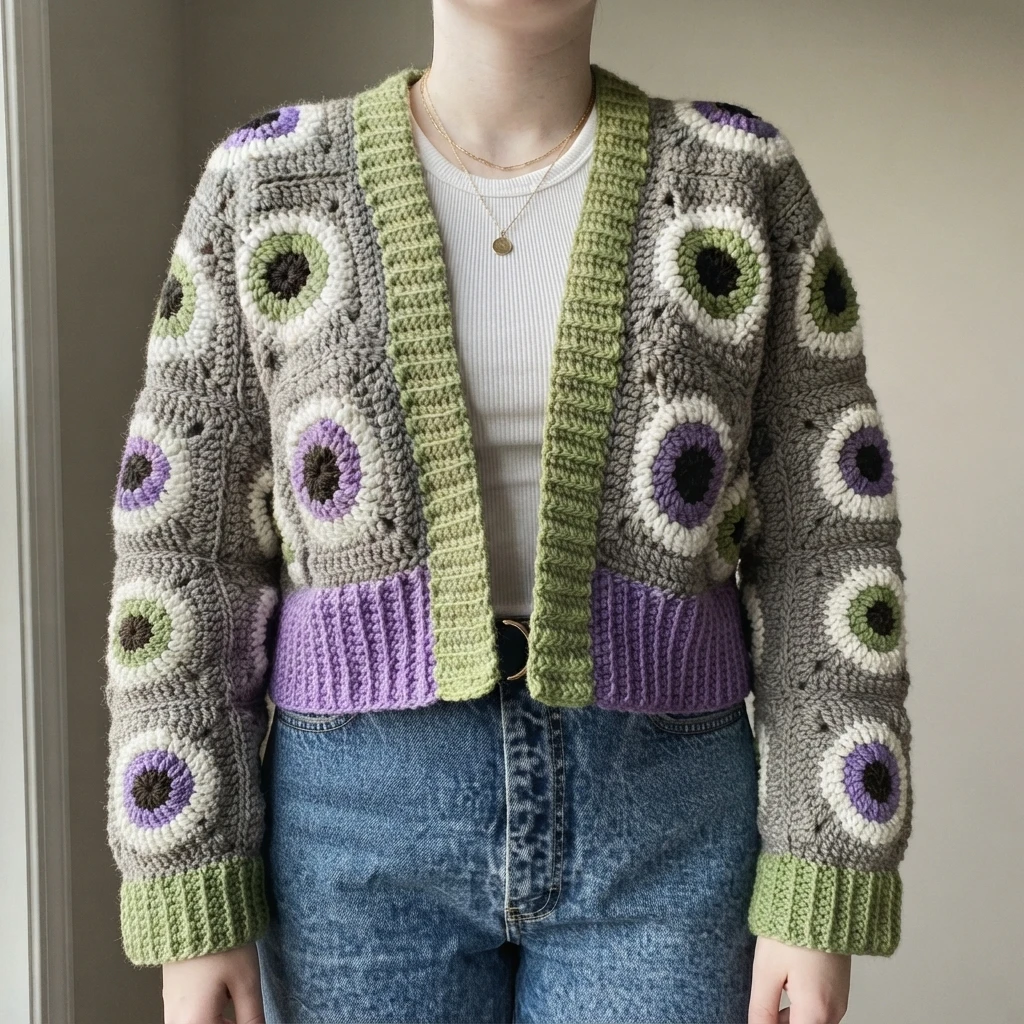
This is a pattern overview, not a full tutorial. The All Eyes On You Cardi comes from Hayhay Crochet, and the designer shares it as a free Halloween granny square cardigan pattern with a companion Youtube video. The design is rated Easy and is built from 45 eyeball granny squares, each measuring 5 inches by 5 inches. If you want the actual rounds, assembly diagrams and ribbing steps, the Original designer’s pattern and instructions is the place to work from.
The idea is simple and very seasonal: a granny square cardigan where each square reads as an eye. The designer made purple and green eyes because those colors felt the most Halloween appropriate, and notes that you can make as many or as few colored eyeball squares as you like. That flexibility is what makes this project approachable. You can lean into a classic spooky palette or keep the eyes subtle and let one accent color do the work.
Before you commit to a full cardigan, it helps to know what the source actually specifies. The pattern fits sizes XS to M, and possibly L, and the designer suggests that making more squares and assembling as needed should be an easy fix for a larger size. It follows US crochet terms, chain 3 always counts as a stitch, and stitch counts appear between angle brackets. Those notes matter because they set the rules for the whole project.
Here is the complete supply list exactly as the source lists it:
- Worsted or Medium Weight Yarn (4) in Black, Antique White, Grey Beard, Mid Green and Amethyst
- 5.00mm crochet hook
- Scissors
- Darning needle
- Stitch marker (the designer does not use one, but recommends it for beginners or anyone who loses track of where a round started)
Gauge is given as a 4 inch square measuring 7 stitches wide by 7 rows tall in double crochet. The abbreviation list is standard US terminology: St(s) for stitch or stitches, Ch for chain, Sc for single crochet, Sl st for slip stitch, Dc for double crochet, Hdc for half double crochet and Rep for repeat.
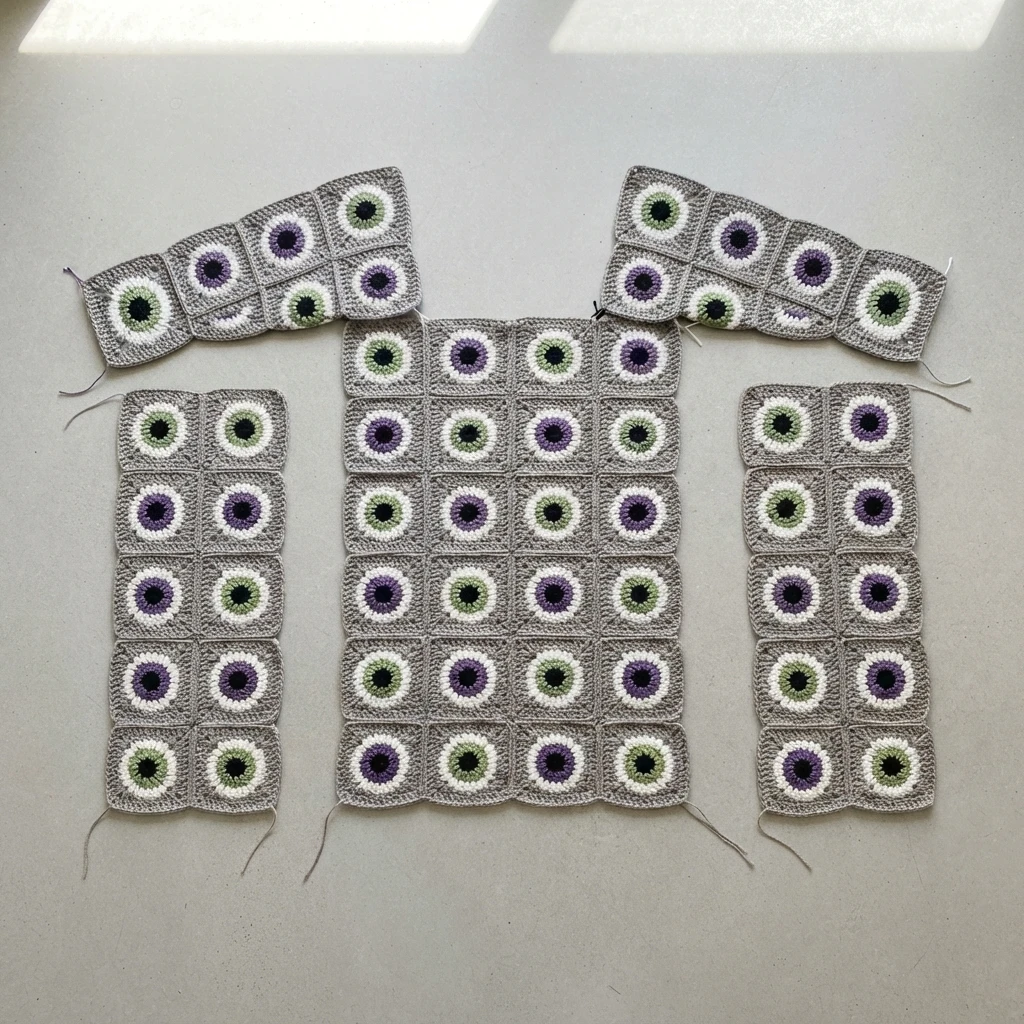
Construction happens in stages rather than all at once. The source describes making the eyeball granny squares first, then sewing them together in panels, then joining those panels. The designer notes that sleeves are folded in half and sewn together before being sewn to the bodice, and that the sides are only sewn about halfway up so there is room for the sleeve to fit. After that, single crochet goes around the openings for a cleaner look and to make adding ribbing easier.
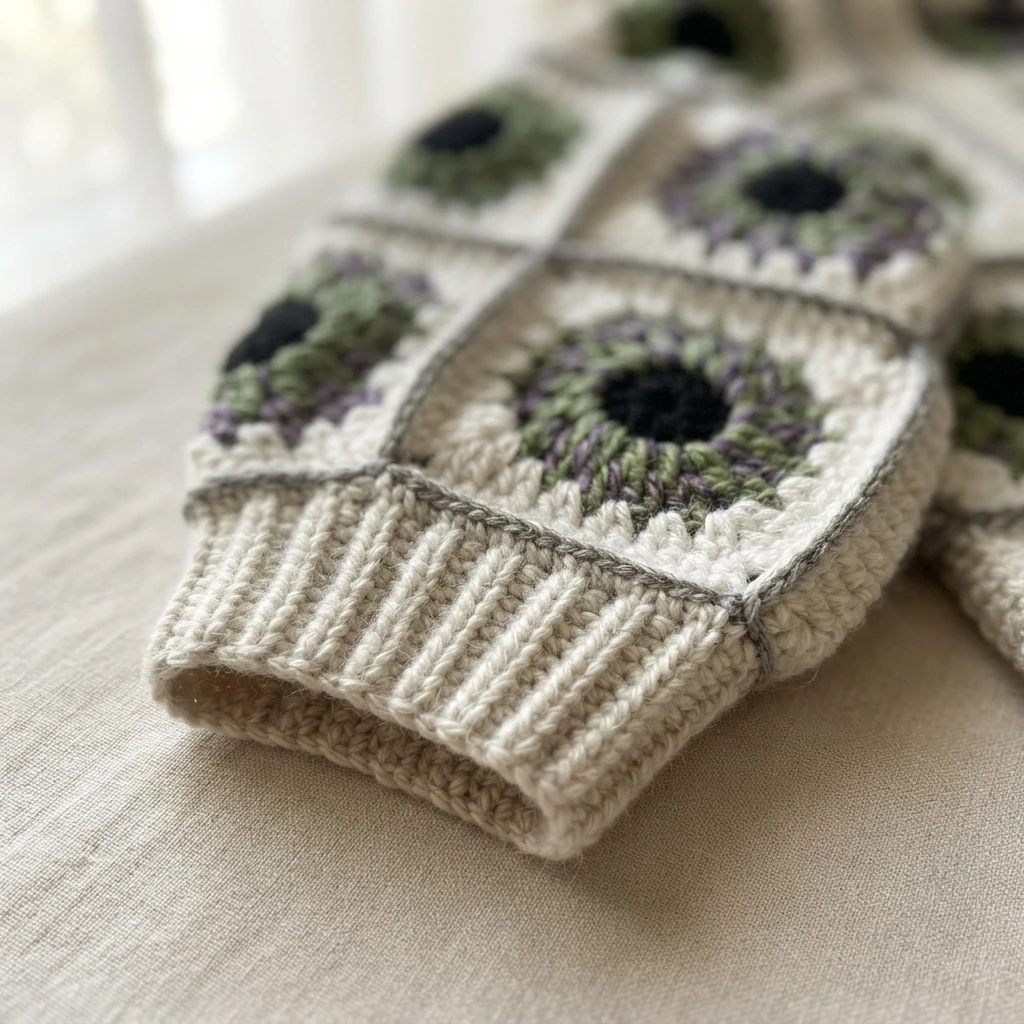
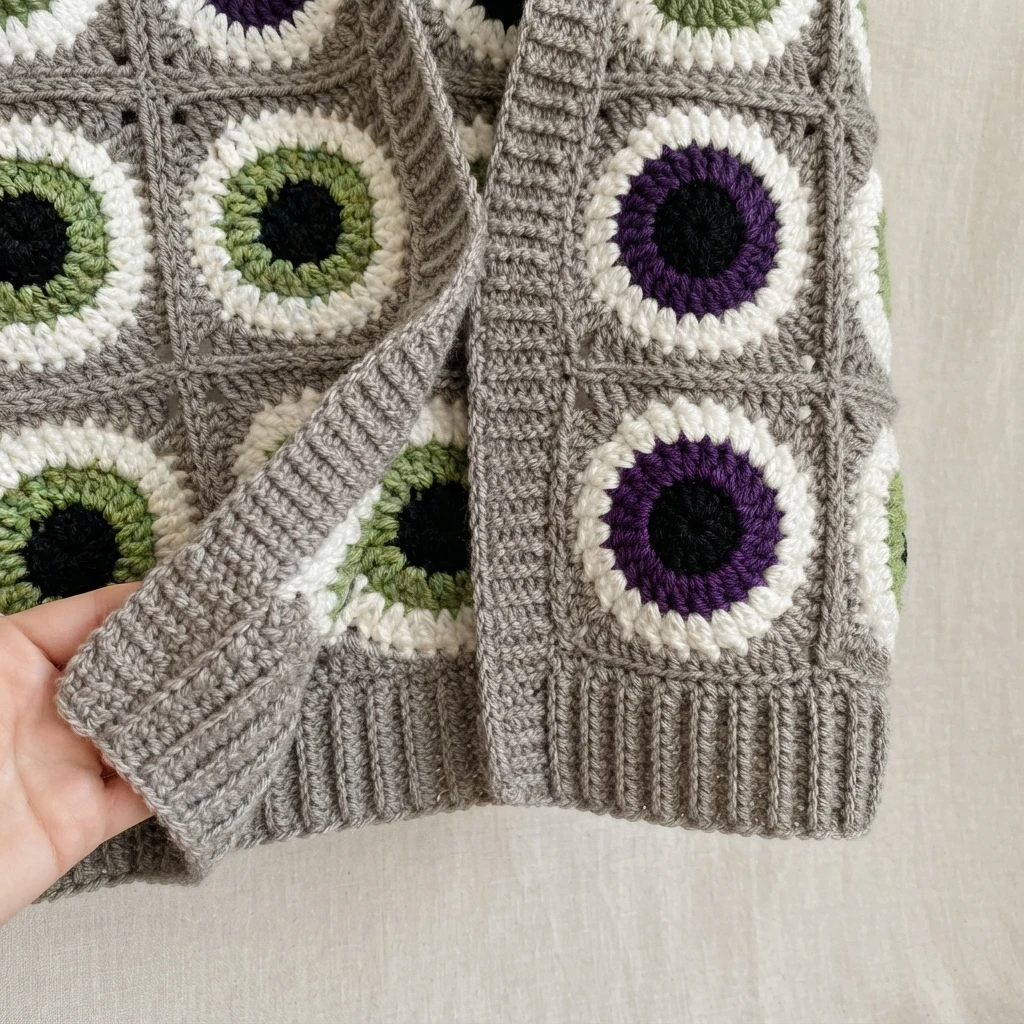
Ribbing is handled in three places. Sleeve ribbing is shown in the video worked directly onto the cardigan, but the designer also offers the alternative of crocheting a piece 5 sts wide by whatever length you need and sewing it to the sleeve. Bottom ribbing and front ribbing are both 7 sts wide by whatever length you need, then sewn to the bottom and front of the cardigan. When single crocheting around the sleeve openings, the source reminds you to end up with the same amount of sc on each so one sleeve is not bigger than the other.
If you like granny square cardigans in general, our Easy Crochet Granny Hexagon Cardigan, Pattern and Video Tutorial: Pattern Overview covers a different construction style. For another spooky square option, see the Halloween Bats Granny Square pattern by Wiam’s Crafts: Pattern Overview. Both are useful comparisons while you plan your own version.
One practical note on access: the source presents this as a free pattern with a video tutorial, so the web pattern and the Youtube video are the formats to check there. Whether any printable or PDF version exists, and on what terms, is not established by the source, so verify that with the designer rather than assuming.
Pattern format and preparation
Reading this pattern is easier once you understand how it is organized. The source opens with a welcome and background, then moves into level, materials, gauge, abbreviations, measurements and pattern notes before the square instructions begin. That order is worth respecting. Skipping the pattern notes means missing the size range, the US terms confirmation and the chain 3 rule, all of which affect how the rounds behave.
The eyeball square itself is worked from a magic ring outward across five rounds, with color changes worked into the final loops of a stitch and slip stitches joining rounds. The source uses double crochet, half double crochet and single crochet within the square, and the last round works into chain spaces and into slip stitches from the previous round. The designer acknowledges those slip stitches can be tougher to work into and suggests pushing the hook through anyway.
If any instruction reads ambiguously to you, the honest move is to check the original pattern and video rather than guess at a correction.
Preparation is mostly about consistency. Because the cardigan depends on many squares matching, gauge matters more than it would in a single-piece garment. The stated gauge of 7 stitches wide by 7 rows tall in double crochet across 4 inches gives you a reference point to check before you commit to all 45 squares. If your squares come out noticeably different in size from the stated 5 inches by 5 inches, the panel assembly described in the source will not line up the way the designer intended.
Two habits help here. First, work one complete square and measure it before starting the rest. Second, keep your color changes consistent, since the source works new colors in before finishing the last stitch of a round. The designer’s own palette of Black, Antique White, Grey Beard, Mid Green and Amethyst is one option, and the source explicitly allows you to choose how many colored squares to include. That means your version can be as bold or as restrained as you want while still following the same construction.
Finally, treat the video as a companion rather than a replacement. It is where the designer demonstrates ribbing worked directly onto the cardigan, which is the part of the process hardest to picture from text alone. Between the written pattern and the video, you have both the structure and the visual reference, and the original source remains the authority for every round and seam.